

How to Handle the "I Don't Have Time" Objection in Sales for Contractors

Most contractors lose work not because of price but because the conversation ends when a prospect says, "I don't have time." This guide gives trade-focused, practical fixes: how to find the real reason behind the stall, keep your price intact, and move busy homeowners into short, trackable next steps. You’ll get exact appointment language, follow-up sequences that respect the homeowner’s schedule, and field-tested urgency tactics. We break down the psychology of the brush-off, show the RPC Framework (Rapport, Professionalism, Close) in real job-site moments, and include ready-to-use call scripts, email replies, and urgency examples. Each H2 covers trade-specific snippets for roofing, HVAC, and remodeling, plus quick comparison tables and actionable steps you can use immediately. Work these sequences and role-play the prompts to stop "no-time" stalls and close more by focusing on short, low-friction commitments.
What Is the 'I Don't Have Time' Objection and Why Do Clients Use It?
The "I don't have time" reply is a short stall—a polite way for prospects to pause the conversation. It can hide several underlying issues: a real scheduling problem, a polite brush-off, or avoidance driven by price or decision anxiety. For contractors, diagnosing which one it is preserves credibility and avoids unnecessary discounts. The key is to pivot to a micro-commitment that lowers the prospect’s perceived cost of deciding. The sections below list common phrasings, explain the likely reasons behind them, and offer quick diagnostic questions you can use to find the true blocker without pressuring the homeowner.
What Are Common Forms of Time Objections in Sales?
Time objections usually show up the same way: "I'm too busy," "Call me back later," "We need to think about it," or "Wait until [season/event]." Each phrasing points to a different root cause—immediate unavailability, polite deferral, partner approval, or a decision to prioritize other projects. Listen for qualifiers like "later this week" or "maybe next month" to classify the objection. Then use a two-sentence diagnostic pivot that acknowledges the prospect’s schedule and offers a micro-commitment—a ten-minute window or a one-page estimate—to bridge the gap. That short ask respects their time and creates a measurable next step, which converts better than an open-ended "call me later." Role-play these pivots so your team nails the cadence on cold calls and on-site interruptions.
Why Do Prospects Say They Don’t Have Time?
People say they don’t have time for situational and psychological reasons: decision avoidance, fear of being sold to, needing partner sign-off, or genuine overload from work and family. Decision fatigue and low perceived value are common—if the homeowner doesn’t see a clear upside, they’ll postpone. To expose the real blocker, ask one clarifying question and offer a concise alternative. For example: "Is timing the only issue, or would a ten-minute walkthrough this week save you time later?" That names the friction and gives a low-effort route forward, which often converts a polite deferral into a short appointment without sounding pushy.
How Does the RPC Framework Help Contractors Overcome Time Objections?
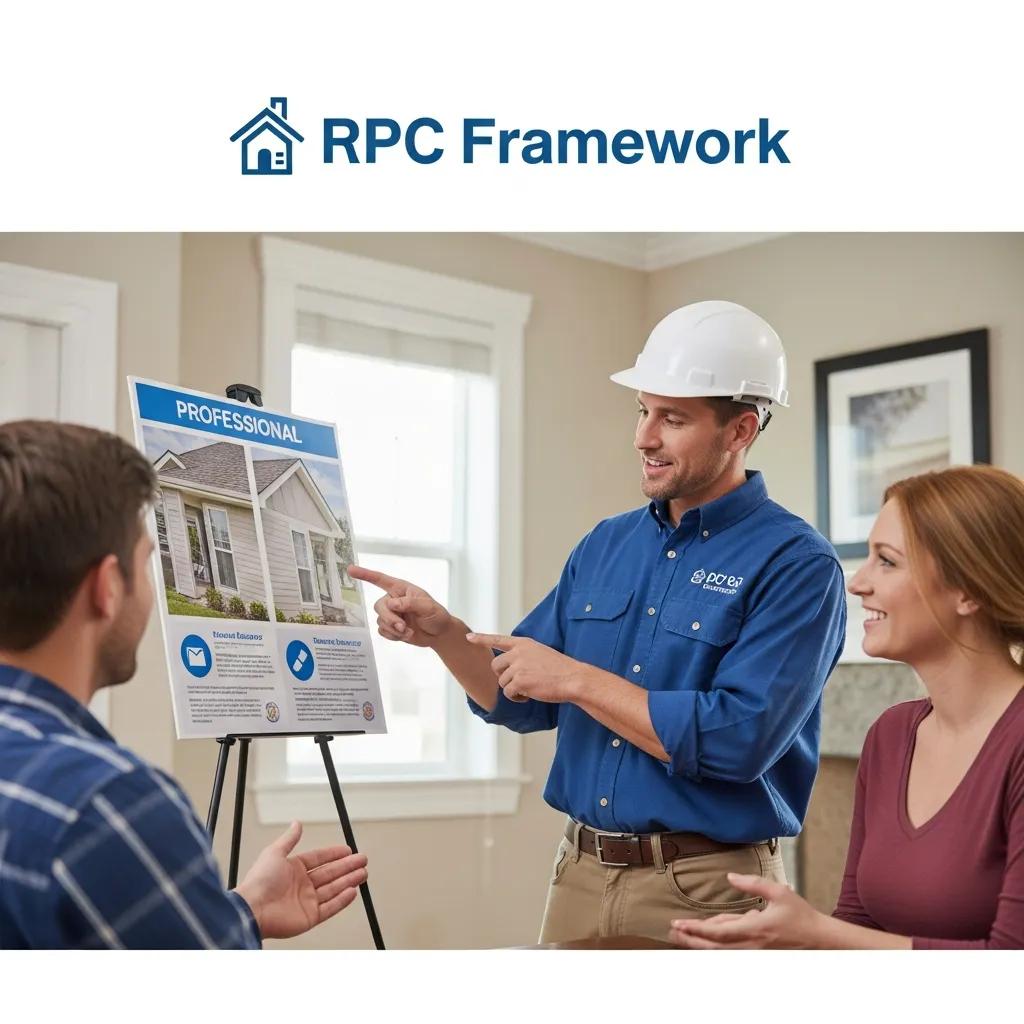
RPC—Rapport, Professionalism, Close—turns a vague "no time" into a short, justifiable commitment. Rapport opens with a quick, relevant connection so the homeowner feels understood. Professionalism gives a concise proof point that shows value in a few words. Close asks for a tiny next step—a 10–15 minute slot or a one-page estimate—that respects their schedule. Breaking each phase into micro-behaviors (an opening line, a one-line proof, and a two-option close) lets crews handle time objections consistently and confidently on the job or over the phone. Below we define each component and show how it reduces the friction that creates time objections.
What Are the Three Steps of the RPC Framework?
Rapport: make a quick, context-specific connection—reference a visible issue or the weather to become relevant in 15–20 seconds. Professionalism: follow with a short credibility line that demonstrates competence—mention a recent similar job or a performance metric that matters to the homeowner. Close: offer a specific, limited ask—"a 10-minute on-site assessment this Thursday or Friday"—instead of leaving the appointment open-ended. Together, these steps cut perceived time cost and turn busy prospects into concrete, schedulable commitments.
How Does Each RPC Step Address the 'No Time' Objection?
Rapport reduces resistance by acknowledging the homeowner’s situation—"I know you’re busy; I’ll be in and out in ten minutes"—so the ask feels less intrusive. Professionalism justifies that short visit with a tight proof statement—"We fixed a similar leak recently and saved the homeowner 30% on replacement labor"—giving a reason to invest minutes now rather than hours later. Close turns the softened prospect into a micro-commitment using two clear options: "Would morning at 8:00 or after dinner at 6:30 work better?" Specifics remove ambiguity and speed scheduling. Rehearse the RPC sequence in role-plays to improve callbacks and shorten sales cycles—prospects are more likely to accept low-cost, credible next steps.
Many contractors then lock these behaviors in with structured training. Home Improvement Closer teaches RPC in trade-specific modules and drills. Our Tier 2: Mastery of Contractor Sales program focuses on objection work and RPC implementation through live role-plays and replayable lessons. For teams ready to practice scripts and benchmark outcomes, Tier 2 Mastery is available at $149 per month or $1,788 per year and includes community access and Q&A replays to speed adoption. That program is meant to make RPC second nature across crews while keeping the emphasis on trade-specific selling skills.
What Are Effective Sales Scripts and Responses for Handling Time Objections?
Winning scripts are short, trade-focused, and built around a single micro-commitment that moves the sale while respecting the homeowner’s time. The best lines open with relevance, offer a tight proof or credibility cue, and close with a precise, low-friction ask—usually a 10–15 minute window or a one-page estimate. Keep language conversational and job-site appropriate; long explanations give prospects room to default to "no time." Below are common script types and a quick EAV table to help you choose the right approach in the moment.
When to use each basic script intent:
- Cold-call opener: Lead with value, then ask for a ten-minute call.
- On-site pivot: Acknowledge the interruption and offer a focused, brief assessment.
- Follow-up email: One-paragraph recap with one calendar option and social proof.
- Voicemail: 20-second value promise and a clear callback option for a short chat.
| Contact Type | Characteristic | Example Line |
|---|---|---|
| Cold-call | Brief value + micro-ask | "I can give you a 10-minute estimate outlining two cost options—would morning or afternoon work better?" |
| In-person | Interrupt-respect + focused deliverable | "I’ll be in and out in ten minutes and leave a one-page scope for you to review." |
| Follow-up email | Concise proof + single CTA | "Quick recap: we found X—can I do a 10-minute walkthrough on Tuesday at 3 pm?" |
Use this table to match script length, tone, and objective so your crew picks the right response under pressure.
The book "INKED: Powerful Closing and Sales Negotiation Tactics for Contractors" contains practical phrasing to move a prospect toward a commitment—examples include: "Please send over the SOW and contract so we can sign it."
INKED: Powerful Closing and Sales Negotiation Tactics for Contractors
"Please send over the SOW and contract so we can sign it."
INKED: the ultimate guide to powerful closing and sales negotiation tactics that unlock YES and seal the deal, 2020
How Can Contractors Create Ethical Urgency to Motivate Busy Prospects?

Ethical urgency gets decisions moving by pointing to real, time-sensitive reasons to act now—material price shifts, seasonal scheduling windows, or safety risks—without pressure tactics. Framed correctly, urgency links the prospect’s choice to concrete consequences (cost, safety, timelines) and offers a fair, limited-time option that clarifies the trade-off. That turns a vague "I don’t have time" into a clear decision homeowners can evaluate quickly. Below we break down cost-of-inaction messaging and transparent limited offers and include a comparative table of urgency approaches with ethical checklists and typical conversion impact.
What Are the Best Ways to Highlight the Cost of Inaction?
Show the cost of inaction with concrete, contractor-relevant facts: recent material trends, likely escalation of damage, or lost seasonal slots that add clear expense or delay. Use a short numeric or timeline example—"Delaying replacement this season could increase material costs by 8–12% and push the job into peak pricing months"—to make the trade-off tangible without fearmongering. Pair that with an immediate, low-effort next step: a ten-minute assessment that quantifies risk and gives an estimate for comparison. Clear cost framing plus a brief diagnostic converts vague delays into decisions by making consequences easy to evaluate.
Ethical urgency tactics to test:
- Cost-of-inaction framing: Use local facts and timelines to show financial or safety consequences.
- Limited scheduling windows: Offer transparent booking options tied to real crew availability.
- Clear short-term incentives: Small, well-defined offers—like a complimentary site assessment—to help speed decisions.
| Urgency Tactic | Ethical Checklist | Expected Conversion Lift |
|---|---|---|
| Cost-of-inaction | Factual, local data; no exaggeration | Moderate to High |
| Limited scheduling window | Real availability; stated deadline | Moderate |
| Short-term incentive | Clear terms; small, value-focused | Low to Moderate |
This comparison helps you pick urgency tactics that follow ethical guardrails and deliver predictable conversion impact in contractor sales.
What Contractor-Specific Scenarios Affect Handling the 'I Don't Have Time' Objection?
Contractors face situations that make time objections more common: on-site interruptions, households needing partner approval, and prospects collecting multiple bids. Each case calls for a tailored script and timing plan that preserves your value while keeping the sale moving. The right response mixes a quick credibility cue, a short diagnostic question to identify the real blocker, and a sequenced follow-up that respects the homeowner’s calendar.
How to Manage On-Site Interruptions and Client Skepticism?
If you’re interrupted on-site, acknowledge the interruption, offer a focused short assessment, and leave a tangible deliverable—a one-page scope or photo notes. Use a fast credibility cue—mention a recent similar job or show verification—to disarm skepticism without a long pitch. Offer a two-option close for the follow-up: "I can finish this now in ten minutes, or come back Saturday morning—what works best?" That keeps the process professional, gives the prospect control, and preserves the sales opportunity.
How to Handle Spouse or Partner Consultation Delays and Multiple Bids?
When partner approval is required or the homeowner is comparing bids, bring the decision-maker into a single short step: book a ten-minute joint walkthrough or send a concise comparison one-pager that highlights warranty, timeline, and value differences. Emphasize comparisons beyond price—warranty, schedule, and proven results—and use social proof or metrics to shift the conversation to value. Follow with a respectful cadence: one-pager, brief check-in call, then a short testimonial or case study—so you stay present without pressuring the homeowner.
| Scenario | Strategy | Timing Recommendation |
|---|---|---|
| On-site interruption | Short assessment + deliverable | Complete within 10–15 minutes |
| Partner consultation | Offer joint walkthrough or one-pager | Schedule joint 10-minute slot within 3 days |
| Multiple bids | Value-focused bid comparison | Send one-pager, follow up in 48–72 hours |
The table maps common contractor scenarios to clear tactics and timing so crews can respond consistently in the field.
How Can Contractors Integrate Objection Handling into Their Overall Sales Process?
Make time-objection handling part of your qualification, scheduling, and follow-up so "I don't have time" shows up less downstream. Start with qualifying questions that reveal timing and decision-makers, set expectations for short, predictable interactions, and use a multi-channel follow-up that mixes brief calls, texts, and value emails. Turn micro-commitments into SOPs so every rep knows how to pivot when a prospect signals limited availability.
What Pre-Qualifying Techniques Reduce Time Objections?
Use a short pre-qualification script to surface timeline, decision-makers, and existing bids: ask the homeowner’s ideal timing, whether others need to be present, and if they’re collecting quotes. Use those answers to pick the right next step—if timing is vague, offer a single short diagnostic; if partner approval is required, schedule a joint walkthrough. Log these signals in your CRM so follow-ups are tailored and you avoid repeating long asks that prompted the initial objection. These steps shrink downstream stalls by turning vague prospects into defined follow-up actions.
How to Design Effective Follow-Up Sequences That Respect Prospect Time?
A respectful, high-conversion follow-up is short and consistent—brief calls, concise texts, and one focused email with a one-page scope or short testimonial. Use a six-step cadence: immediate recap, 48-hour check-in, value email with comparison, brief voicemail, short text reminder, and a final scheduling offer. Keep each touch under 40 words or 20 seconds of talk time. Only escalate to a full 1-on-1 consult after these low-effort touches fail to convert, and always give clear next-step options in every message. This preserves the prospect’s time while keeping momentum toward a decision.
Some teams need help wiring these sequences into CRMs and automations. For groups wanting customization, Home Improvement Closer provides 1-on-1 consultation and higher-tier support to adapt pre-qualifying flows and follow-up cadences to specific trades and business models. These services are designed to help teams scale the taught strategies and make objection-handling part of daily operations.
- Pre-qualification questions: Identify timeline, decision-makers, and current bids.
- Micro-commitments: Always offer a 10–15 minute next step instead of an open meeting.
- Multi-channel follow-up: Combine short calls, texts, and one-page emails to stay top-of-mind.
Frequently Asked Questions
What are some effective ways to build rapport with prospects during a sales call?
Start by referencing something specific about the home or neighborhood to make the conversation feel personal and relevant. Use a straightforward, friendly tone and show genuine curiosity about the homeowner’s priorities. Short, relevant anecdotes about similar jobs help establish credibility quickly. The goal is to make the homeowner feel heard—when they do, objections soften and the conversation moves forward.
How can contractors effectively follow up after an initial conversation?
Follow up with brief, multi-channel touches: a short recap email, a quick call, and a text reminder. Keep each message concise—under 40 words—and always include a clear next step, like scheduling a 10-minute assessment. This approach keeps you top-of-mind without overwhelming the prospect, making it easier for them to engage when they’re ready.
What role does urgency play in overcoming time objections?
Urgency works when it’s honest. Point to real, time-sensitive reasons—price trends, crew availability, or safety concerns—and frame them as clear trade-offs. Ethical urgency clarifies the cost of delaying and helps the homeowner prioritize, without pressure. That makes it simpler for them to choose a short next step instead of defaulting to "no time."
How can contractors tailor their approach for different types of clients?
Ask targeted questions to identify each client’s situation: who needs to sign off, what’s their timeline, and whether they’re comparing bids. Use that info to tailor your next step—joint walkthroughs for partner approvals, one-page comparisons for people looking at multiple quotes, or highlighted warranties for value-focused buyers. Matching your approach to the client’s process raises your chances of closing.
What are some common mistakes contractors make when handling time objections?
Common mistakes include talking too much, overlooking active listening, and pushing for long commitments too early. Skipping rapport and jumping straight to price often pushes prospects away. Keep communication concise, validate the homeowner’s time, and offer low-friction next steps to keep the conversation alive.
How can contractors measure the effectiveness of their objection-handling strategies?
Track conversion rates, follow-up response rates, and qualitative client feedback in your CRM. Note how often time objections appear and whether micro-commitments convert into appointments. Regularly review that data and refine scripts and cadences—small tweaks add up to more predictable results.
Conclusion
Handling the "I don't have time" objection well turns stalled prospects into scheduled opportunities. Use the RPC Framework and ethical urgency to create short, respectful interactions that move decisions forward. These techniques not only lift close rates but also strengthen long-term relationships built on trust and clear value. Start applying the micro-commitments and sequences here to turn time objections into real appointments.