

How to Read Body Language in Home Improvement Sales to Close More Deals

Spotting a homeowner’s nonverbal cues is one of the fastest, most reliable ways a contractor can gauge buying intent, uncover hidden objections, and protect margin during in-home estimates. This guide breaks down practical, trades-first ways to read and use body language—eye contact, facial cues, posture, gestures, lower-body signals, and proxemics—so remodelers and subs can turn visual signals into clear next steps. You’ll get short scripts, micro-closes, and pitch tweaks that reduce price resistance and speed decisions. We map defensive cues to exact objection-handling responses, rank the buying signals that deserve an immediate close, and show how your posture and tone build pricing authority. Read on for field-tested tactics, quick-reference tables, and simple checklists you can practice between jobs to boost nonverbal sales skills and close rates.
What Are the Key Nonverbal Cues to Watch for in Home Improvement Sales?
Key nonverbal cues are observable behaviors—eye contact, facial expressions, posture, gestures, and lower-body movement—that hint at interest, confusion, or resistance during an estimate. Think of these cues as a system: each signal narrows the homeowner’s likely mindset (curious, worried, skeptical) and points to the best seller response to keep momentum. Look for clusters of cues—leaning in plus steady eye contact and sample handling beats any single sign. Use the list below to build pattern recognition and let cues guide micro-closes and diagnostic questions so you surface real objections instead of guessing.
Common visual cues and what they usually mean:
- Eye contact changes: steady gaze typically shows interest; darting eyes can mean discomfort or mental processing.
- Facial expressions: quick smiles or raised brows signal curiosity; tightened lips often indicate concern or price shock.
- Posture: open, forward-leaning posture signals engagement; crossed arms or leaning back suggests defensiveness.
- Gestures: touching samples or pointing at specs shows ownership thinking; hands in pockets can signal reservation.
- Lower-body orientation: feet pointed toward the door or partner suggest disengagement; foot tapping signals impatience or stress.
This short reference helps you prioritize which cues to react to first and sets up the tables below that translate observed behavior into immediate on-site actions.
Intro to cue→response table: use the table below as a field cheat-sheet to turn an observed nonverbal cue into what it most likely means and the tactical response you can deliver right then.
| Cue (What you see) | Likely meaning | Immediate contractor response |
|---|---|---|
| Sustained eye contact while examining samples | Genuine interest; comparing options | Ask a low-friction timing question and offer a concise next step |
| Darting eyes / avoiding gaze | Processing bad news or price shock | Pause, lower your energy, and ask a clarifying, non-threatening question |
| Crossed arms and leaning back | Defensiveness; price or trust issue | Soften tone, mirror posture subtly, validate the concern, then probe |
| Hands touching product / leaning in | Ownership behavior; high readiness | Use a micro-close: “If we schedule for next week, does that work?” |
| Feet pointed toward exit | Disengagement or time pressure | Offer a short summary and ask, “Is there anything stopping you from moving forward?” |
This table gives a practical observation→action map so you can translate what you see into a single focused step that preserves price and keeps the conversation moving.
How Does Eye Contact Reveal Homeowner Interest or Hesitation?
Eye contact is a high-bandwidth signal: where and how homeowners look—at you, the plans, or samples—reveals their processing and emotion. Sustained, direct eye contact while you explain an estimate usually means attention and internal comparison—time to advance toward pricing or scheduling. Repeated avoidance or quick glances at a partner or the clock often flag discomfort, price surprise, or a need for social confirmation. When eye behavior is ambiguous, ask a short, neutral question to reduce threat and confirm intent without pressure.
Practical checklist for eye-contact patterns:
- Sustained gaze at you or plans: move to a clear next step within one sentence.
- Looking at partner repeatedly: address both decision-makers with a brief summary.
- Avoiding eye contact: slow your pace and ask an information-gathering question.
Use these checks to turn visual data into verbal confirmation, then adapt your pitch based on the homeowner’s answer—next stop: facial expressions for emotional diagnosis.
What Do Facial Expressions Tell You About Client Emotions?
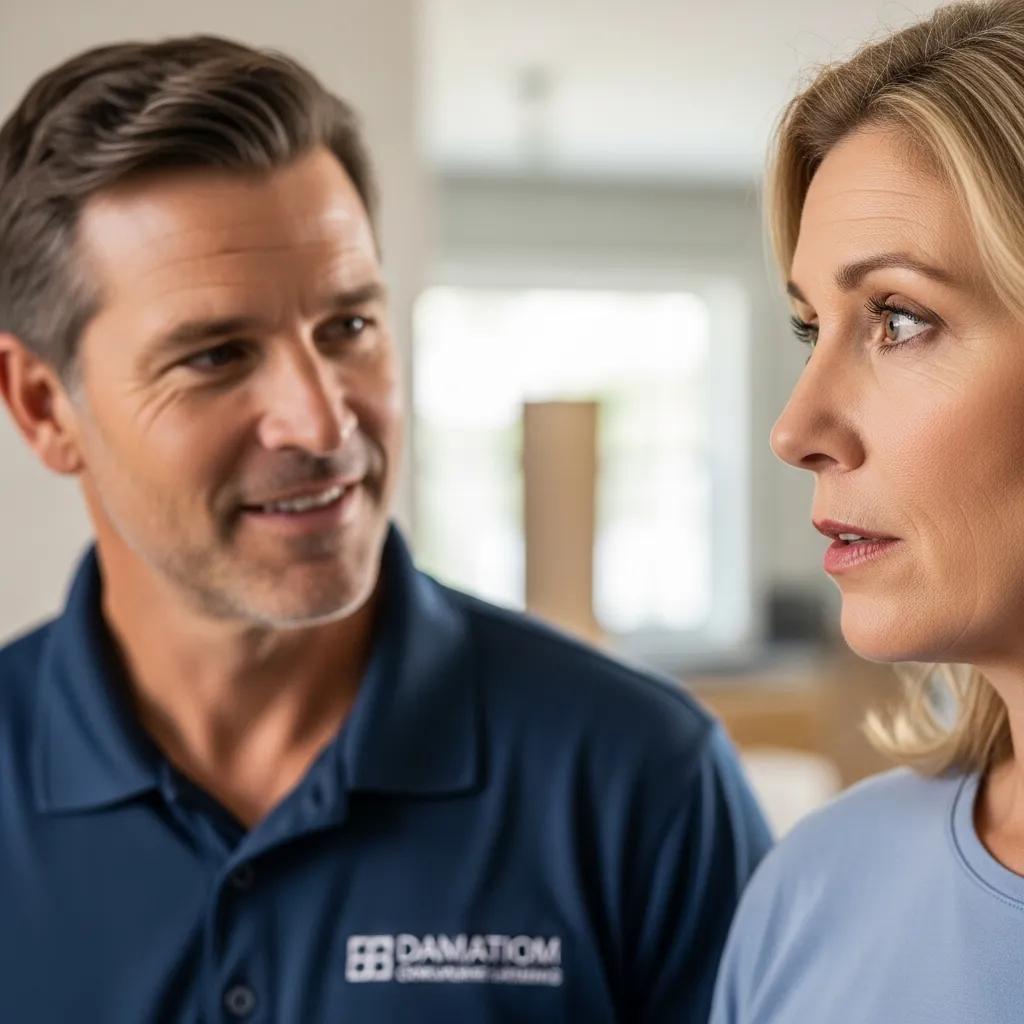
Facial expressions—smiles, tightened lips, furrowed brows—give fast emotional context to words and price anchors. A quick smile during benefit talk signals internal alignment you can reinforce with a micro-close; a tightened jaw or pursed lips during costs signals concern about value or budget. Micro-expressions, like a flash of surprise at a price, usually indicate price shock and call for a soft reframing—not an immediate discount. When you see negative facial cues, validate and offer choice questions to surface the real barrier without escalating resistance.
Short scripts to address common facial cues:
- Price shock (surprise expression): “I hear that—what part feels off right now: scope or timing?”
- Confusion (furrowed brow): “Would it help if I walk through the timeline one more time, step by step?”
- Concern (tight lips): “That’s valid—what would make you feel more comfortable with this plan?”
These lines let you convert facial evidence into diagnostic dialogue and prepare you to adjust posture and gestures to rebuild trust.
How Can Contractors Use Their Own Body Language to Build Sales Confidence?
Your body language sets a credibility baseline before your words land; posture, gestures, tone, and spacing tell homeowners whether you belong as the decision-maker in the room. Project authority while staying approachable to reduce the chance homeowners anchor to lowball competitors after price shock. Adopt a confident stance, controlled open gestures, and a steady vocal pace to communicate value—these habits make it easier to defend price without discounting. Start with small, repeatable habits you can practice between jobs—feet shoulder-width, open palms when describing scope, and slowing your pace at price points—to make pricing confidence consistent.
Practice checklist for contractor body language:
- Stance: feet shoulder-width, weight balanced, slightly forward to show engagement.
- Hand gestures: open palms, controlled motions that illustrate points without fidgeting.
- Vocal delivery: steady pacing, lower register when stating price, brief silence after the number to let it settle.
These habits boost perceived competence and invite homeowners to mirror and trust you—foundation work for mirroring and active listening techniques covered next.
What Posture and Gestures Project Authority and Openness?
Certain posture and gesture choices shape perceived competence: a grounded stance with relaxed shoulders projects authority; open palms and measured hand movements communicate transparency. Avoid closed postures—crossed arms, hands in pockets, or leaning too far forward—that create threat or desperation. In kitchen island or narrow hallway situations, angle your torso slightly toward decision-makers and avoid hovering; this respects personal space while maintaining leadership. A five-minute daily drill makes these adjustments automatic and keeps your nonverbal messages consistent with your verbal pitch.
Quick dos and don’ts for on-site posture:
- Do keep shoulders relaxed and hands visible.
- Do angle slightly toward both decision-makers when present.
- Don’t cross arms or step into personal boundaries when showing samples.
These posture choices support mirroring and active listening, deepen rapport, and lower price resistance.
How Does Mirroring and Active Listening Improve Client Rapport?
Mirroring subtle behaviors—matching vocal pace, head tilt, or energy level—signals empathy and helps create unconscious rapport when used ethically and sparingly. Combine mirroring with active listening cues like nods, brief verbal acknowledgments, and reflective summaries to validate homeowner concerns and reduce defensiveness. Mirror only after the homeowner sets a pattern; start small (match speaking speed or volume) and, if rapport builds, add gentle posture mirroring. Role-play common estimate scenes to make these moves natural; effective mirroring shortens the trust curve and makes price talks less adversarial.
Simple role-play script to practice:
- Contractor: “So you’re saying the timeline is the main worry—have I got that right?”
- Homeowner: [response]
- Contractor: “Okay, sounds like we need a plan that minimizes disruption; here are two options.”
This short script pairs mirroring with reflective listening to clarify priorities and lead smoothly toward closing steps.
What Are the Most Common Nonverbal Buying Signals from Homeowners?
Certain nonverbal behaviors reliably indicate purchase readiness: leaning in, handling samples, nodding while you talk, and asking timing or payment questions. When high-strength signals cluster—touching samples plus asking about start dates—you should move to a clear next step instead of offering more options. Watch for weaker signals too, like polite nodding without forward lean or partner-only interest, which need a confirmatory question before you close. Use the ranked list below to prioritize actions when multiple cues appear and decide when to test for commitment with a micro-close.
Top buying signals and recommended next steps:
- Leaning in while reviewing plans: propose a scheduling micro-close.
- Nodding consistently: summarize key benefits and ask a preference question.
- Handling samples or pointing at specs: offer a limited scheduling option.
- Asking about timing or deposits: move to firm the commitment with paperwork.
- Spouse/partner asking logistical questions: address both decision-makers and confirm a follow-up.
The table below ranks these buying signals by strength and suggests the best immediate closing action so you can prioritize when cues cluster.
| Buying signal | Strength level | Suggested closing step |
|---|---|---|
| Handling samples / touching materials | High | Offer a specific start date and next-step paperwork |
| Asking about timing or deposits | High | Present scheduling options and clear payment terms |
| Leaning forward and steady eye contact | Medium-High | Use a micro-close to confirm preferences |
| Nodding without follow-up questions | Medium | Ask a low-risk test question to confirm readiness |
| Partner-only engagement | Low-Medium | Bring partner into the summary and ask for their view |
This ranking helps you decide when to escalate to a close and turns nonverbal intent into concrete administrative steps that move the sale forward.
Which Physical Cues Indicate Readiness to Purchase?
Strong readiness cues include active interaction with materials, logistical questions, and statements about timing—signs the homeowner is mentally organizing the purchase. When you spot these, shift to administrative language: “Which week works best?” or “Would you prefer option A or B for the start date?” Framing the choice as scheduling, not price negotiation, removes psychological friction. Use short, direct micro-closes that assume the decision and give the homeowner an easy way to say yes—more effective than repeating benefits.
Micro-close examples for readiness cues:
- “There are openings next Tuesday or Thursday—which works better for you?”
- “Our crew can start the first week of the month; which date should I hold for you?”
These micro-closes convert buying signals into commitments without pressure and prepare you to handle follow-up objections.
How to Recognize Hesitation or Disinterest Through Body Language?
Hesitation often shows as mixed signals—polite nodding with closed posture, or verbal agreement while feet point to the exit. Disinterest shows in disengagement behaviors like checking a phone, avoiding eye contact, or watching the clock. When you detect hesitation, use low-threat diagnostic questions to surface the real barrier—budget, timing, spouse input, or trust. If cues point to clear disinterest, execute a graceful close or schedule a follow-up instead of pushing, preserving goodwill for future opportunities.
Scripts to surface hesitation without pressuring:
- “It seems like something’s holding you back—what’s the one thing I haven’t covered?”
- “Would it help if I put together a one-page summary for you to review with your partner?”
These approaches turn uncertainty into actionable next steps and set up a targeted follow-up or clearer path forward.
How Can Reading Body Language Help Handle Objections in Home Improvement Sales?
Defensive signals point to the likely underlying objection so you can tailor your response instead of guessing. Crossed arms, leaning away, or a tightened jaw typically map to price, timing, or credibility concerns; spotting them lets you use de-escalation language, mirror tone, and ask clarifying questions that reduce resistance. A cue→likely objection→script map is a quick on-site playbook: validate, probe, then reframe value with specifics. Use the table below as a practical objection-handling guide linking body language to exact phrasing and recovery steps.
Intro to defensive-cue table: translate what you see into the probable objection and the exact script to use for calm, diagnostic probing.
| Defensive cue | Probable underlying objection | Tactical script / response |
|---|---|---|
| Crossed arms, leaning back | Price or distrust | “I hear your concern about cost—what part feels like the biggest stretch?” |
| Avoided eye contact when price is mentioned | Price shock or embarrassment | “That number landed a bit strong—would it help if I break the costs into phases?” |
| Partner whispering or looking to each other | Need for joint decision or spouse objection | “Would it help if I left a one-page summary for you both and scheduled a short follow-up?” |
This cue-to-script mapping cuts guesswork and gives you precise language to de-escalate, surface root causes, and reframe value in ways that protect price.
What Defensive Cues Should Contractors Look For?
The most common defensive cues are crossed arms, leaning away, tightened jaw, and partner-only engagement—each usually points to price, timing, or credibility concerns. Spot the cue quickly and ask a low-threat diagnostic question that invites the homeowner to name the objection in their own words. Avoid rebuttals; validate the feeling and offer specific solutions like payment options, phased scopes, or references that address credibility. These steps let you protect margin by fixing the real problem instead of conceding on price.
Diagnostic questions that work in defensive situations:
- “Help me understand—what’s the biggest thing stopping you right now?”
- “Is this a timeline issue or a budget issue we should solve with options?”
- “Would seeing a quick reference from similar projects help you feel more comfortable?”
These questions surface the objection and lead naturally into adaptive pitch adjustments described next.
How to Adapt Your Sales Pitch Based on Nonverbal Feedback?
Adjust pitch pace, detail, and framing based on whether signals are positive, mixed, or defensive: speed up and simplify when homeowners look impatient, slow down and add detail when they look confused, and reframe benefits when they show price resistance. Use a simple decision checklist—simplify, add evidence, or offer options—so your on-site changes are fast and consistent. Swap technical detail for outcome-focused language when homeowners are visually overwhelmed, or present phased scopes when budget defensiveness appears. These adaptations keep the conversation client-centered and increase the chance of closing without dropping price.
Adaptive pitch checklist:
- Positive signals: use concise administrative micro-closes.
- Mixed signals: confirm the priority and offer two options (phased vs. full).
- Defensive signals: validate, probe, then reframe with social proof or phased pricing.
Turning nonverbal feedback into a live decision tree lets you preserve price while moving toward commitment.
How Does Nonverbal Communication Build Trust and Rapport with Homeowners?
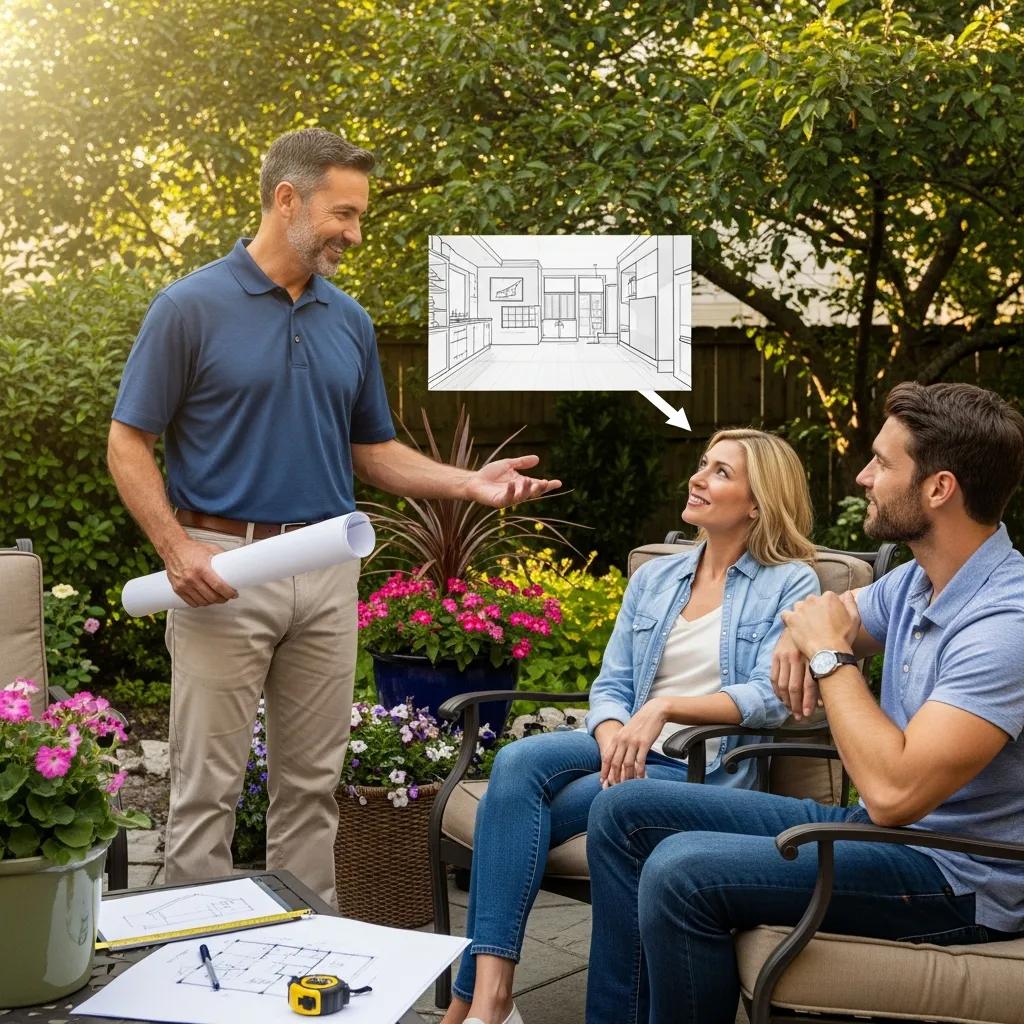
Consistent, congruent nonverbal signals—steady posture, calibrated tone, and respectful proxemics—create an implicit trust currency that lowers homeowner anxiety during big decisions. Trust builds over the appointment when your gestures, tone, and positioning reinforce what you say about timelines, guarantees, and workmanship. Respect personal space, mirror partner dynamics, and keep team body language aligned (if a crew member is present) to show professionalism and reduce buyer friction. These practices make it easier for homeowners to move from consideration to commitment because trust lowers perceived risk and supports your pricing position.
Practical trust-building checklist:
- Consistency: match verbal claims with steady posture and measured tone.
- Proxemics: maintain comfortable distance; don’t crowd samples or decision-makers.
- Team alignment: ensure crew members use the same nonverbal cues to reinforce credibility.
Consistent nonverbal messaging primes the conversation for validating emotions and the empathy techniques that follow.
What Body Language Shows Empathy and Understanding?
Empathy pairs a softer vocal tone, nodding, reflective statements, and a slight forward lean that signals engagement without pressure. Use short validating phrases—“I understand,” “That makes sense”—with a gentle head tilt and steady eye contact to show you heard the homeowner’s concern. Mirror emotional tone (not facial expressions) to connect during sensitive talks about budget or past contractor issues. Practice paired examples and short drills so you can show empathy without losing authority—strengthening rapport and your ability to defend price.
Examples to practice:
- Emotional concern: “I hear why that worries you—here’s how we handle it.”
- Budget anxiety: “That’s understandable; let’s look at phased options that meet your priorities.”li>
- Schedule stress: “We can outline a plan that minimizes disruption; which days are off-limits?”
These verbal and nonverbal combos validate homeowners and open space for constructive negotiation.
How to Create a Comfortable Sales Environment Using Personal Space and Positioning?
Managing proxemics on a home visit means standing at an angle instead of directly face-to-face, placing samples within reach without crowding, and giving space to couples or family members who need to consult. Respecting personal space reduces defensiveness and lets homeowners feel control while you lead the appointment. If multiple decision-makers are present, position yourself equidistantly and direct visuals where everyone can see them so no one feels excluded. These positioning habits cut friction and support collaborative decision-making, which makes closing easier.
Dos and don’ts for positioning:
- Do stand slightly off-center so homeowners feel less confronted.
- Do place samples on a surface everyone can reach.
- Don’t hover over partners or block sightlines to plans.
Good proxemics sets up the next step: where to learn more and how to keep improving these skills.
Where Can Contractors Learn More About Mastering Body Language in Home Improvement Sales?
We create sales training that attracts home improvement companies and pros—contractors and subcontractors—who want repeatable on-site skills. If you want to move from awareness to practiced ability, follow a structured path combining group training, applied psychology modules, and hands-on coaching. Start with free foundational resources that introduce core concepts, then move to mastery programs that focus on client psychology, objection handling, and defending price without dropping it. For personalized practice, one-on-one consultations offer role-play, real-time feedback, and tailored scripts you can use on the next estimate.
Program overview and low-friction next steps:
- Tier 1: Foundation (free): introductory materials and basics for immediate application.
- Tier 2: Mastery ($149/month or $1,788/year): deeper training on client psychology, objection mastery, and communication techniques to defend price.
- Tier 3: Ownership ($250/month): advanced implementation and business-model alignment.
- 1-on-1 consultations: personalized coaching for role-play and script customization.
These options move contractors from learning to applied competence; Tier 2 emphasizes field-tested tactics and objection mastery that protect margin and raise closing confidence. Membership perks commonly include a peer community, practical templates, and risk-reducing guarantees.
What Does the Tier 2: Mastery Program Teach About Client Psychology and Body Language?
Tier 2: Mastery focuses on turning client psychology into on-site behaviors: spotting buying signals, defending price with confidence, and handling complex objections without discounting. The curriculum centers on applied tactics—reading couples, responding to price shock, and building trust with consistent nonverbal messaging—so you walk away with scripts and drills, not just theory. The program emphasizes practice, objection-handling frameworks, and peer feedback to make outcomes predictable. Pricing and enrollment details are clear, and the program is designed to shift contractors from awareness to confident execution.
Key Tier 2 outcomes:
- Client psychology frameworks to diagnose underlying objections.
- Applied body language drills to make nonverbal skills automatic.
- Objection mastery methods to defend price without discounting.
These outcomes help contractors scale the skills in this article with measurable improvements in close rates.
How Can 1-on-1 Consultations Enhance Your Nonverbal Sales Skills?
One-on-one consultations deliver focused role-play, immediate feedback on posture and phrasing, and scripts tailored to your common job scenarios—compressing trial-and-error into targeted practice. In one micro-case, a contractor who practiced price-anchor delivery and received real-time corrections closed higher-margin work within weeks because adjustments were rehearsed under pressure. Expect sessions that diagnose your common cues, refine micro-closes, and leave you with a rehearsal plan to use on estimates that week. Personalized coaching accelerates the path from insight to higher conversions and pricing confidence.
What to expect from a consultation:
- Real-time role-play and critique on body language and scripts.
- A tailored action plan with micro-closes and phrasing for your market.
- Faster application: practice drills you can use immediately on the job.
For contractors committed to measurable improvement, focused coaching often delivers the fastest route from insight to better close rates and stronger pricing.
Frequently Asked Questions
1. How can I practice reading body language effectively?
Practice by observing real interactions—at cafés, job sites, or meetings—and note eye contact, posture, and gestures. Role-play estimate scenes with colleagues or friends and record sessions to review later. Use short drills: watch a two-minute clip and list the cues you see, then compare notes. Complement practice with books or online courses that focus on body language in sales to deepen your skills.
2. What should I do if I notice defensive body language from a homeowner?
If you see defensive signals—crossed arms, leaning away—stay calm. Validate the feeling with a soft tone, ask an open question, and invite the homeowner to explain. Example: “I sense there’s a concern—can you tell me what’s on your mind?” That approach opens conversation and helps you address the real issue without escalating tension.
3. How can I improve my own body language during sales presentations?
Work on confident posture, steady eye contact, and open gestures. Stand with feet shoulder-width apart, keep shoulders relaxed, and use controlled hand motions to emphasize points. Practice vocal delivery—clear, steady pace—and record yourself to spot habits you can tighten. Regular rehearsals make these behaviors feel natural on the job.
4. What role does personal space play in home improvement sales?
Personal space affects comfort and trust. Standing too close can feel pushy; keeping an appropriate distance helps homeowners stay relaxed. Angle your body slightly instead of facing someone head-on, and make sure everyone can see samples and plans without feeling crowded. Respecting space fosters collaboration and smoother decision-making.
5. How can I use mirroring effectively in sales conversations?
Use mirroring subtly and ethically: match vocal tone or speaking speed, nod when the homeowner speaks, and mirror small posture cues if rapport is building. Don’t mimic every move—that feels fake. Focus on key behaviors that signal connection to build trust and make the homeowner feel understood.
6. What are some common mistakes to avoid when interpreting body language?
Don’t jump to conclusions from a single cue or ignore context. For example, crossed arms could mean cold, not defense. Always look for clusters of signals and consider the situation before acting. Avoid projecting your own emotions onto the homeowner; instead, let the evidence guide a diagnostic question.
7. How can I handle objections that arise from body language cues?
When cues suggest an objection—tightened jaw or avoided eye contact—address it proactively. Acknowledge the feeling, ask an open question to uncover specifics, then respond with targeted options. Example: “I noticed you seemed unsure when I mentioned price—what would help clarify that for you?” This shows empathy and opens a path to resolve the issue.
Conclusion
Getting body language right in home improvement sales gives you a practical edge: better reads on homeowner intent, faster objection resolution, and higher close rates. By translating nonverbal cues into diagnostic questions, micro-closes, and on-site adjustments, you protect margin and shorten decision cycles. Ready to level up? Explore our training programs to turn these tactics into repeatable skills—start applying them on your next estimate and watch your results improve.