

How to Sell Sustainable Upgrades: Practical Sales Strategies for Green Building and Eco-Friendly Home Improvements

Sustainable practices in home improvement are concrete changes to materials, systems, and sales approach that cut environmental impact while adding homeowner value and long-term savings. This guide shows contractors how to pair proven green building tactics with field-tested sales moves so eco-friendly upgrades are simple to present and easier to close. Many crews struggle to turn technical benefits into short, persuasive pitches; here you’ll find ways to quantify ROI, answer common objections, and position green options as practical, premium choices homeowners will accept. Read on to learn what buyers care about, which upgrades pay back fastest, how to adapt your sales process for green projects, and marketing and on-site tools your team can use immediately. By the end you’ll have repeatable language, scripts, and estimation patterns to sell energy‑efficient HVAC, high‑performance windows, low‑VOC finishes, and other green upgrades with confidence.
Why Should Contractors Adopt Sustainable Construction Sales Practices?
Selling sustainable construction is a business move that aligns homeowner priorities—lower energy bills, better indoor air, longer-lasting builds—with higher contract values and market differentiation. Homeowners increasingly care about operating costs and health, and contractors who can show measurable outcomes win more deals. Market tailwinds (growing demand and available incentives) give contractors a timely reason to lead with sustainability. Adding these sales techniques also builds lasting advantages through referrals and higher‑margin packages. The next section breaks down the core homeowner and contractor benefits that make green selling a smart strategy.
What Are the Key Benefits of Selling Green Building Solutions?
Green upgrades deliver clear homeowner benefits and tangible business gains you can say in plain language. Homeowners get lower utility bills, healthier indoor air, and better resale prospects. Contractors win higher average order values, new referral sources, and stronger brand positioning. Present these points with numbers and simple examples to move skeptical buyers into real conversations—pairing savings and health benefits appeals to both budget‑minded and wellness‑focused clients. Use the list below during discovery to frame the opportunity quickly.
- Market Demand: Growing interest in energy savings and healthy homes expands your pool of qualified leads.
- Financial Value: Measurable utility savings and incentives shorten payback and support premium pricing.
- Differentiation: Sustainable offerings position your company as a specialist, not a commodity.
- Reputation: Health and durability claims backed by certifications drive referrals and trust.
These points prepare you to present sustainable options as both sensible and premium, and lead into specific differentiators you can use against traditional offerings.
How Does Sustainable Selling Differentiate Your Business in a Competitive Market?
Differentiation comes from packaging eco upgrades as clear, trustable choices—not vague “green” ideas. Translate certifications and performance into homeowner outcomes such as lower bills, fewer repairs, and better comfort. Use side‑by‑side comparisons to show lifecycle cost and performance benefits, then offer a straightforward purchasing path. Short testimonials, before/after numbers, and visible certification badges reinforce your claims without heavy jargon. The checklist below gives simple positioning moves to make sustainability your competitive advantage.
- Lead with outcome language: “lower monthly energy bills,” “health‑focused finishes.”
- Offer tiered packages—standard, enhanced, premium—so clients see clear value steps.
- Show certification badges and a one‑line resale impact in proposals to justify the investment.
Making sustainability tangible helps buyers decide—and points the sales conversation toward the specific upgrades that deliver the most impact.
What Are the Most Impactful Sustainable Practices to Implement in Your Business?
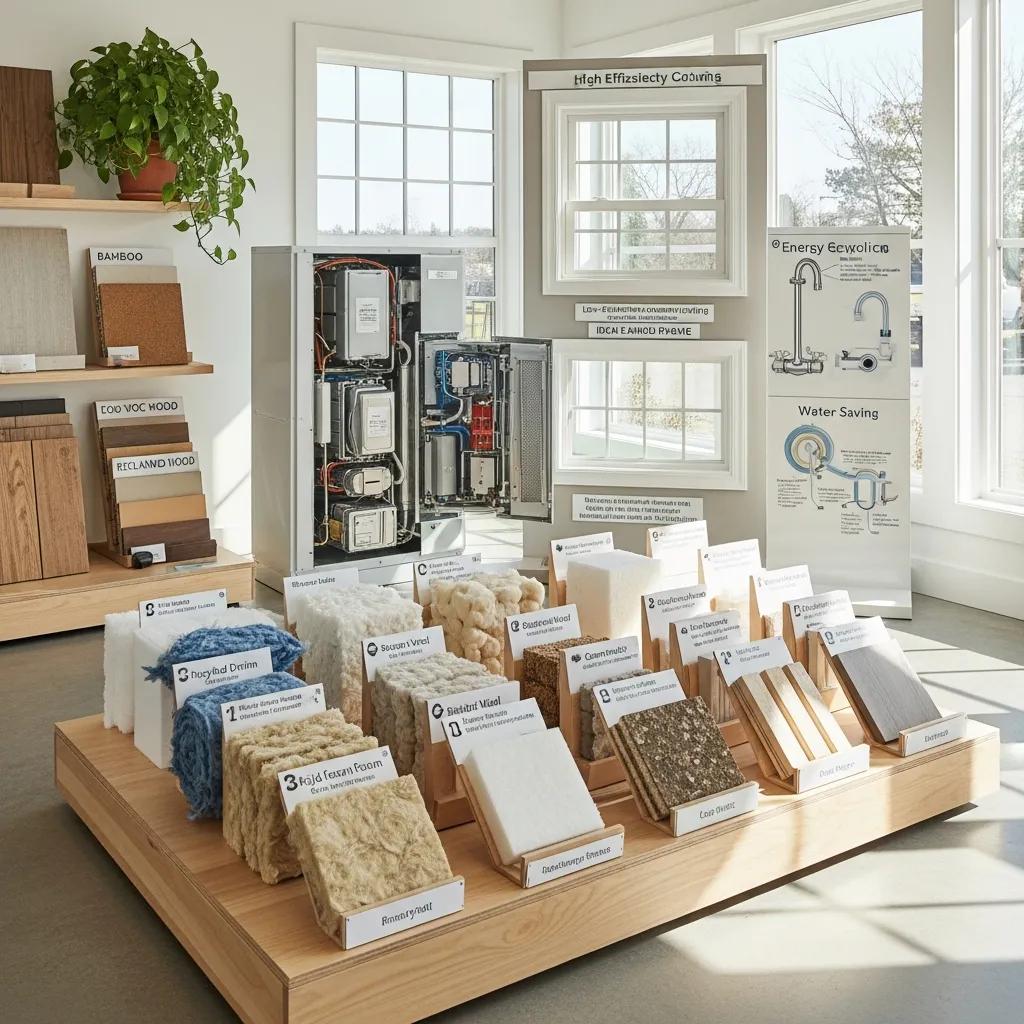
The most effective sustainable practices balance homeowner appeal, measurable savings, and reasonable payback. Common high‑impact upgrades include insulation and air sealing, high‑efficiency HVAC, solar‑ready systems, and premium windows. These upgrades create quantifiable benefits you can promise and prove, and prioritizing by payback and customer interest focuses your team on projects that close more often and produce stronger testimonials. Use the comparison table below to guide on‑site conversations about upfront cost, typical payback, and the main selling points.
| Upgrade | Typical Upfront Cost | Typical Payback (years) | Energy/Value Impact |
|---|---|---|---|
| Insulation & Air Sealing | Moderate | 3–7 | Lowers heating/cooling bills 10–30% |
| High-Efficiency HVAC | High | 5–9 | Improves comfort, cuts energy use 15–40% |
| Energy-Efficient Windows | High | 7–12 | Reduces heat loss, improves comfort |
| Solar PV (rooftop) | High | 6–12 (after incentives) | Offsets electricity bills, potential income |
| Low-VOC Finishes & Materials | Low–Moderate | <5 (health value) | Improves indoor air quality, marketable health benefit |
Use this quick reference to match upgrades to homeowner priorities and to set up selling angles and scripts discussed below.
Which Eco-Friendly Materials Should Sales Professionals Promote?
Promote materials that combine health benefits, durability, and clear warranty or lifecycle advantages—low‑VOC paints, FSC‑certified wood, recycled‑content products, and durable composites. These products sell because they lower maintenance and indoor pollutants and often carry recognizable labels that build trust. When you present materials, use a one‑line benefit—e.g., “low‑VOC paint reduces off‑gassing for healthier indoor air”—and back it up with warranty or maintenance points. Offer customers a choice set—value, enhanced, premium—so they can weigh upfront cost against long‑term comfort and resale value.
- Low‑VOC paint: quick install, health‑focused benefit.
- FSC‑certified wood: responsible sourcing with long‑term durability.
- Recycled‑content decking: lower lifecycle impact with strong looks.
Framing materials this way naturally leads into energy upgrades, which often close faster when paired with clear payback examples.
How Can Energy-Efficient Upgrades Be Effectively Sold to Clients?
Sell energy upgrades with a simple three‑step pattern: short‑term savings estimate, incentives and rebates, then long‑term value (comfort and resale). Start on site with a plain estimate: “This insulation job typically cuts your heating bill by X%, saving about $Y a year.” Layer in incentives and tax credits to shrink the net cost, then highlight comfort, noise reduction, and warranty coverage to lower perceived risk. Use a compact numeric example to anchor the claim and invite a decision.
- Estimate immediate annual savings in dollars and percentages.
- Show available incentives that reduce net cost and shorten payback.
- Emphasize cumulative 5–10 year savings and improved resale potential.
A clear numeric frame makes it easier for homeowners to choose sustainable options and trains your team to communicate ROI on the spot.
How Can the RPC Framework Be Adapted for Sustainable Home Improvement Sales?
The RPC framework—Rapport, Professionalism, Close—maps cleanly to green sales. Rapport uncovers homeowner motivations, Professionalism communicates credible evidence and certifications, and Close reframes cost as an investment with a clear payback. Applied consistently, RPC gives your team a repeatable path to introduce sustainable upgrades confidently. The table below matches each RPC step to practical sales actions and sample lines your field teams can use.
| RPC Step | Sales Action for Sustainability | Example Script / Outcome |
|---|---|---|
| Rapport | Ask discovery questions about priorities | "What matters most—lower bills, comfort, or healthier air?" |
| Professionalism | Translate certifications and data into homeowner benefits | "This Energy Star system typically cuts energy use by X% and includes a Y‑year warranty." |
| Close | Use assumptive or ROI closes tied to payback | "If we show a 6‑year payback after rebates, would you rather do the upgrade now or in three months?" |
How to Build Rapport Around Environmental Values with Clients?
Start with open discovery questions that surface priorities—cost, comfort, health, or long‑term plans—and reflect those priorities back in plain language. Ask about past energy bills, allergies, or renovation goals. Mirror the homeowner’s language ("Sounds like cutting bills is your top priority") to show alignment and reduce defensiveness. If cost comes up, pivot to phased options or financing. These moves set the stage for a professional, evidence‑based presentation.
- Ask targeted discovery questions about bills, comfort, and health.
- Mirror client language to confirm priorities and build trust.
- Offer phased or modular solutions when budget is the main concern.
These rapport techniques prepare you to present certifications and evidence clearly, which builds professional credibility.
What Professional Techniques Showcase Expertise in Green Building Certifications?
Show expertise by translating certification claims into homeowner benefits, using plain‑language explanations, and displaying concise proof points in proposals. Explain LEED or Energy Star as “verified efficiency that typically saves X%” rather than reciting technical criteria. Use short case examples or analogies to make the value tangible and avoid acronyms without translation. Add a one‑line certification summary on proposals so clients quickly grasp the advantage—this clarity increases trust and supports premium pricing.
- Convert certification claims into homeowner‑centric benefits.
- Keep explanations under two sentences and avoid unexplained acronyms.
- Include certification highlights as one‑line bullets in proposals.
Plain, credible professionalism flows naturally into confident closing techniques for sustainable renovations.
How to Confidently Close Sales on Sustainable Renovations?
Use three adaptable close templates: assumptive, options, and ROI‑based—each reframes cost as an investment and lowers perceived risk. The assumptive close moves forward as if the upgrade is chosen ("We’ll schedule installation for next month unless you prefer a later date"). The options close gives two positive choices where the sustainable package is the recommended pick. The ROI close ties the decision to payback and incentives. Combine closing language with guarantees, maintenance plans, and client references to reduce friction and respect homeowners’ preference for low‑pressure decisions.
- Assumptive: Use scheduling language that assumes a positive decision.
- Options: Present two packages with the sustainable option recommended.
- ROI‑based: Show clear payback and cumulative savings over 5–10 years.
These templates help move conversations from interest to commitment while keeping the approach homeowner‑friendly.
After mapping RPC to sustainable selling, consider next steps for training and field practice. Home Improvement Closer offers a structured, three‑tier online training program for contractors: a free Tier 1 Foundation course that covers core principles, Tier 2 Mastery at $149 per month for deeper skills and ready‑to‑use templates, and Tier 3 Ownership at $250 per month for advanced coaching and implementation. The program centers on the RPC Framework and includes community access, one‑on‑one consultations, and a 60‑day money‑back guarantee on paid tiers—helping teams practice scripts and close more green projects consistently.
How Do You Communicate the ROI of Sustainable Renovations to Clients?
Communicate ROI by combining estimated utility savings, available incentives, and likely resale uplift into a concise statement a homeowner can grasp in under two minutes. The approach is straightforward: show annual savings, apply rebates or tax credits, then present 5–10 year cumulative savings to illustrate value beyond the sticker price. A quick formula contractors use is: Annual Utility Savings + Incentives + Resale Uplift = Total 5‑Year Benefit; divide that by net cost to show payback years. Training sellers to run this calculation on site improves conversion because homeowners see the investment logic immediately. The table below is a handy reference for on‑the‑job proposals.
This table compares typical homeowner financial benefits for common upgrades and shows how to present them clearly.
| Upgrade | Estimated Yearly Savings | Typical Incentives/Tax Credits | Effect on Resale Value |
|---|---|---|---|
| Insulation | $200–$600 | State rebates, utility programs | Improves comfort, modest uplift |
| High-Efficiency HVAC | $300–$800 | Utility rebates, tax credits | Notable buyer appeal, higher comfort |
| Windows | $150–$500 | Manufacturer rebates | Visible curb/comfort benefit |
| Solar PV | $600–$2,000+ | Federal/state credits | Strong resale differentiation |
Use this comparison to create quick on‑site ROI statements and to answer follow‑up questions about incentives and verification.
What Financial Advantages Should Contractors Highlight for Eco-Friendly Upgrades?
Highlight the most persuasive financial points for homeowners: predictable monthly savings, lower maintenance costs, available rebates that reduce net outlay, and resale value improvements. Present annual and 5–10 year cumulative savings in dollar amounts rather than just percentages so the benefit feels tangible. Show how incentives are applied in your proposal and be ready to point clients to verification sources. Stress durability and reduced upkeep as recurring cost avoidance—often more meaningful to buyers than raw energy numbers.
- Show annual dollar savings, not only percentages.
- Include incentives and display net cost after rebates.
- Explain maintenance savings and warranty coverage.
Framing value in concrete terms reduces price resistance and sets up the objection responses below.
How to Overcome Common Client Objections to Sustainable Home Improvements?
Typical objections are high upfront cost, installation disruption, and doubt about actual savings. Counter these with short, evidence‑based replies that use numbers, phased options, and verifiable guarantees. Keep an objection‑response matrix handy that pairs common objections with a one‑line script and supporting proof such as payback figures or warranty terms. When cost is the main objection, propose phased upgrades or financing tied to expected savings. Use short case examples of clients who achieved the stated payback to build credibility without overpromising.
- Objection: "It's too expensive." Response: Show net cost after incentives and 5‑year savings.
- Objection: "Won't it be disruptive?" Response: Explain phased installation options and realistic timelines.
- Objection: "How do I know it will save money?" Response: Provide a concise case example and warranty details.
These responses help field teams keep conversations focused on value instead of price alone.
After covering ROI and objections, the next practical step is training. Short, focused modules teach ROI scripts, templates, and calculators so sellers can practice and apply them on real estimates. The Home Improvement Closer training path—Tier 1 Foundation (FREE), Tier 2 Mastery ($149/mo), and Tier 3 Ownership ($250/mo)—offers escalating access to templates, community feedback, and one‑on‑one coaching, with a 60‑day money‑back guarantee on paid tiers to lower adoption risk.
What Marketing Strategies Attract Clients Interested in Sustainable Home Improvements?

Attract eco‑minded homeowners with a mix of trust signals (certs and testimonials), practical lead magnets (ROI calculators, case studies), and targeted channels like SEO and short video testimonials. Effective marketing answers buyer intent—people search for savings, health benefits, or certifications—so content that responds to those queries wins clicks and leads. Build a sustainable‑sales hub with cluster pages that explain common upgrades, show ROI examples, and include short FAQs to capture organic traffic and nurture leads. The following sections show how to use certifications and testimonials and where to focus channels.
How to Leverage Green Building Certifications and Testimonials in Marketing?
Place certification badges and brief testimonial snippets where they’re visible—landing pages, proposals, and CTAs—and always add a one‑line benefit explaining what the certification means for the homeowner. For example: “Energy Star systems typically reduce electricity use by X%.” Use testimonials that emphasize measurable results—dollar savings, comfort, fewer allergies—and add before/after photos where possible. Keep the language outcome‑focused and approachable to avoid sounding technical.
- Place badges near calls‑to‑action with a one‑line explanation.
- Use testimonial snippets that highlight measurable outcomes.
- Support claims with before/after images and clear metrics.
These elements raise credibility and improve conversion when combined with targeted outreach.
Which Digital Channels Best Showcase Your Sustainable Sales Expertise?
Prioritize website hub pages and SEO content, short video testimonials, and targeted paid search for high‑intent retrofit and energy queries. Interactive tools—simple ROI calculators and one‑page cheat sheets—make strong lead magnets. Track channel performance by leads, demo requests, and conversion to consultations, and iterate creative based on those signals. Pair organic content with strategic paid placements to keep visibility steady while videos and calculators provide the social proof and interactivity that convert cautious homeowners.
- Website hub pages + SEO articles for discovery and organic leads.
- Short video testimonials and case vignettes for social proof.
- Paid search targeting retrofit and energy‑efficiency queries for immediate demand capture.
Testing the right channel mix and measuring results builds a predictable pipeline for sustainable service offers.
What Are the Emerging Trends and Technologies in Sustainable Construction Sales?
Emerging trends—prefab, BIM and digital twins, energy‑smart systems, and integrated measurement tools—are changing how contractors sell sustainable projects by making performance visible and verifiable. These tools convert abstract metrics into visual demos and concrete estimates homeowners understand. Adopting them shortens decision cycles because buyers can see projected savings and comfort improvements before committing. Offering tech‑enabled services lets you capture higher‑value work and stand out from competitors who rely on generic claims.
How Are Advanced Technologies Shaping Sustainable Home Improvement Sales?
Technologies like BIM, digital twins, and interactive savings calculators let sales teams present realistic simulations of savings and lifecycle costs, boosting buyer confidence. A tablet demo on site that estimates monthly savings after an insulation upgrade turns abstract benefits into something the homeowner can picture. Partnering with tech vendors for visualizations and measurement tools enhances proposals and positions your team as capable and modern—present tech as a value‑add, not a cost, to avoid overwhelming clients.
- Use visual simulations to show savings and comfort improvements.
- Integrate simple calculators into proposals for immediate ROI estimates.
- Partner with suppliers to offer bundled tech‑enabled services.
These tech approaches feed directly into training and field execution.
Why Is Specialized Training in Sustainable Sales Critical for Contractors?
Specialized training closes the gap between technical know‑how and sales effectiveness. It teaches crews to translate engineering outcomes into homeowner benefits, run quick ROI estimates, and handle green‑specific objections. Most traditional programs focus on installation and not on scripts, objection matrices, or field‑ready calculators salespeople need. Structured training that combines framework mapping, scripts, and practice produces measurable lifts in green project wins, higher average ticket sizes, and more confident sales teams. The skills learned also apply to other high‑value upgrades, creating a multiplier effect.
- Teaches ROI communication, certification literacy, and closing for green deals.
- Provides templates and on‑site estimation tools for faster decisions.
- Delivers measurable lifts in green project conversion and average order value.
Home Improvement Closer’s three‑tier program—Tier 1 Foundation (FREE), Tier 2 Mastery ($149/mo), and Tier 3 Ownership ($250/mo)—is built to teach the RPC Framework, field‑ready ROI scripts, and objection handling with community support and one‑on‑one consultations; paid tiers include a 60‑day money‑back guarantee to reduce risk and speed adoption.
Combining practical sustainable practices with repeatable sales methods turns interest into closed projects and long‑term differentiation for your business.
Research shows homeowners are more likely to act when upgrade messaging highlights clear, specific benefits—bill savings, comfort gains, and reduced environmental impact—rather than vague calls to action.
Homeowner Engagement in Green Renovations: Information Needs and Process Improvement
Green home renovation is a socio‑technical process involving homeowners and professionals. People undertaking a green renovation often face unfamiliar terms and mixed information from different sources, which can reduce engagement and satisfaction. This paper outlines homeowner information needs based on seven interviews and recommends ways to improve the renovation process so homeowners are more satisfied and green features are used effectively. It also suggests creating systems that let homeowners contribute to the knowledge base around green renovations and proposes an ICT platform model to address these needs.
Homeowners as Engaged Participants: Determining information needs to maximize the environmental benefit of green renovations, S Easterbrook, 2016
Tailoring messages to individual homeowner motivations significantly increases adoption rates for energy efficiency upgrades.
Message Framing for Home Energy Efficiency Upgrades: Influencing Homeowner Decisions
This study shows that how upgrade options are framed affects homeowner decisions: messages that spell out concrete benefits—bill savings, comfort, environmental impact—prompt more action than generic appeals. Tailoring the message to match a homeowner’s priorities is key to boosting uptake of energy efficiency measures.
Message framing for home energy efficiency upgrades, R Sussman, 2018
Using home inspections at the time of sale is a practical touchpoint to promote energy upgrades to new buyers.
Promoting Energy Upgrades Through Home Inspections at Time-of-Sale
Homebuyers of existing homes typically spend about $4,100 more on improvements, yet home inspections usually focus on defects rather than upgrade opportunities. Leveraging inspections at time‑of‑sale to include actionable energy upgrade recommendations can turn transactions into catalysts for efficiency improvements, increasing home performance and owner value.
Really selling efficiency: Leveraging existing home inspections at time-of-sale to promote energy upgrades, 2018
Frequently Asked Questions
What are the best ways to market sustainable home improvement services?
Use a mix of educational content, trust signals, and targeted outreach. Publish clear articles and case studies that answer homeowner questions about savings and health benefits, optimize for search, and offer lead magnets like ROI calculators or one‑page guides. Show certifications and short testimonials on landing pages, share video case studies on social platforms, and run targeted ads for high‑intent queries. Hosting short workshops or webinars can also bring in motivated local leads.
How can contractors stay updated on sustainable building trends?
Stay current by subscribing to industry publications, attending trade shows, joining relevant professional groups, and taking focused online courses and certifications. Webinars and supplier training can introduce new products and tools quickly. Participate in industry forums and local networking to share what’s working and learn from peers.
What financing options are available for homeowners considering eco-friendly upgrades?
Homeowners can access several financing paths: local and federal low‑interest loans or grants for energy upgrades, utility rebates, manufacturer incentives, personal loans, or home equity lines for larger projects. Property Assessed Clean Energy (PACE) financing is another option in some areas—allowing repayment through property taxes to spread cost over time. Always point clients to verified programs in their state to show real net costs.
How can contractors effectively handle client objections regarding sustainable upgrades?
Start by listening and validating concerns, then respond with short, evidence‑based answers: show net cost after incentives, explain phased installation options to reduce disruption, and provide case examples with realistic payback timelines. Emphasize warranty and maintenance advantages and offer financing when upfront cost is the barrier. Testimonials from similar homeowners also help turn doubt into action.
What role do certifications play in selling sustainable home improvements?
Certifications are credibility shortcuts—visible proof that a product or system meets defined standards. Display badges and add a one‑line explanation of what they mean for the homeowner (e.g., lower energy use, verified performance). Use certifications to justify premium pricing and to anchor claims about savings and health benefits.
How can technology enhance the sales process for sustainable renovations?
Technology makes abstract benefits tangible: BIM, digital twins, and interactive calculators let homeowners visualize savings and comfort gains. Tablet demos and simple on‑site calculators help produce immediate ROI estimates. CRMs keep follow‑ups organized so no lead falls through. Use tech selectively as a value add—not as a barrier that overwhelms clients.
Conclusion
Adding sustainable practices to your services strengthens your market position and meets growing homeowner demand for savings and healthier homes. When you communicate clear financial and health benefits, package options simply, and train your team to use ROI language and scripts, you’ll close more green projects and create lasting differentiation. Start applying these techniques today—and consider our training program to accelerate adoption and field performance.