

Proactive Sales Objection Handling: Stop Objections Before They Start — Practical Sales Strategies for Home Improvement Contractors
Homeowners raise predictable concerns during remodeling conversations. Proactive objection handling means surfacing those concerns early and neutralizing them before they derail the sale. This guide shows contractors how to anticipate common objections, use pre-framing to set expectations, and apply repeatable tactics you can practice and measure. You’ll get the most common objection types, scripts for pricing and timing conversations, a clear run-through of the RPC Framework (Rapport, Professionalism, Close), and pricing approaches that protect premium proposals without resorting to discounts. Each section includes sample scripts, diagnostic questions, short role-play prompts, and mapping tables that link homeowner language to proactive responses — ready for field use on mobile or desktop. Read on for step-by-step pre-framing workflows and practical training actions to lift close rates and defend margins.
The Most Common Sales Objections Contractors Face
Most objections fall into repeatable buckets tied to homeowner psychology, timing, or social influence rather than a single vendor mistake. Spotting the underlying cause lets you pre-frame answers that remove resistance. Price pushback, timing delays, partner deferrals, competitor comparisons, doubts about quality, and “I need to think” stalls make up the bulk of stalled appointments — and they’re often symptoms of unmet expectations. Anticipating these concerns shifts conversations away from reactive discounting and toward consultative problem solving that preserves value. Below is a quick list of common objections with one-line tactics to head them off.
- Price: “That’s too expensive.” Anchor value and present tiered options before you quote.
- Timing: “We’ll do it later.” Use consequence questions to make the cost of delay concrete.
- Think-about-it: “I need to think.” Agree decision criteria and a short next step while you’re still there.
- Spouse/partner: “My partner needs to see this.” Invite decision-makers early or set a joint review appointment.
- Competitor bid: “We have a cheaper quote.” Differentiate on scope, materials, and warranty — not just price.
- Quality/reputation: “How do I know you’ll do it right?” Lead with relevant proof and clear process signals.
This quick mapping pairs homeowner phrases with a short proactive tactic that keeps the meeting moving toward a close.
| Objection Type | Typical Homeowner Language | Proactive Response / Pre-framing Tactic |
|---|---|---|
| Price | "It's more than I expected." | Share tiers and lifecycle value before giving a single number; offer clear options. |
| Timing | "We want to wait until next year." | Ask a consequence question to surface cost or risk from delaying. |
| Think-about-it | "I need to think about it." | Clarify decision criteria and set a specific, short follow-up. |
Use this table to translate common homeowner phrasing into targeted pre-framing moves you can use during discovery. The sections that follow unpack price signals and how timing, partner involvement, and competitor bids affect the sale.
Which Price Objections Do Contractors Face and How Can They Be Identified?
Price resistance appears directly — “that’s too expensive” — or indirectly through comparison questions, pauses when you quote, or requests to cut scope. To test whether price is the real blocker, ask isolation questions like, "If price weren’t an issue, what would stop this project?" or "Which part of this proposal feels off to you?" Those questions clarify whether the barrier is cost, timing, or perceived value. Use short pre-frame lines early — for example, "We price for longevity and low callbacks; I’ll show you where that sits in the numbers" — so the homeowner interprets the quote inside a value frame rather than reacting to a sticker price.
Field example: when a homeowner says, "We got someone cheaper," reply, "I hear that — let me show you where our scope, materials, and warranty differ so you can compare apples to apples." That separates true pricing barriers from negotiable preferences and lets you sell on value.
How Do Timing, Spouse, and Competitor Bid Objections Impact Sales?
Timing objections kill momentum and often mask other issues like budget timing or project priority; they need consequence-focused probing to reveal what “later” actually means. Partner deferrals add decision layers, so involve all decision-makers early when possible or schedule a joint review. Competitor-bid objections usually signal a failure to show process and outcome differences — not purely price. Walk through process steps, materials, and guarantees to reframe the comparison.
Use these short scripts to respond:
- For timing: "What happens if this is delayed three months?"
- For partner involvement: "Would it help if we scheduled a quick call with them to run through the details?"
- For competitor bids: "Let’s lay both bids side‑by‑side so you can see the real differences."
Move quickly from diagnosing the barrier to a small consultative next step; that reduces the chance a one‑line brush‑off becomes a lost sale.
How Can Pre-Framing Sales Objections Help Contractors Close More Deals?
Pre-framing deliberately shapes expectations before objections surface. It works by setting context (scope and outcomes), conditioning price expectations (ranges, tiers, clear cost drivers), and confirming next steps (decision criteria and timing). Applied during discovery and before you quote, pre-framing helps homeowners judge price after value is clear, which leads to smoother closes and fewer late concessions.
- Set expectations: Explain process, timeline, and what success looks like before numbers come up.
- Condition price: Use ranges and tiered options so there’s no sticker shock.
- Confirm decision criteria: Ask how they’ll compare offers and what must be true to move forward.
These steps become a repeatable prevention mechanism when practiced — pre-framing should be a predictable part of every visit, not an improvised response.
In practice, pre-framing starts in discovery with lines like, "Most clients decide on durability and timeline; if that’s you, I’ll focus our options there," and continues through proposals with clear tiering. For teams that want full script sets and structured role-play to master these moves, Tier 2 Mastery provides deeper training and practice so you can make pre-framing a routine part of every sale.
What Are Effective Techniques to Pre-frame Price Objections Early?
Price conditioning works when you introduce value attributes and cost drivers before you give a final number. Use price ranges instead of a single figure, show the long-term cost of lower-quality materials, and walk the project lifecycle with emphasis on warranty and craftsmanship.
Short script example: "For this scope we usually see a range of X–Y depending on material choices; most clients pick the mid option for the best lifecycle value." Say the appointment flow out loud — discovery, options, decision — so price becomes one piece of a plan rather than the headline. When people understand trade‑offs, they're less likely to default to "That’s too expensive."
How Does Building Trust and Setting Expectations Reduce Objections?
Trust and clear expectations shorten buyer hesitation by lowering perceived vendor risk and showing what happens after a decision. Quick credibility statements, targeted social proof, a transparent process, and scopes with milestones are powerful trust signals.
Expectation scripting — for example, "We start with a site measure, then a final scope review, then a binding proposal — here’s the timeline" — prevents misunderstandings that later become objections. Combine early credibility with procedural clarity and homeowners are less likely to invent objections during the cooling-off period because they understand the next steps and who’s accountable. Those elements make pricing, closing, and follow-up far more effective.
What Is the RPC Framework and How Does It Prevent Sales Objections?
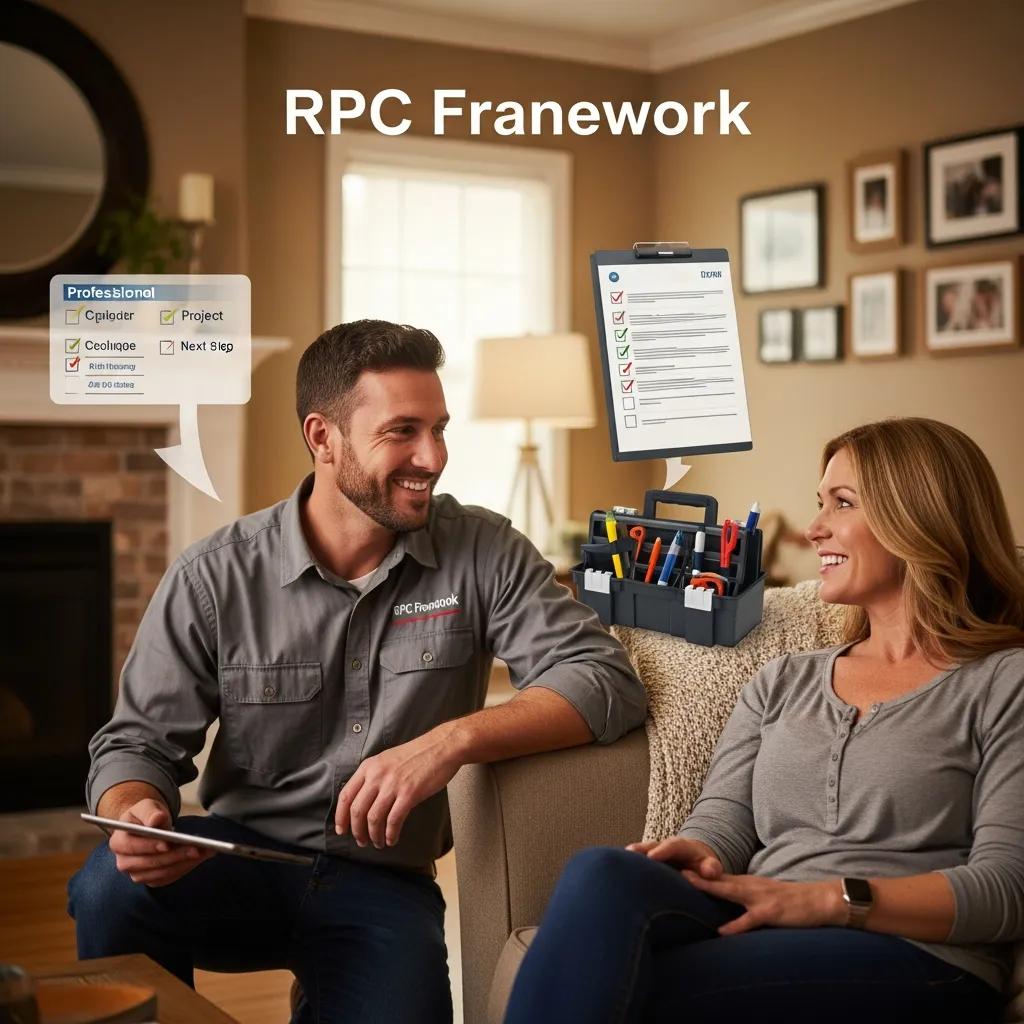
RPC — Rapport, Professionalism, Close — is a simple sequence that prevents objections by aligning the homeowner’s mindset, demonstrating reliable process, and driving a clear next step. Rapport uncovers priorities so objections lose grip; Professionalism proves you have a repeatable process and evidence; Close uses assumptive language and consequence questions to convert remaining concerns into commitments.
Below is a compact breakdown tying each RPC element to tactical steps and example language.
| RPC Component | Tactical Steps | How it Reduces Objections / Example Language |
|---|---|---|
| Rapport | Discovery questions, mirroring, shared context | Reduces resistance by aligning goals; "Tell me what success looks like for you." |
| Professionalism | Clear scope, timelines, proof points | Reduces perceived risk; "Here’s our process and recent customer examples." |
| Close | Assumptive close, consequence questions | Turns objections into next steps; "If we agree on scope, when should we schedule start?" |
Practice these RPC steps until they’re natural — they directly cut the kinds of objections that stop deals and set you up for the rapport and closing tactics that follow.
Home Improvement Closer builds training that helps companies adopt RPC in the field. We offer a free entry-level path (Tier 1: Foundation for Construction Sales) so teams can test the basics risk-free, and a paid mastery subscription (Tier 2: Mastery of Contractor Sales, $149/month) for deeper practice on the 11 major objections and a script vault. These tiers are designed for contractors and subcontractors who want repeatable behaviors and measurable results in the field.
How Does Rapport Building Lay the Foundation for Objection Prevention?
Rapport creates psychological alignment — when homeowners feel understood they lower defenses and become open to value-based arguments. Use open diagnostic questions like, "What prompted you to look at this now?" and mirror their phrasing to build quick comfort.
Lead with concise credibility statements and micro-proofs — brief, relevant examples of similar work — to reduce skepticism without sounding salesy. A short role-play could start with discovery, echo the homeowner’s priority, then present value tied to that priority. That alignment makes later objections rarer and easier to resolve. In short, rapport is the foundation for effective pre-framing and value-based selling.
How Do Professionalism and Closing Steps Turn Objections into Sales Opportunities?
Professionalism makes buying predictable and turns objections into solvable line items instead of deal-breakers. Clean proposals, clear timelines, and written warranties remove ambiguity that otherwise creates price or quality concerns.
Closing techniques — isolate the objection with a targeted question and use assumptive language — shrink remaining resistance into a short checklist rather than a negotiation. Example: when a homeowner raises a concern, ask, "Is that the only thing stopping you?" then offer a small consultative fix rather than an immediate concession. That reframes the issue and preserves margin.
Which Proactive Communication Strategies Help Overcome Objections in Home Renovation Sales?
Proactive communication pairs active listening, purposeful questioning, and concise follow-up to surface objections early and resolve them fast. Active listening validates concerns and reveals hidden issues, while clarifying, isolation, and consequence questions expose root causes. Follow-up templates for phone, text, and email bring off‑site objections back into a consultative space. The triad — listen, probe, follow up — treats objections as data to solve, not as a cue to discount.
- Active listening: Acknowledge the homeowner’s words, then ask a clarifying question to uncover motive.
- Isolation questions: Discover whether one point is the true blocker or just a symptom.
- Consequence questions: Make the cost of delay or poor choices explicit without applying pressure.
Together these tactics surface real concerns and keep the conversation moving. The next subsections supply psychology-based phrases and plug-and-play scripts you can use today.
How Can Active Listening and Client Psychology Improve Objection Handling?
Active listening uses short reflections and summaries to validate concerns, lower defensiveness, and open the door to influence. People move forward when they feel heard and their concerns are reframed, so use lines like, "I hear your budget is tight — help me understand what flexibility you have." Watch for buying signals — repetition, hesitation, topic shifts — and treat them as probes for deeper issues. Pair ethical psychological levers — authority (process proof), scarcity (limited scheduling), and social proof (local examples) — with genuine empathy to protect trust and close more deals.
What Scripts and Dialogues Effectively Anticipate and Address Concerns?
Short, copy-ready scripts give teams consistent ways to answer common stalls like "I need to think" and "We have a cheaper bid." For "think about it": "I understand — what specifically are you weighing so I can address it now?" For price comparisons: "Let’s compare apples to apples — here’s where our scope differs." For follow-up texts, try: "Quick question — what’s the main factor holding this up?" Keep the tone direct and authentic in role-plays. Regular rehearsal makes these responses automatic and reduces reactive discounting.
How Can Contractors Use Pricing Strategies to Overcome Price Objections Without Discounting?
Smart pricing protects margin by shifting the conversation from sticker price to project value, lifecycle cost, and choice architecture. Value-based selling ties materials and workmanship to homeowner priorities, consequence questions highlight the cost of delay, and option tiers give buyers an upgrade path instead of prompting a discount. Present payment plans or phased approaches to ease upfront sticker shock while keeping total project value intact.
| Pricing Strategy | When to Use | Expected Outcome / Example Script |
|---|---|---|
| Value-based selling | When homeowner focuses on outcomes | "This option reduces maintenance for 10 years, lowering total cost of ownership." |
| Consequence questions | When timing stalls appear | "What would happen if this roof stayed unrepaired through winter?" |
| Option tiers (good/better/best) | When price is sensitive | "Here are three levels — most choose the middle for best lifecycle value." |
Use these strategies to defend premium pricing without conceding margin. Consequence questions move buyers from abstract hesitation to concrete trade-offs.
What Value-Based Selling Techniques Help Defend Premium Pricing?
Value-based selling reframes the project as an investment with measurable outcomes rather than a commodity purchase. Use case outcomes and specific durability claims to justify premium pricing. Translate technical benefits into homeowner outcomes — fewer callbacks, longer useful life, lower operating costs, and stronger curb appeal.
Short evidence snippets and before/after examples work well: "This siding option reduced maintenance calls for a neighbor and extended useful life by X years."
Offer clear, structured options so customers buy the outcomes they value instead of bargaining over a single line item. That shifts negotiation from price to preference.
How Do Consequence Questions Create Urgency Without Pressure?
Consequence questions make trade-offs explicit by asking homeowners to consider the real cost of inaction or low-quality choices, framed consultatively rather than coercively. Examples: "What would a leaky roof do to your interior this winter?" or "If you delay, how will that change next season’s budget?" Use them in discovery or at close when timing stalls appear, and always pair with empathy — acknowledge constraints before exploring consequences. Properly used, these questions clarify risk and create a natural preference for action.
How Do Advanced Sales Strategies Support Business Growth and Consistent Objection Prevention?
Advanced strategies scale objection prevention through structured training, documented SOPs, and metrics that track objection frequency and close consistency. Role-play and script training standardize language across the team; hiring and onboarding that emphasize RPC behaviors embed the approach in new hires. Track KPIs — close rate, average ticket, and frequency of objection types — to measure training ROI and sharpen coaching.
- Role-play cadence: Weekly practice reinforces scripts and builds confidence.
- SOPs: Standard proposal and follow-up processes reduce variability in customer experience.
- Metrics: Monitor close rates and objection types so coaching targets the biggest opportunities.
These elements create a repeatable sales machine that prevents objections from becoming a systemic problem. The following H3s offer practical training and scaling steps managers can adopt right away.
How Can Team Training Improve Sales Consistency and Objection Handling?
Team training formalizes routines — discovery scripts, pre-framing checklists, and objection responses — so sellers perform consistently. Sample cadence: a weekly 30–45 minute role-play on one objection type, monthly audits of proposals and follow-ups, and short coaching check‑ins tied to KPIs.
Run call or text audits to identify recurring objection language and role-play those scenarios until the responses are automatic. This turns weak spots into repeatable strengths and raises close rates without undercutting price discipline.
What Are Best Practices for Scaling Sales and Charging Premium Prices?
Scaling with premium pricing requires clear packaging customers understand, predictable sales handoffs, and leadership that enforces quality and margin-focused incentives. Structure services into tiers that communicate outcomes, build SOPs for proposal delivery and site management to reduce surprises, and align sales incentives to average ticket and close quality. As teams consistently apply RPC behaviors and standardized communication, expect incremental pricing uplift — operational discipline keeps objections low even as volume grows.
Home Improvement Closer packages training to help companies adopt these practices. For teams ready to scale, Tier 3 Ownership of Contracting Business ($250/month) focuses on team building and premium pricing, and we offer a Free 60‑minute strategy session to translate training into a custom growth plan.
Below is a concise checklist you can adopt this week to get started:
- Weekly role-play sessions: Practice one objection type per week with peer feedback.
- Proposal SOP: Build a one-page scope template that highlights long-term value.
- Performance metrics: Track close rate, average ticket, and top objections monthly.
These practices align company systems with seller behavior so objection prevention stays consistent as you grow.
For teams and owners ready to act, consider these course and coaching options:
- Tier 1: Foundation for Construction Sales (free) — Intro access to core frameworks and scripts so teams can adopt basics without risk.
- Tier 2: Mastery of Contractor Sales ($149/month) — Intensive practice on objection handling, a script vault covering the 11 major objections, and structured role-play to sustain higher close rates.
- Tier 3: Ownership of Contracting Business ($250/month) — Team building, premium pricing, scaling, and exit-strategy work for firms ready to grow.
These offerings are designed to help home improvement companies and professionals adopt proven sales behaviors. Book a free 60‑minute 1‑on‑1 consultation to align training with your company priorities and start applying proactive objection prevention to increase close rates while protecting margin.
Frequently Asked Questions
What role does active listening play in objection handling?
Active listening is the foundation of objection handling. When you reflect and summarize a homeowner’s concern, you reduce defensiveness and open space for problem-solving. That makes it easier to uncover hidden objections and address them directly — and when people feel heard, they’re far more likely to engage toward a decision.
How can contractors effectively follow up after initial consultations?
Follow-up should be concise, consultative, and specific. Use short scripts tailored to the homeowner’s stated concern — by phone, text, or email. A simple prompt like, "Quick question — what’s the main factor holding this up?" invites an honest reply and brings objections back into a problem-solving discussion instead of letting them fester.
What are some common psychological triggers that can aid in closing sales?
Authority, scarcity, and social proof are reliable, ethical triggers when used transparently. Authority comes from credentials and clear process; scarcity can be limited scheduling or seasonal constraints; social proof is testimonials and local project examples. Use these signals sparingly and honestly to reinforce the homeowner’s confidence in choosing you.
How can contractors differentiate their services from competitors?
Differentiation comes from showing the real differences in scope, materials, process, and guarantees. Lead with outcome-focused benefits — durability, fewer callbacks, better curb appeal — and use side‑by‑side comparisons to make distinctions clear. That shifts the conversation away from price and toward long-term value.
What are the benefits of using consequence questions during sales conversations?
Consequence questions surface the practical cost of inaction or low-quality choices, which creates urgency without pressure. Asking, "What would happen if this roof stayed unrepaired through winter?" forces a concrete trade-off and helps homeowners see the benefits of timely action.
How can contractors build trust with potential clients?
Build trust by being transparent and consistent: explain your process, show relevant case studies, and offer clear warranties. Use open-ended questions to understand needs and demonstrate you’re solving for the homeowner’s priorities, not just closing a sale.
What training methods can improve objection handling skills for sales teams?
Role-playing, targeted feedback, and short focused workshops work best. Role-play common objection scenarios, audit actual follow-up messages, and track outcomes so coaching is evidence-based. Repetition turns good responses into automatic habits.
Conclusion
Proactive objection handling gives contractors a clear path to higher close rates and protected margins. By mastering pre-framing, RPC behaviors, and disciplined follow-up, you turn potential objections into opportunities for clarity and trust. Start with the checklists and scripts here, practice them with your team, and use the training tiers to scale what works. Apply these steps consistently and you’ll see fewer late-stage concessions and more predictable wins.