

Developing Sales Self-Discipline for Consistent Performance: Field-Proven Habits and Tactics for Contractors

Sales self-discipline means deliberately scheduling the high-value sales work, guarding those short windows, and running the same scripts and follow-through every time so your pipeline and pricing stop being surprises. This guide lays out the exact habits that move the needle—daily prospecting, a repeatable follow-up cadence, weekly pipeline checks, time blocking, and role-play—and shows the measurable outcomes you can expect: more leads, better close rates, steadier cashflow. Whether you’re a contractor, roofer, HVAC tech, or remodeler, you’ll get field-tested routines that fit between jobs, on-site objection scripts, and quick CRM actions you can set up in under an hour. The article breaks the work into core areas: daily habits, time management and CRM efficiency, mindset shifts, objection handling with the RPC Framework, pricing posture to protect premium quotes, and accountability plus work-life balance so gains stick. Read each section for job-site-ready tactics, short scripts, and templates you can start using today.
Key Sales-Discipline Habits Contractors Need for Consistent Results
Sales-discipline habits are the short, scheduled actions that create steady lead flow and predictable conversions. Routines turn willpower into processes — they’re not one-off pushes. When crews habit-stack short prospecting or follow-up windows into the workday and track a few KPIs, behavior becomes outcomes: more quotes out the door, higher follow-up completion, and fewer deals lost to price-shopping. Below are the highest-leverage habits to start with and the direct results you should expect when they’re done consistently.
Contractor-ready sales discipline habits:
- Daily prospecting slot: 20–30 minutes a day adding leads — expect higher lead volume in two to three weeks.
- Consistent follow-up cadence: A four-touch sequence over 14 days — improves contact rate and quote-to-close ratio.
- Weekly pipeline review: 15-minute weekly check of stages and next actions — stops deals from slipping through gaps.
- Quote discipline: Send polished, consistent proposals within 24–48 hours — protects margin and cuts renegotiation.
- Role-play practice: 10–15 minute weekly objection drills — builds confidence and faster, cleaner responses on-site.
These five habits form the backbone of reliable sales effort and lead into the operational moves that make them stick. Below is a quick comparison of what each habit improves and the KPI to watch.
Before you roll these habits out, decide which clear metric each one will move so you can see when discipline is working.
| Habit | What it improves | Tangible outcome / KPI |
|---|---|---|
| Daily prospecting | Lead volume and pipeline depth | New leads/week (target: +20–40%) |
| Consistent follow-ups | Contact rate and engagement | Response rate (%) and follow-up completion |
| Weekly pipeline review | Forecast accuracy, next-step clarity | Deals with assigned next step / week |
| Quote discipline | Close rate and margin protection | Quotes sent within SLA; close % |
| Role-play practice | Response speed and confidence | Average handling time; fewer concessions |
How Daily Sales Routines Build Discipline and Deliver Results

Daily routines turn good intentions into automatic actions using habit stacking and short, repeatable windows between jobs. The idea is simple: small, consistent inputs compound into predictable outputs. A practical morning stack could be 10 minutes warm-lead outreach, 10 minutes confirming appointments, 10 minutes updating CRM notes — each step cues the next so the habit forms fast. Teams that add a single 20-minute prospecting window usually see an uptick in inbound activity in two to three weeks because outreach and follow-up both increase. Start with a 15–30 minute routine that fits your day and treat that slot as non-negotiable; over time it becomes the default behavior that keeps the pipeline healthy. A predictable pipeline makes time management and pricing decisions easier — covered next.
How to Build Willpower and Sales Resilience on the Job
Willpower and resilience grow through deliberate practice, not grit alone: set micro-goals, get regular, scheduled exposure to rejection via role-play, and track simple metrics so progress is visible. Try micro-goals like “make three outreach calls before lunch” and log each win in your CRM — action plus record builds momentum. Two practical exercises: weekly 10–15 minute role-play drills and a five-minute end-of-day note that records one lesson and one next step. Both reduce the sting of rejection and make improvement measurable. Track basic KPIs — calls made, follow-ups completed, quotes sent — and compile a weekly scorecard so resilience becomes a number you improve, not an abstract idea. That measurable resilience ties directly into the time-blocking and objection-handling systems that follow.
How Contractors Master Time Management to Boost Sales Output
Good time management prioritizes the high-value sales work — prospecting, follow-up, quoting — over low-value admin, and locks those tasks into short protected blocks. The mechanism is simple: time blocking plus delegation. Protect short, recurring windows for sales work and automate or outsource routine admin. When teams commit to 20–30 minute protected blocks and use a mobile CRM, lost leads fall and close rates rise because follow-ups actually happen. Below are ready-to-use templates and tech actions you can try this week to turn intention into consistent execution.
Three time-block templates for common contractor setups:
- One-man crew: 20 minutes before the first job for outreach, 20 minutes mid-day for follow-ups, 15 minutes after work for quotes.
- Small crew (2–4 techs): Rotate a daily “sales lead” who handles outreach for 30 minutes while others work; run a 30-minute pipeline review twice weekly.
- Multi-site manager: Batch quotes in the morning and delegate site checks; reserve 45 minutes mid-day for quote delivery.
These templates show how to carve short repeatable windows that fit between jobs so sales tasks don’t get postponed. Next, use light automation and a mobile CRM to protect those blocks and cut time spent on routine work.
| Tool / Method | Use case | Time saved / efficiency gain |
|---|---|---|
| Mobile CRM with templates | Send quotes and update notes on-site | 15–30 minutes per job saved |
| SMS/email automation | Scheduled follow-ups after estimate | Reduces manual touch time by 40–60% |
| Delegated admin (VA) | Handle scheduling, invoicing prep | Frees 1–3 hours/week for sales |
| Time-block calendar | Protect daily prospecting slots | Prevents task drift; increases task completion |
Best Time-Blocking Methods for Home Improvement Sales
Contractor-friendly time blocking accepts interruptions but plans predictable windows: short blocks near job starts/ends and a protected mid-day slot for admin. A weekly plan might put Monday morning on pipeline triage, daily 20-minute prospecting windows, and Wednesday afternoons for quotes and client calls. Short, sacred blocks are easier to honor than long sessions. Keep blocks sacred with a visible timer, tell the crew the plan, and treat those minutes as billable sales time — not optional chores. If disruptions happen, use a rule like “one interruption, then reschedule the block same day” so the routine stays intact. Simple cadence and rules make it easier to turn daily discipline into steady pipeline outcomes; your CRM helps enforce that.
How Technology and CRM Tools Boost Sales Efficiency
Tech matters when it cuts friction for mobile sales work: a mobile CRM with quoting templates, task reminders, and two-way SMS saves time and keeps follow-through tight. Prioritize mobile quoting, templated responses for common objections, one-tap task creation, and automatic follow-up sequences — those parts make the system work. Set up three quick automations: an SMS 24 hours after an estimate, an email two days after no response, and a task reminder for a 7-day check-in. These reduce manual follow-up and keep deals moving. You can onboard a CRM in an afternoon if you focus on five fields: contact, job stage, next action, quote sent date, and follow-up sequence. Once the CRM reduces friction, daily habits and protected time blocks compound into reliable revenue — which brings us to mindset next.
Sales Mindset Shifts That Drive Consistent Results
Mindset shifts turn sales from emotional events into repeatable processes: treat each interaction as data, measure small wins, and focus on learning over immediate proof. A growth mindset — where calls and “no’s” are experiments that teach you — makes consistency feel possible and routines sustainable. Below are short, practical exercises that build a resilient sales mentality and link directly to KPIs that keep motivation real.
Three mindset exercises to adopt this week:
- Post-call reflection: Two minutes after each sales call to note one improvement and one next action.
- Micro-experiment log: Try one script line per week and track the result to build evidence-based confidence.
- Weekly KPI ritual: Spend five minutes on a one-page scorecard and celebrate process wins, not just closed deals.
How a Growth Mindset Improves Sales Performance
A growth mindset shifts the focus from proving you’re good to improving your process. That leads to more experiments — different scripts, offers, and schedules — and faster learning. Treat every “no” like data and you’ll speed up the feedback loop that refines your scripts and objection responses. Two practical moves: split-test two closing phrases over a week and record which wins more next-step commitments, and do a five-minute daily learning review that logs takeaways and actions. As you collect small wins and proof, confidence rises and panic discounting falls — which protects margins. These learning loops support resilience and cut burnout, covered next.
How to Handle Rejection and Stay Motivated
Handling rejection is both mental and procedural: depersonalize the “no” by logging its type (budget, timing, vendor preference) and schedule structured rejection exposure through role-play so real rejections hurt less. A good weekly cadence is two short role-play sessions, a five-minute daily reflection, and tracking your contacts-to-meaningful-conversations ratio so progress is visible. When you treat rejection as information, emotional reactivity drops and steady effort becomes normal — a design that preserves momentum and leads into reliable objection handling.
How Contractors Overcome Objections and Close More Jobs
Handling objections works best with a simple, repeatable process and jobsite-ready micro-scripts for the usual stalls: cheaper bids, “I need to think,” “ask my spouse,” timing, and warranty or trust concerns. The reliable process: acknowledge, diagnose, then give a concise, value-based response so the homeowner feels heard and you keep control. Below is a quick objection-response matrix built for home improvement conversations on-site.
| Objection Type | Common cause | Recommended script / response |
|---|---|---|
| "Cheaper bid" | Price comparison without evidence | "I hear you — price matters. Here’s what our price covers that others might not: warranty, materials, timeline. Which of those is most important to you?" |
| "Need to think" | Decision uncertainty or lack of urgency | "Totally reasonable. What part do you need time on — scope, price, or timing? If it’s price, I can show payment options." |
| "Ask your spouse" | Shared decision-making required | "Makes sense — when’s a good time I can talk to both of you, or would you like a one-page summary to share?" |
| "Timing" | Scheduling conflict or project priority | "We can work around your timing — what month works best? I can hold a tentative slot this week to lock materials if that helps." |
| "Warranty/trust" | Risk aversion or past bad experiences | "We stand behind our work with [standard proof points], and I’ll include that in the proposal so it’s in writing." |
Most Common Home Improvement Objections — Short, Effective Responses
In the field the top objections are price, timing, authority (ask your spouse), comparison shopping, and doubts about quality. The quickest way to move the conversation is a one-question diagnosis, a clear value statement, and a tight next step. If a homeowner says they have a cheaper bid, ask: "What specifically was different about that quote?" Then highlight one or two real differentiators (material grade, timeline, warranty) and close with a next step like scheduling a follow-up or offering a one-page comparison. Practice these short exchanges in weekly role-play so responses become reflexive, not improvised. The RPC Framework below lays out how to sequence rapport, professionalism, and the close so objections derail fewer deals.
How the RPC Framework Makes Objection Handling Repeatable
RPC is three easy moves: build Rapport, show Professionalism, then do a concise Close. Rapport lowers the homeowner’s guard, Professionalism presents clear evidence and a tidy proposal, and Close asks for a specific next step — that sequence improves close rates in real field tests. Quick micro-scripts for each step: Rapport — "We’ve done a few homes like yours nearby; what mattered most to them?" Professionalism — "Here’s a one-page scope with materials and timeline so everything’s clear." Close — "If this looks right, I can hold a start date — morning or afternoon?" Use RPC consistently and role-play it weekly until it’s automatic. For teams who want structured coaching on RPC and trade-specific role-play, Home Improvement Closer offers targeted training and one-on-one coaching in higher-tier programs.
Home Improvement Closer teaches the RPC Framework and role-play in a tiered training lineup: the Foundation tier gives free quick routines and templates, while deeper coached implementation is available in paid options like Mastery ($149/month or $1,788/year) and 1-on-1 Consultation for hands-on, personalized coaching. These programs move teams from script-learning to reliable execution, backed by KPIs and accountability.
Pricing Strategies That Help Contractors Win Premium Work Without Panic-Discounting
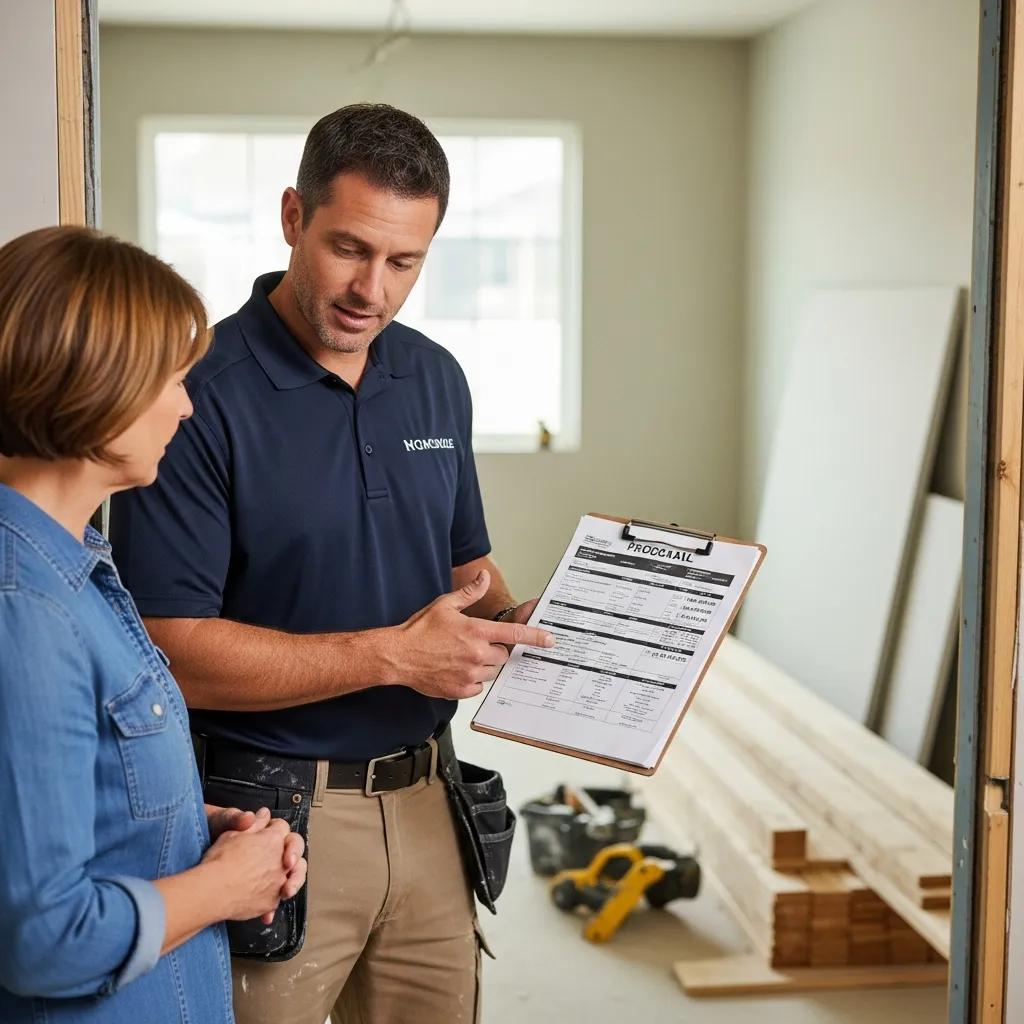
Defending premium quotes comes down to consistent quoting, clear value articulation, and predictable follow-up — not emotional discounts. Value-based selling ties price to outcomes homeowners care about: durability, warranty, timelines, and less disruption. Pair disciplined quoting (send proposals within your SLA) with automatic follow-ups and a one-page proof checklist and you reduce the need to cut price. Below are three immediate tactics plus a short on-site checklist for when cost gets challenged.
Three pricing tactics you can use now:
- Value reframe: Call it an "investment" and link that to measurable benefits (material lifespan, warranty length).
- Proof-first approach: Lead with the single strongest proof point (photo, client note, warranty) before you talk price.
- Anchoring and options: Offer a solid baseline package and a clearly superior premium option to anchor perceived value.
On-site one-page checklist: portfolio photo, warranty terms, material spec sheet, a brief reference, and a timeline commitment — these proof points make premium pricing quicker to justify. Next, we’ll connect pricing discipline to daily sales habits so you don’t discount under pressure.
How to Justify Premium Pricing Without Cutting Price
Start with consistent, professional proposals and a short evidence-led on-site script that reframes cost around outcomes. Try this: "Our price reflects the materials and the guaranteed timeline — that means fewer callbacks and better resale value. What matters more to you, longevity or upfront cost?" Carry the one-page proof checklist so the claim is fast and credible. Adopt a rule: no discount without documented escalation and a margin check. Make discounting a business decision, not an emotional reaction. Practice the script in role-play and log results in your CRM so pricing discipline becomes measurable behavior that protects margin.
Why Sales Self-Discipline Keeps Your Pricing Consistent
Self-discipline prevents reactive discounting by replacing ad-hoc choices with rules: quoting SLAs, scheduled follow-ups, and weekly margin audits. A simple checklist: send proposals within 48 hours, record any concession reason in the CRM, and run a weekly 10-minute margin review to spot erosion. One contractor who enforced a 48-hour quoting rule and tracked concessions cut discounting by 30% in six weeks — behavior change removed panic offers. Discipline signals professionalism to customers and lowers the power of low bids. If you want role-play and systems to lock these rules in, higher-tier programs offer structured coaching and repeat practice.
Paid programs that reinforce pricing systems include Mastery ($149/month or $1,788/year) and Ownership ($250/month), both focused on objection-resistant pricing and defending premium quotes through habit systems and coaching.
How Accountability and Work-Life Balance Make Sales Discipline Last
Accountability plus balanced scheduling keeps discipline sustainable by pairing short peer or coach check-ins with protected downtime so you don’t burn out. The mechanism is simple: set measurable KPIs, review them quickly on a short cadence, and pair that review with scheduled rest so you keep energy for sales work. Recommended systems include a weekly scorecard, brief peer check-ins, and CRM dashboards that show the one-page metrics that matter. Below are systems and a cadence that keep sales consistent without taking your life over.
Accountability systems to implement:
- Weekly scorecard: Track three metrics — leads added, follow-ups completed, quotes sent — and review for five minutes each Monday.
- Peer accountability group: A 15-minute weekly call to share one win and one blocker.
- Coach check-in / 1-on-1: Monthly session to audit pipeline and pricing choices.
These systems mix measurement, social pressure, and expert input to keep behavior aligned with goals and pair well with a work-life plan that protects personal time. The next subsection gives templates for a weekly plan that secures downtime while keeping sales activity protected.
Accountability Systems That Keep Contractors on Track
Effective accountability blends a simple scorecard, short peer huddles, and periodic coaching to create multiple supports that enforce habits. A minimal weekly scorecard tracks three KPIs — new leads, follow-ups completed, quotes sent — recorded in your CRM and reviewed for five minutes on Monday to spot focus areas. Peer groups meet for a 15-minute huddle where each member declares one weekly commitment and reports back; that social layer raises follow-through. A 30/60/90 coaching plan with a consultant focuses the change: 30 days to form habits, 60 days to refine scripts, 90 days to embed KPIs — making long-term change predictable. Layered systems give you external anchors so individual willpower is backed by structure and you’re less likely to slip back into old habits.
How Work-Life Balance Improves Sales Consistency
Protecting downtime sharpens judgment, reduces burnout, and improves client interactions — all of which sustain sales performance over months and years. A balanced-week template reserves two half-days for family or rest and keeps short daily sales blocks sacred; that prevents reactive behavior and preserves energy for selling. Rested contractors make better pricing decisions, are less likely to discount under stress, and follow up more reliably — measurable differences in close rates and client experience. Pair a protected-week plan with the accountability systems above for sustainable discipline. If you need fast implementation help, Home Improvement Closer’s Foundation (Free) materials and Consultation services provide templates and coaching to get routines running quickly.
Home Improvement Closer offers a free Foundation tier with immediate habit templates and quick routines, while one-on-one Consultation services deliver targeted coaching for teams that need rapid behavior change. Paid tiers add deeper support to embed systems and measurement routines, and a 60-day money-back guarantee reduces risk for trial participants.
Frequently Asked Questions
What are the benefits of using a CRM for sales discipline?
A CRM makes sales discipline practical by streamlining follow-ups and centralizing customer info. It automates reminders, tracks interactions, and keeps quotes organized so leads aren’t forgotten. That better organization saves time and increases your chance to close, because you can respond faster and more professionally to prospects.
How can contractors measure the effectiveness of their sales habits?
Measure results with a few clear KPIs: leads generated, follow-up completion rate, and the percent of quotes that convert. Review those numbers regularly to see which habits move the needle and which need tweaking. A weekly scorecard gives you a quick visual of progress and keeps you accountable.
What role does mindset play in overcoming sales challenges?
Mindset shapes how you handle rejection and setbacks. A growth mindset turns interactions into data points — learning opportunities instead of personal failures. Simple reflective practices, like post-call notes, reinforce that view and keep you improving without getting discouraged.
How can role-playing improve sales skills for contractors?
Role-play simulates real conversations so you can sharpen scripts and objection handling without the pressure of a live call. It builds speed and confidence, improves team communication, and makes on-site responses reflexive. Regular role-play leads to higher close rates and a more consistent sales approach across the crew.
What strategies can contractors use to maintain work-life balance while pursuing sales goals?
Keep a structured schedule that reserves dedicated time for both sales work and personal life. Block short sales windows, schedule regular breaks, and use accountability check-ins to stay on track. Prioritizing rest and family time helps you make better decisions and keeps selling sustainable.
How can contractors effectively handle price objections from clients?
Handle price objections with a short, structured approach: ask a diagnostic question, state a concise value point, and offer evidence (testimonials, photos, warranty). Stay calm and professional, and turn the objection into a chance to clarify priorities and move to a specific next step.
Conclusion
Sales self-discipline gives contractors the repeatable habits and systems needed for steady performance and predictable revenue. Put short routines, the right tech, and a growth mindset in place and you’ll see quicker follow-ups, fewer panic discounts, and cleaner closes. Start small, track a few KPIs, and use the templates and role-play drills here to make disciplined selling part of your daily work. Explore our free Foundation materials or the paid coaching options to move from learning scripts to making them automatic.
**