

How to Break Sales Stalls and Beat Buyer Indecision in Home Improvement Sales

Stalled sales and indecisive homeowners cost contractors time, margin, and momentum on every estimate — but they usually follow predictable patterns. This guide gives practical, field-tested tactics you can use on-site to move decisions forward: objection responses, decision psychology, closing moves, trust-building cues, follow-up cadences, and a repeatable framework for every appointment. You’ll get short scripts, a bank of trial closes, plain-language urgency lines, follow-up templates to re-engage prospects, and three compact EAV tables that match objections to causes and quick responses for fast use in the field. Read the sections for quick-reference lists and a concise framework that helps you protect margin and cut down “I’ll think about it” stalls — tailored for long timelines, big-ticket choices, and homeowner risk aversion so you can close more confidently on-site.
What Are the Most Common Sales Objections in Home Improvement?
Objections in home improvement usually fall into five buckets: price, timing, risk, scope, and comparison-shopping. Each objection points to a different root issue, and the right tactical response depends on that cause. “Too expensive” often hides uncertainty about value; “I need to think about it” usually signals decision overload or missing decision-makers. When you identify the root cause you can choose the right tool — a trial close, a financing example, or a single clear recommendation that cuts choices. Below are the most frequent objections you’ll hear on-site, why they matter, and one-line responses you can use immediately.
The most frequent contractor objections and one-line rationales are:
- The price is too high: The homeowner isn’t convinced the value matches the cost.
- I need to think about it: They’re overloaded or worried about making a mistake.
- We’re getting other bids: They’re comparing offers and anchoring to price.
- Not right now / timing: Scheduling or cash-flow keeps them from committing.
- Scope uncertainty: They’re unclear what’s included or worried about exclusions.
Those surface objections usually point to deeper follow-up needs. Solve the root problem and you remove friction — making it easier for homeowners to say yes. The next section gives on-site tactical responses to use immediately.
This table maps common objections to typical causes and short field responses you can use on-site.
| Objection | Likely Root Cause | One-line Tactical Response |
|---|---|---|
| “Too expensive” | Value not established or ROI unclear | “I get it — here’s what’s included that prevents the issue long-term and lowers your cost over time.” |
| “I need to think about it” | Choice overload or fear of messing up | “Who else needs to sign off, and can we set one clear next step now?” |
| “We’re getting other bids” | Comparison shopping, price anchoring | “Good — what would make this the one you pick?” |
| “Not right now” | Timing or cashflow constraints | “If timing is the issue, we have a window next month that saves on cost and locks materials.” |
| “What’s exactly included?” | Scope confusion | “Let me walk this line-by-line so there are no surprises.” |
Keep this quick-reference handy so crews can choose the right response faster and cut on-site hesitation. Next: price-specific tactics you can deploy now.
How Do Contractors Handle Price Objections Effectively?
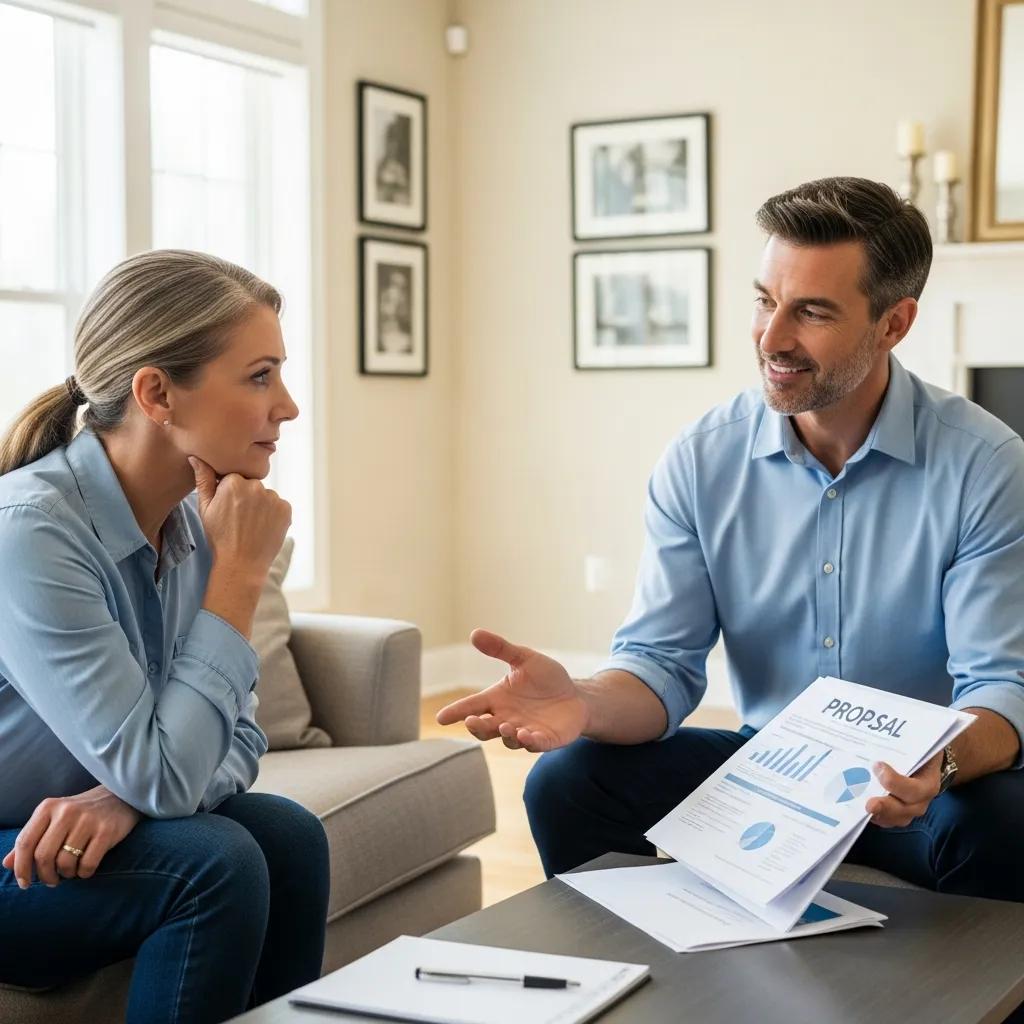
When homeowners say price is the problem, they’re often unsure about long-term value, warranty protection, or the project’s risk. Reframe price as outcomes: clarify scope so the homeowner knows exactly what’s included, then show the payoff — durability, fewer callbacks, warranty coverage, and added resale value — to turn cost into ROI. Use clear, confident language that links features to benefits: name the material or method, explain the homeowner benefit, then restate the price in a final, professional way. Offering a bundled, recommended option reduces comparison paralysis and makes premium pricing easier to defend.
Use short, on-site scripts and a mini-case example. For example: “This system uses X-grade materials so you won’t be patching this again in five years — that saves roughly $X over time. For most owners, the mid-tier package gives the best lifespan per dollar.” Follow with a simple payment frame and you’ll move price pushback into practical trade-offs, which sets up breaking the “think-it-over” loop.
What Strategies Address “I Need to Think About It” and Other Hesitations?
“I need to think about it” rarely means a firm “no.” It usually means the homeowner lacks a clear decision path, has competing priorities, or needs risk reassurance. Your job is to simplify and de-risk. Use a short decision checklist: confirm decision criteria, identify other stakeholders, offer one recommended option, and set a concrete next-step date. Reduce perceived risk with references, a small guarantee, or a financing example that turns a large sum into a manageable monthly payment. Trial closes — short conditional checks — reveal how ready they really are and guide your follow-up.
Use a tight follow-up template: send a one-paragraph recap, restate the recommended option, include one photo or case that matches their concern, and propose two clear next steps with dates. This converts vague hesitation into actionable steps and removes the psychology that causes stalls. These materials also make effective content for sales training and coaching programs aimed at contractors and subcontractors.
Why Do Clients Experience Indecision in Contractor Sales?
Indecision in contractor sales comes from a simple psychological imbalance: perceived downside outweighs perceived upside on large purchases. Homeowners overweight risk on high-cost decisions, so even a solid offer can stall if risk isn’t closed out. Recognizing the drivers behind indecision lets you design short interventions that reduce perceived risk and simplify the choice. Below are the main psychological causes and field-ready responses.
The top three causes of homeowner indecision are:
- Fear of messing up: Worry about poor workmanship or disruption.
- Choice overload: Too many options or confusing comparisons.
- Risk aversion: Concern about unexpected costs, timing, or reliability.
Fixing these issues takes proof, clarity, and a clear decision path. The next section explains how “fear of messing up” shows up and how to neutralize it. These tactics also feed into training content that attracts home improvement companies and professionals to coaching programs.
What Is the Fear of Messing Up and How Does It Impact Decisions?
Fear of messing up is the homeowner’s worry about making a costly mistake. It shows up as requests for more time, more bids, or endless scope tweaks — behavior that amplifies stalls and cuts conversion. The JOLT effect in decision science reminds us the cost of no decision is often higher than people think, so reframe inaction as costly and offer safeguards that lower downside. Use social proof — short testimonials and before/after photos — and offer modest guarantees or staged payments to reduce perceived risk. When homeowners see a low-risk path, friction drops fast.
On-site tactic: show a nearby finished job, explain warranty coverage, then use a trial close tied to their main concern. That focused reassurance often converts hesitation into a commitment and clears the way for simpler decision steps.
How Can Contractors Simplify the Decision-Making Process for Clients?
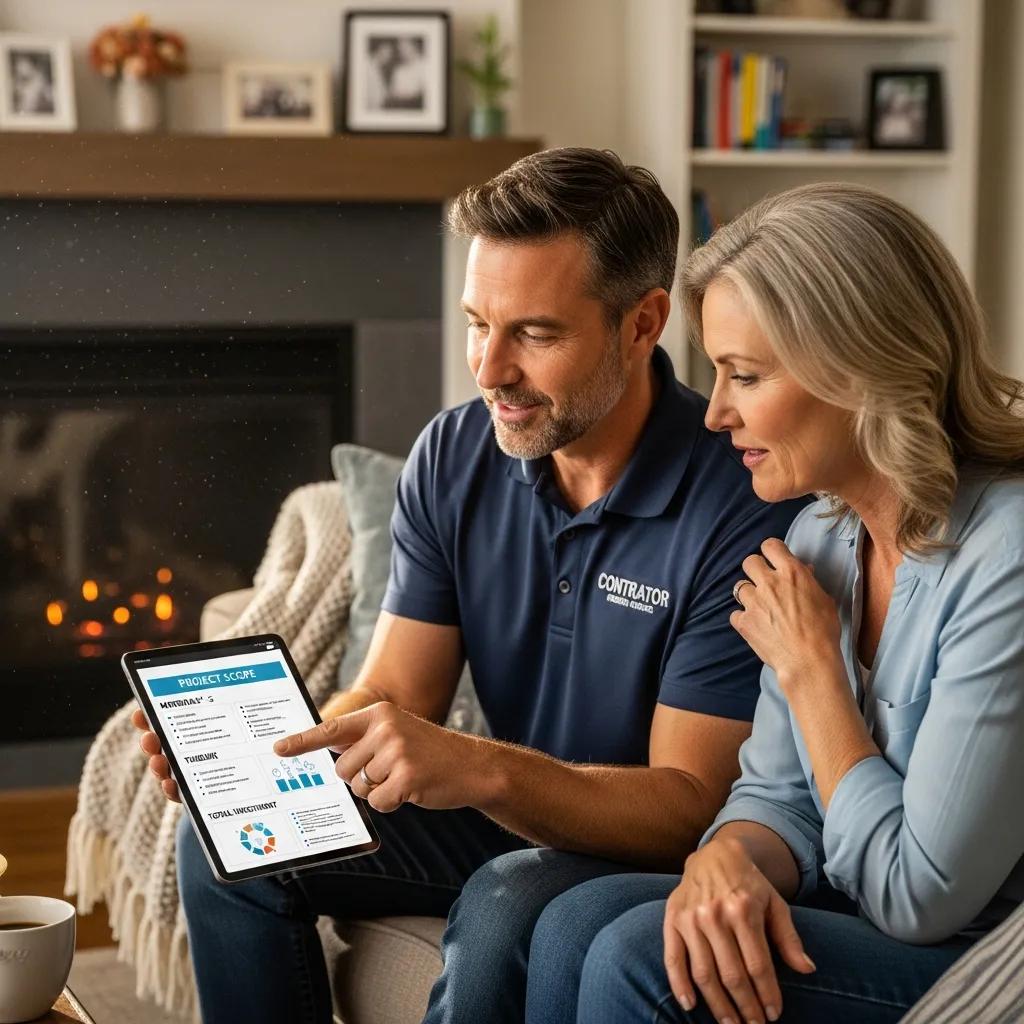
Simplifying decisions means cutting options, offering a single recommended choice, and confirming who needs to sign off — all of which lower cognitive load and make saying yes easier. Use the three-choice rule: present two realistic options and one recommended pick, then summarize pros, cons, and timelines quickly. Use a one-page comparison or a mobile-friendly gallery to anchor the recommendation and avoid long spreadsheets. Confirm other stakeholders and lock a follow-up before you leave the site.
Try this script: “Based on what you’ve said, option B fixes the main issue with the best long-term value — if your spouse is on board, can we tentatively book installation next Thursday or the following Monday?” That clear choice reduces paralysis and primes the close.
Which Sales Closing Techniques Work Best for Home Improvement Contractors?
The most effective closing techniques reveal readiness without pressure and guide homeowners through a confidence-building sequence. Trial closes and assumptive closes work well when timed to buyer signals: trial closes surface objections early; assumptive closes move logistics forward once agreement exists. Both rely on active listening and tight benefit summaries so the homeowner feels informed, not pushed. Below are examples and short scripts you can use on-site.
Key closing techniques:
- Trial close questions: quick checks to gauge readiness.
- Assumptive language: next-step phrasing that presumes agreement once signs are positive.
- Summary close: recap the value and ask for a commitment on logistics or signature.
Always pair these techniques with honest urgency tied to real constraints, explained next.
How Do Trial Closes and Assumptive Closes Increase Close Rates?
Trial closes are short conditional checks that bring hidden objections to light and let you address them before asking for a signature; they create small commitments that build toward the full close. Examples: “If we can meet that timeline, would you be ready to move forward?” or “Does this finish match what you pictured?” These confirm alignment and uncover loose ends. Assumptive closes then shift the conversation to logistics with lines like: “Great — would you prefer a Tuesday or Thursday start?” or “I’ll reserve materials for the first slot, which works better for you?”
Watch verbal and nonverbal cues: a quick nod plus a date preference signals readiness for an assumptive close; hesitation means you need another trial close. This sequence reduces pressure while keeping the buyer moving forward.
What Are Ethical Ways to Create Urgency Without Being Pushy?
Ethical urgency links the decision to real constraints — material lead times, permit windows, seasonal schedules, or documented pricing windows — and presents them transparently instead of faking deadlines. Give factual timing reasons (for example, current material lead times or an open permit slot) and offer an incentive only when it’s real. Script example: “There’s a material lead time of X weeks now; booking this month secures that slot and avoids a summer delay.” That reason-based urgency respects the homeowner and makes the cost of delay obvious.
Avoid manufactured scarcity. Offer alternatives (finance now, schedule later) so the homeowner keeps control. Honest urgency translates inaction into a clear cost and naturally nudges buyers toward a decision while you continue building trust.
How Can Contractors Build Trust and Rapport to Prevent Sales Stalls?
Trust and rapport shorten sales cycles by aligning you with the homeowner’s priorities and reducing perceived risk. Fast, repeatable habits — active listening, relevant credibility markers, and a personalized presentation — are the quickest path to trust. The next paragraphs break these into actionable steps you can use in the first five minutes on-site and throughout the proposal.
Build rapport quickly with these steps:
- Match language and mirror priorities so the homeowner feels understood.
- Show local references and project photos that prove you’ve done similar work nearby.
- Ask one clarifying question to surface the homeowner’s biggest fear, then address it immediately.
These moves narrow the perceived distance between you and the homeowner and set up a value-focused presentation that closes on outcomes.
What Role Does Active Listening Play in Contractor Sales?
Active listening validates concerns, surfaces hidden objections, and gives you the information to tailor your pitch — which shortens decision time and lifts close rates. Practically, listen, paraphrase the homeowner’s worry, ask one clarifying question, and confirm the priority: “So your main worry is X — is that right?” That shows you’re solving their problem, not pushing your service. Use three quick listener responses: acknowledge, paraphrase, then offer a focused solution. Ending with a short summary creates a natural path into a personalized proposal.
How Do Personalized Presentations and Testimonials Influence Client Decisions?
Personalized proposals and tightly matched testimonials reduce perceived risk by showing proof aligned with the homeowner’s priority. Deliver a one-page, mobile-friendly proposal that opens with their stated priority, offers a short cost/benefit comparison, and includes a single testimonial from a similar local job. Pick testimonials that address the homeowner’s exact concern — a short quote or a before/after photo works best. Showing that evidence on a tablet or phone keeps the conversation outcome-focused and helps homeowners say yes because they can see similar results.
What Are Effective Strategies to Prevent and Overcome Sales Stalls in Home Services?
Tackling stalls is a systems problem: combine clean proposals, a disciplined follow-up cadence, financing options, and schedule-based urgency to keep momentum and convert stalled leads. Each tactic has an ideal use-case — follow-up recovers attention, financing reduces sticker shock, and streamlined proposals cut confusion. The comparison table below shows when to deploy each strategy and the typical KPI impact, followed by tactical next steps crews can implement today.
Use these strategic interventions to keep deals alive:
- Follow-up cadence: re-engage prospects and recover stalled conversations.
- Financing offerings: lower sticker shock and reach more buyers.
- Streamlined proposals: remove scope confusion and speed decisions.
Deploy the right mix based on the objection to raise close-rate KPIs and shorten decision timelines, as the table illustrates.
| Strategy | When to Use | Expected Outcome / KPI |
|---|---|---|
| Follow-up Cadence | After a soft stall or “thinking” response | Re-engagement rate +15–25% within 2 weeks |
| Financing Options | When price causes sticker shock | Increase approval rate and expand buyer pool |
| Trial Closes | During presentation to test readiness | Faster objection discovery and higher immediate closes |
| Scheduling Urgency | When material or permit windows exist | Higher booking rate for earlier slots |
How Can Contractors Maintain Sales Momentum Through Follow-Up?
A disciplined follow-up sequence recovers stalled deals by combining phone, text, and email touches that move from high-touch to low-touch while keeping the homeowner comfortable. Use a seven-step cadence: call within 24 hours, text the same day with a short recap, email a one-page proposal on day two, call on day five, send a financing or testimonial note on day nine, offer a schedule window on day 12, and close with a final availability notice on day 14. Keep each touch brief, specific, and focused on one clear next action. Track response rate, re-engagement, and conversion so you know when to escalate or stop.
Sample messages and KPIs for each step make this cadence repeatable for crews and sales teams, improving follow-up efficiency and recovering more deals.
- Call within 24 hours: brief recap and next-step ask.
- Text same day: one-sentence recap and availability check.
- Email day 2: attach one-page proposal with the recommended option.
- Call day 5: short check-in and answer questions.
- Message day 9: share financing or a relevant testimonial snippet.
- Schedule window day 12: offer concrete dates to pick from.
- Final availability day 14: polite last check before closing the file.
How Do Financing Options Help Close More Deals?
Financing removes sticker shock by turning a one-time expense into a predictable monthly payment, widening your buyer pool to homeowners who would otherwise delay. Present financing as a single line on the proposal with a clear monthly example and a short script: “If monthly payments work better, this option lets you do the project now for about $X/month.” Make the math transparent and show total cost versus monthly trade-offs. Financing usually increases conversions among price-sensitive buyers and pairs well with a small scheduling incentive.
Add a short financing script and a simple comparison table to your proposal so it’s easy to explain on-site, which reduces “think-it-over” responses and converts more prospects into scheduled jobs. These materials also work well as training content for company coaching programs.
How Does Home Improvement Closer’s RPC Framework Help Contractors Overcome Sales Challenges?
The RPC Framework — Rapport, Professionalism, Close — is a compact sequence that turns on-site visits into predictable outcomes by aligning behavior, language, and documentation to lower homeowner risk and speed decisions. Rapport uncovers priorities and builds trust, Professionalism signals value and justifies premium pricing, and Close moves the homeowner through a confidence-building sequence toward signature and scheduling. The EAV table below links each RPC step to behavioral goals and tactical actions you can use on every visit.
| RPC Step | Behavioral Goal | Tactical Actions / Example Scripts |
|---|---|---|
| Rapport | Build trust quickly | 5-line opening: local reference, one question, mirror language, confirm priority, brief credibility line |
| Professionalism | Demonstrate higher value | Clean proposal, timeline, warranties: “Here’s exactly what you get and what we guarantee.” |
| Close | Convert agreement to signature | Recap benefits, trial close, assumptive scheduling: “Which of these two dates works?” |
This mapping turns RPC into on-site habits that reduce indecision and increase closes. Operationalize these actions with scripts, checklists, and documentation, and reinforce them through structured training and one-on-one coaching to raise team performance.
What Is the Role of Rapport in Building Client Trust?
Rapport is the short opening sequence that shifts a homeowner from evaluation to seeing you as an advisor. It works by matching language, showing local credibility, and asking one high-value clarifying question. A five-line opener should include a local reference, a brief credibility line, language that mirrors the homeowner, a clarifying question about their main worry, and a smooth transition to the inspection. Use the first five minutes to set expectations and next steps — this lowers suspicion and primes the homeowner for a value-first presentation.
This setup feeds directly into the professionalism cues that justify premium pricing and reduce perceived risk.
How Does Professionalism Demonstrate Value Beyond Price?
Professionalism signals quality through a consistent proposal layout, clear timelines, visible warranties, and transparent processes. These elements let homeowners feel safer paying more because uncertainty is reduced. A professionalism checklist should include a branded one-page proposal, a scope summary, a timeline, warranty language, and a named single point of contact. Organized documentation and a clear schedule reassure homeowners the project will be managed, not improvised — shifting the conversation from cost to outcomes.
That documentation and clarity set the stage for confident closing and fewer second guesses.
How Does the Close Step Guide Clients to Confident Decisions?
The Close step is a short routine that confirms scope, recaps benefits, handles final objections, and secures signature and scheduling. It prevents last-minute reversals by making the next steps immediate and procedural. Use a closing checklist: confirm scope, recap the top three benefits, ask a trial close, offer two scheduling options, and present the agreement for signature. Example lines: “Given this, are you ready to lock a start date?” and “If that works, I’ll reserve your materials and confirm with a down payment.” These steps move homeowners from agreement to action with clarity and confidence.
A consistent close routine finishes the RPC loop: trust starts the process and a scheduled, signed job completes it. These steps also form the basis for training programs and coaching offerings aimed at contractors and subcontractors.
Frequently Asked Questions
What are some effective ways to build rapport with clients in home improvement sales?
Start by matching the homeowner’s language and priorities so they feel understood. Use nearby references and short project photos to show local experience. Ask one clarifying question to uncover their main concern and address it quickly. These simple moves make the conversation feel collaborative and set the stage for a value-focused presentation.
How can contractors effectively follow up with clients after an initial meeting?
Use a structured follow-up cadence that blends phone, text, and email. Call within 24 hours, text a short recap the same day, and send a one-page proposal within two days. Continue with brief, timed touches that offer helpful information — financing examples, testimonials, or concrete schedule windows — each with a single next action. Keep messages short, track responses, and escalate only when appropriate.
What role does decision fatigue play in home improvement sales?
Decision fatigue happens when homeowners face too many choices, so they postpone action. Combat it with fewer options — two realistic choices and one recommended pick — and a clear pros/cons summary. Confirm who else needs to be involved, then offer a simple path forward. Reducing cognitive load helps clients move from indecision to commitment.
How can contractors address the fear of making a costly mistake?
Alleviate this fear with clear, transparent information: warranties, timelines, and examples of past work. Use tight social proof — a short testimonial or a before/after photo — and offer staged payments or small guarantees to shrink perceived risk. Addressing the fear directly makes homeowners more comfortable moving forward.
What are some common mistakes contractors make during the closing process?
Common errors include skipping a benefits recap, failing to surface final objections, and rushing the homeowner. Instead, confirm scope, summarize the top benefits, use a trial close to check readiness, and offer two scheduling options. Give homeowners time to feel informed, then move to a clear, procedural close.
How can contractors use testimonials effectively in their sales process?
Pick testimonials that match the homeowner’s specific concern and present them succinctly — a short quote or a before/after image. Include the testimonial in the one-page proposal or show it on a tablet during your pitch. Targeted social proof increases credibility and helps homeowners visualize the outcome.
Conclusion
Reducing stalls and homeowner indecision comes down to predictable habits: handle objections clearly, simplify choices, build trust fast, and follow up with a disciplined cadence. Apply the scripts, trial closes, and RPC framework here to protect margin and speed decisions. Start using these tactics on your next visit and consider structured training or coaching to make them repeatable across your team — the payoff is more signed jobs and fewer “I’ll think about it” responses.