

Effective Project Management for Home Improvement Projects: How to Plan, Schedule, and Deliver Successful Renovations

Project management for home improvement is about bringing scope, schedule, budget, quality, risk and communication into a single, repeatable process so jobs finish on time, on budget, and with happy homeowners. For sales teams, those same practices boost credibility, reduce objections, and increase close rates. This guide shows contractor sales teams how to use structured planning, clear schedules, transparent budgets, quality controls, and risk language to turn operational competence into a sales advantage. You’ll get a five‑phase planning model, scheduling best practices, change‑order and pricing tactics, quality and follow‑up workflows, homeowner‑friendly risk language, and the simple tools that make these practices repeatable. Each section includes short checklists, sample scripts sales reps can use with clients, and comparison tables that map methods and software to homeowner benefits. Read on for practical scripts, templates, and a workflow that makes professional project management a competitive differentiator while protecting margins and trust.
What Are the Key Phases of Home Renovation Project Planning?
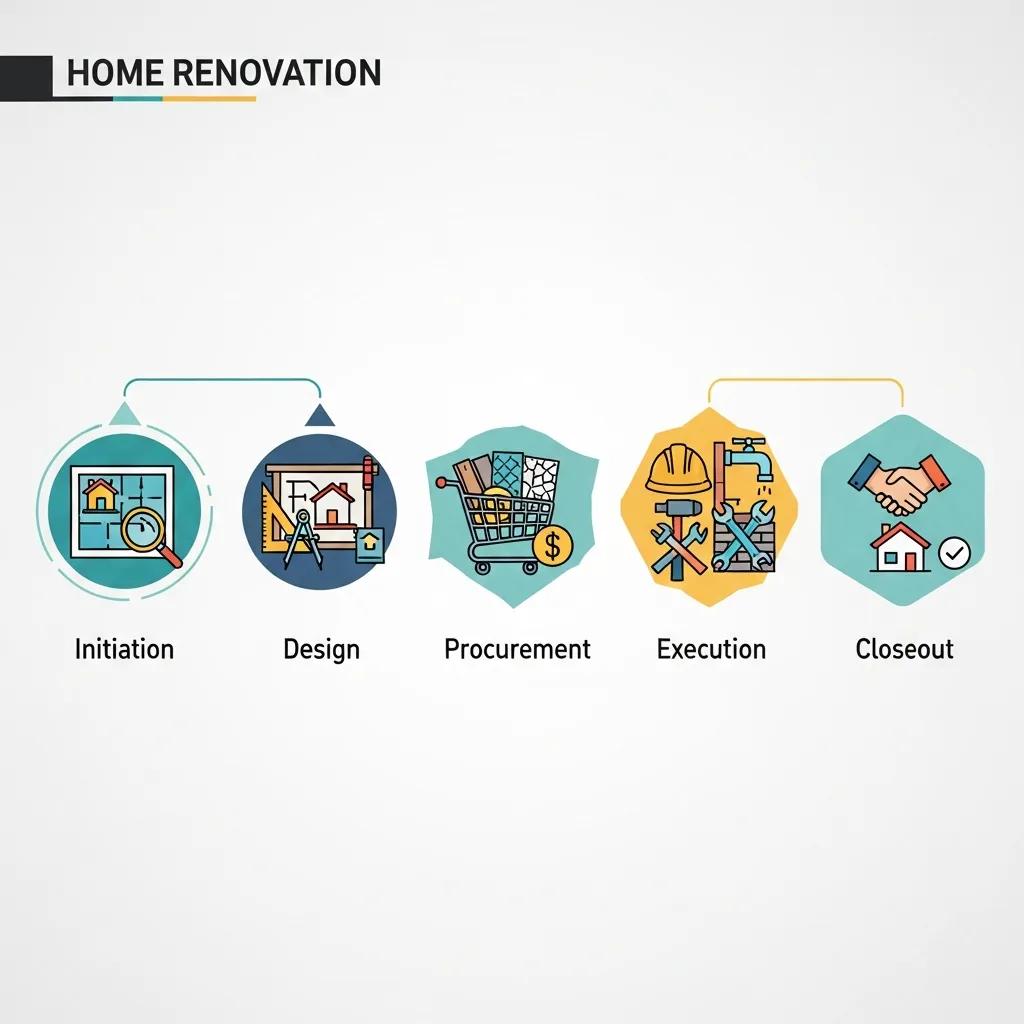
Renovation planning breaks a job into coordinated phases that define what’s delivered, how permits and procurement will work, how the work will be executed, and how the project is closed out for the homeowner. Clear phases reduce scope creep, enable reliable schedules and estimates, and give salespeople predictable milestones to reference during conversations. Framing your approach around discrete phases helps translate technical steps into homeowner benefits—fewer surprises, predictable timing, and documented quality checks. Below is a concise phase list you can use to frame proposals and set expectations before contracts are signed.
Home renovation projects typically progress through five core phases:
- Initiation / Scope: Spell out deliverables, exclusions, assumptions, and success criteria in plain language.
- Design / Permits: Finalize design decisions and secure required permits for lawful, timely work.
- Procurement: Order materials, confirm subs, and set realistic lead‑time expectations.
- Execution: Coordinate on‑site crews, daily supervision, and quality checkpoints.
- Closeout: Complete final inspections, punchlist items, documentation, and the client walkthrough.
This sequence makes it simple to explain how work moves from idea to completion and supports practical scope conversations that reduce disputes later.
How Does Defining Project Scope Improve Client Expectations?
Clear scope is the single best defense against misunderstandings: it tells homeowners what’s included, what’s excluded, and which assumptions affect time or cost. A tight scope section in your proposal should list deliverables, material types, measurable tolerances, and exclusions so everyone shares the same baseline. Sales reps who translate technical terms into homeowner language convert ambiguity into certainty, which lowers price and scope objections. Well‑written scope language also creates natural places to explain allowances, change‑order triggers, and contingency steps that protect both parties—setting up a clean handoff into pre‑construction readiness.
What Pre-Construction Steps Ensure Smooth Project Execution?
Pre‑construction turns a signed agreement into an executable plan: validate site conditions, confirm permit status, secure long‑lead items, and schedule key trades around the homeowner’s needs. A short pre‑construction checklist for sales should include site verification, utility locates, subcontractor vetting, material lead‑time confirmation, and a preliminary milestone calendar to share with the homeowner. Talking through these steps during the sale demonstrates professionalism and reduces early delays that erode trust. When pre‑construction is presented as part of a professional handoff, the execution phase becomes less risky and the homeowner sees the value of transparent planning.
How Can Construction Project Scheduling Enhance Sales and Client Trust?

A good construction schedule creates a shared timeline that ties individual tasks to homeowner milestones. Realistic schedules reduce objections because they set achievable expectations for start dates, sequencing, and completion. Scheduling gathers inputs—scope, permit timing, material lead times, and trade availability—and converts them into a timeline with sensible buffers and clear milestones you can explain. When salespeople present schedules as commitments with built‑in contingencies instead of hard promises, homeowners feel informed and secure. Below are practical practices and communication tactics that make schedules credible and sellable.
Creating realistic timelines depends on three foundational practices:
- Collect Inputs: Verify permit windows, supplier lead times, and subcontractor availability before committing dates.
- Build Buffers: Add predictable contingency time to critical‑path activities to absorb common delays.
- Visualize Milestones: Use simple timeline visuals so homeowners can see phase boundaries and acceptance points.
These practices let sales teams present schedules as professional plans—not optimistic guesses—improving perceived reliability and reducing timeline and price objections.
What Are Best Practices for Creating Realistic Home Improvement Timelines?
Start with a short discovery to quantify permit durations, supplier lead times, and trade availability, then convert those inputs into task durations with defined buffers. Train salespeople to ask targeted questions during initial meetings so proposed schedules are evidence‑based and defensible. Present timelines with explicit buffers and a brief explanation of why they exist—don’t hide contingency time. That builds homeowner trust and frames delays as managed risks. Clear timelines also give sales teams milestones to reference in follow‑ups, keeping clients engaged and reducing friction before work begins.
Best Practices for Efficient Construction Project Planning and Scheduling
This review highlights proven planning and scheduling practices that improve on‑time delivery, cost control, and overall quality in construction projects. It synthesizes industry case studies and research to outline strategies, tools, and common challenges—offering practical guidance for teams that want predictable outcomes.
Best Practices for Efficient Project Planning and Scheduling in Construction Management, EA Oluwatosin
How Should Delays and Milestones Be Communicated to Clients?
Proactive updates on milestones and delays preserve trust by stating the cause, the schedule impact, and the remediation plan. We recommend a short weekly status update plus milestone alerts when phases start or finish; always use the homeowner’s preferred channel and log messages in the CRM for accountability. A simple message structure works best: status summary, explanation of any deviation, and specific remediation steps with new dates—this reduces homeowner anxiety and shows the team is responsive. Treat milestones as regular touchpoints and you’ll create organic sales follow‑ups and opportunities to reinforce value during execution.
Table for scheduling tools:
| Tool (Scheduling) | Best for | How to Explain to Clients |
|---|---|---|
| Gantt chart (simplified) | Visual sequence and overlap of tasks | "This timeline shows when rooms will be worked on and when you’ll see major milestones." |
| Critical Path Method (CPM) | Identifying tasks that determine overall duration | "These items drive the project finish date; keeping them on time shortens the total schedule." |
| Shared Calendar (client-facing) | Day‑to‑day visibility of major events | "You’ll receive invites for walkthroughs and milestone handoffs so you always know when to expect progress." |
How Does Budget and Cost Management Impact Home Improvement Project Success?
Transparent budgeting turns abstract totals into itemized, explainable investments tied to results—letting salespeople justify price and protect margins. A clear change‑order workflow prevents surprise charges and preserves trust when homeowner requests move beyond the original scope. Teams that can explain estimates, allowances, and approval steps convert price talks into joint decisions about priorities and value. The tactics below give sales teams practical ways to present costs as predictable investments rather than negotiable liabilities.
Transparent pricing tactics include:
- Itemized Estimates: Break costs into materials, labor, permits, and allowances so clients see where money is allocated.
- Defined Allowances: Use allowances for items not yet selected and explain how final choices change the price.
- Change‑Order Process: Describe approvals, pricing turnaround, and schedule impacts so homeowners understand implications.
These tactics shift focus from sticker price to measurable value and prepare clients for the inevitable change‑order conversation that follows scope and schedule talks.
What Strategies Ensure Transparent Pricing and Manage Change Orders?
A step‑by‑step change‑order process begins with a documented request, a clear cost and time impact estimate, homeowner approval in writing, and an updated schedule entry. Present a short checklist during the sale: request received, estimate provided, approval obtained, revised timeline shared—this creates a single source of truth. Proposal language should state approval methods, pricing basis (unit rates or time & materials), and expected decision windows to avoid open‑ended negotiations. Clear processes reduce disputes, protect margins, and keep homeowner confidence high.
Entity | Attribute | Value
| Pricing Approach | When Used | Benefit for Sales & Client Trust |
|---|---|---|
| Itemized Estimates | At proposal stage | Shows where funds go and reduces perception of hidden fees |
| Allowances | When selections are pending | Keeps proposal moving while allowing homeowner choice later |
| Fixed-Price with Contingencies | For locked scopes | Gives certainty while acknowledging scope limits and approved extras |
How Can Sales Professionals Articulate Value Beyond Price?
Sell outcomes by linking costs to benefits: guaranteed timelines, workmanship standards, warranty coverage, and a documented quality process that reduces rework. Use short framing scripts like: "This specification ensures a durable finish backed by documented inspections and warranty," then point to the inspection checkpoints and follow‑up commitments. Showing how permits, milestone tracking, and quality checks save time and avoid surprise expenses helps homeowners see price as an investment in predictability. Those conversations naturally lead into quality control commitments that drive referrals and repeat business.
What Role Does Quality Control Play in Client Satisfaction and Referrals?
Quality control turns promises into visible results through documented inspections, measurable tolerances, and consistent handoffs—information homeowners can verify. When salespeople describe inspection checkpoints and proof points (photos, specs, and a documented punchlist), homeowners perceive lower risk and higher value. Including QC commitments in proposals ties expectations to measurable outcomes and gives clients clear sign‑off criteria. The sections below explain how to set quality standards and why post‑completion follow‑up converts satisfied customers into advocates.
Quality control programs typically include inspection checkpoints at rough‑in, mid‑point, finishing, and final walkthrough stages, each with measurable acceptance criteria. Salespeople should summarize these checkpoints in homeowner language and explain how they prevent rework and ensure a clean handoff. Showing past inspection reports or a sample checklist reassures clients and makes your process tangible. These QC steps naturally feed into a structured follow‑up program that captures feedback and drives referrals.
Identifying Quality Failures in Building Renovation Projects
This study examines common causes of quality failures in building renovation projects and recommends improvements to quality control practices. Its findings underscore the importance of consistent quality management throughout renovation work to protect stakeholder satisfaction and project success.
Identification of quality failures in building energy renovation projects in Northern China, QK Qian, 2019
How to Set and Communicate Quality Standards with Homeowners?
Set measurable standards by specifying acceptable tolerances, preferred brands or grades, finish expectations, and inspection checkpoints tied to sign‑off events. Include a short quality checklist in proposals and explain when each inspection happens so homeowners understand what "done" looks like. Sales reps can use simple phrasing: "We inspect the finish, confirm fixture operation, and photograph completed areas before final sign‑off," which turns subjective promises into verifiable steps. Clear standards reduce disputes, support premium pricing, and set up a follow‑up program that reinforces long‑term satisfaction.
Why Is Post-Completion Follow-Up Critical for Sales and Reputation?
A structured follow‑up timeline—30/90/365 days—catches latent issues, shows ongoing care, and creates natural opportunities to request reviews and referrals. Record follow‑up tasks in the CRM and automate survey triggers and reminders so no client falls through the cracks. Promptly addressing minor issues during follow‑up prevents negative reviews and turns maintenance contacts into relationship moments that generate referrals. Tracking closeout metrics like time‑to‑punchlist closure and referral conversion gives sales leaders data to refine proposals and quality standards.
Recommended follow-up cadence:
- 30 days: Operational check and homeowner satisfaction survey.
- 90 days: Warranty check and photo documentation of installed work.
- 365 days: Annual touchpoint to request referrals and review performance.
These follow‑ups turn quality control into measurable referral outcomes and support long‑term sales growth.
How Can Risk Management Improve Objection Handling in Home Improvement Sales?
Risk management identifies likely obstacles early, quantifies their impact, and embeds mitigation language into proposals so sales conversations focus on managed outcomes instead of unknowns. Typical risks include hidden site conditions, permit delays, supply chain shortages, and labor availability; acknowledging them and offering mitigation steps calms homeowner anxiety. Salespeople who can explain discovery steps, allowance strategies, and contingency clauses convert "what if" objections into collaborative problem‑solving. The next section lists common risks and shows homeowner‑friendly ways to include contingencies in proposals.
Common project risks and mitigations include:
- Hidden Conditions: Mitigate with an early site visit, targeted exploratory scopes, and contingency allowances.
- Permit Delays: Mitigate by starting permit applications early and building realistic calendars tied to permitting windows.
- Supply Chain Issues: Mitigate by flagging long‑lead items at proposal and offering reasonable alternatives.
- Labor Availability: Mitigate by confirming subcontractor commitments and including scheduling buffers.
Offering clear actions and contingencies up front reassures homeowners and reduces the weight of objections during negotiation.
What Are Common Project Risks and How Can They Be Mitigated Early?
Top risks are hidden conditions, permit timing, long material lead times, and trade scheduling conflicts. Early discovery—site visits, utility locates, and permit pre‑checks—reduces surprises. Salespeople should use a short mitigation checklist in meetings: verify site access, confirm permit requirements, identify long‑lead items, and schedule critical trades early. Price unknowns with allowances or provisional sums to turn uncertainty into documented decision points instead of open risk. This proactive stance naturally leads to transparent contract clauses and homeowner‑friendly contingency language.
Managing Customization for Workflow Improvement in House Building
This study evaluates customization strategies and their effect on workflow reliability, using project data to measure variations. The findings offer practical recommendations for reducing workflow disruptions in house building through targeted process changes.
Managing customization strategies to reduce workflow variations in house building projects, CG da Rocha, 2016
How to Build Contingencies into Sales Proposals to Handle Project Complexities?
Be explicit about contingencies: time buffers for key activities, cost allowances for unfinished selections, and approval workflows for changes with clear pricing rules. Sample homeowner‑friendly clause: "If a hidden condition is found, we will provide a written change order outlining scope, cost, and schedule impact for your approval before we proceed." Frame contingencies as mutual safeguards—not surprise fees—and clients will see them as prudent protections. Clear approval paths and notification timelines keep expectations aligned and prevent disputes during execution.
Table for contingency presentation:
| Contingency Type | Purpose | How to Present to Homeowner |
|---|---|---|
| Time Buffer | Absorb common schedule slips | "We include buffer days on the critical path to avoid rushing work and maintain quality." |
| Cost Allowance | Cover unspecified selections | "Allowances let you pick finishes later without delaying the project start." |
| Approval Workflow | Ensure documented consent for changes | "All changes require written approval and an updated schedule so you’re always informed." |
Which Tools and Techniques Support Effective Project Management for Contractors and Sales Professionals?
A practical toolset includes a CRM for handoffs and documentation, simple scheduling visuals (Gantt/CPM) for client conversations, and messaging apps for timely updates. These tools reduce friction between sales and operations and make promises verifiable. Choose tools that generate client‑facing artifacts—timelines, milestone emails, and inspection photos—so salespeople can demonstrate process and earn trust. The following section explains the CRM fields and automations that matter and how to present simplified schedules to clients.
How Do CRM and Communication Software Enhance Project Workflow?
CRMs should capture key delivery fields—scope summary, start/completion milestones, change‑order log, and post‑completion follow‑ups—and automate milestone notifications and survey triggers to keep homeowner touchpoints consistent. Require a short set of CRM fields before handing a job to operations so nothing is lost: agreed scope, allowances, milestone dates, and communication preferences. Automations that send milestone emails and post‑completion surveys cut manual follow‑up and create a traceable communications trail that protects both parties. This documentation supports referral conversion and ensures project management practices translate into measurable sales outcomes.
Table mapping tools:
| Tool | Core Feature | Sales/PM Benefit |
|---|---|---|
| CRM | Lead to project handoff fields | Improves handoff accuracy and reduces lost information |
| Messaging apps | Real‑time photo sharing | Keeps homeowners informed and reduces on‑site questions |
| Scheduling tools | Visual timelines (Gantt/CPM) | Enables sales to show critical path and milestone expectations |
What Are Simple Scheduling Tools Like Gantt Charts and CPM for Sales Discussions?
Gantt charts show task sequences and overlaps in a format homeowners can quickly grasp, while CPM highlights tasks that control the finish date so salespeople can explain which delays matter most. For client conversations, use simplified visuals that show only major phases and milestones—not every subcontractor task—so homeowners focus on meaningful dates. Example phrasing: "This chart shows when we’ll complete demolition, rough‑in, and finishes—keeping the critical items on time gets you to final walk‑through faster." Using plain language turns technical planning into a sales advantage built on predictability and transparency.
For sales professionals who want structured training that ties these project management practices to closing techniques, Home Improvement Closer offers tiered contractor training that aligns planning with sales outcomes. Tier 1 Foundation (free) is a no‑risk entry point with immediate scripts and checklists for scope and timeline conversations. Tier 2 Mastery provides deeper communication and professionalism modules—incorporating the RPC Framework (Rapport, Professionalism, Close)—useful for framing schedules and reducing objections. Tier 3 Ownership delivers ownership‑level coaching on pricing, change‑order negotiation, and advanced sales‑to‑operations alignment. Pricing for paid tiers is shown as Tier 2 Mastery ($149/month or $124/month annually) and Tier 3 Ownership ($250/month or $208/month annually); paid tiers include a 60‑day money‑back guarantee to reduce learner risk.
- Immediate training: Tier 1 Foundation (free) provides quick scripts and checklists to apply right away.
- Advanced skills: Tier 2 Mastery ($149/month or $124/month annually) focuses on professional communication and schedule framing.
- Ownership & coaching: Tier 3 Ownership ($250/month or $208/month annually) supports deeper pricing and change‑order mastery.
This brief integration shows how structured training complements practical project practices without replacing them.
Frequently Asked Questions
What are the benefits of using a structured project management approach in home renovations?
A structured project management approach delivers clearer communication, less scope creep, and higher client satisfaction. By defining phases, timelines, and responsibilities, contractors can manage expectations, allocate resources smarter, and reduce misunderstandings. The result is smoother projects, on‑time delivery, and stronger client relationships that drive repeat business and referrals.
How can contractors effectively manage client expectations throughout a renovation project?
Manage expectations with consistent communication and regular progress updates. Set clear milestones and timelines, use simple visuals like Gantt charts to explain sequencing, and discuss potential risks and contingency plans up front. That transparency builds trust and prevents disputes as the project moves forward.
What role does quality control play in the success of home improvement projects?
Quality control ensures work meets agreed standards and client expectations through regular inspections and documentation. It helps catch issues early, provides tangible proof of workmanship, and increases homeowner confidence. A strong QC program reduces rework, improves referrals, and strengthens the contractor’s reputation.
How can contractors effectively handle change orders during a renovation project?
Handle change orders with a clear, documented process: capture the request, provide a cost and time estimate, get written homeowner approval, and update the schedule. Communicate this workflow upfront and use a checklist to speed decisions. Explaining timeline and budget impacts helps clients understand why the process matters and keeps trust intact.
What tools can enhance communication between contractors and homeowners during a project?
CRMs, project management software, and messaging apps are the main tools that improve communication. CRMs track client interactions and project details; PM software provides visual timelines and task lists; messaging apps enable quick updates and photo sharing. Together they keep clients informed and reduce on‑site confusion.
How can contractors ensure that their pricing is perceived as transparent and fair?
Provide itemized estimates that break down materials, labor, permits, and allowances. Explain allowances and the change‑order process clearly. Frame costs around outcomes—timelines, warranties, and workmanship—so homeowners see the value behind the numbers rather than just a price tag.
What strategies can be employed to mitigate risks in home improvement projects?
Mitigate risks by conducting thorough site assessments, verifying permit requirements early, and identifying long‑lead items during planning. Build contingencies for supply and labor issues, and communicate these mitigations to clients. Proactive risk management keeps projects on track and reduces homeowner anxiety.
Conclusion
Adopting practical project management practices—clear phases, realistic timelines, transparent budgets, and measurable quality checks—improves client satisfaction and reduces project risk. Those same practices make sales conversations easier and protect margins by turning technical competence into customer value. Use the tools and scripts in this guide to align sales and operations, set expectations clearly, and deliver consistent results. Explore our training options to put these practices into daily use and grow your business with more predictable projects and more satisfied homeowners.