

Manage High‑Performing Home Improvement Sales Teams: Practical Strategies to Lead, Coach, and Scale Your Contractor Sales Force

Great team management for home improvement sales means aligning leadership, coaching, process, and metrics so your in‑home selling converts more proposals into profitable projects. This guide walks contractors through targeted coaching, hiring and onboarding that actually works, KPI‑driven performance management, CRM and automation wins, and the leadership systems you need to scale toward a sellable business. Many remodelers and service companies wrestle with uneven close rates, long ramp times, and owner‑dependent selling that blocks growth — the approaches here tackle those problems with practical routines and measurable outcomes. Read on to learn core leadership skills, a step‑by‑step recruiting and onboarding plan, the KPIs that move the needle, CRM efficiencies, and scaling frameworks that preserve culture while expanding capacity. We also map the RPC Framework (Rapport, Professionalism, Close) to team leadership and show where structured training speeds results. Each section includes actionable examples, checklists, and simple tools you can use this week to improve coaching, cut turnover, and raise close rates on higher‑margin jobs.
What Are the Essential Sales Leadership Skills for Home Improvement Teams?
Strong sales leadership in home improvement blends focused coaching, clear communication, KPI fluency, consistent accountability, and negotiation support — the combination that lifts close rates and lowers churn. Leaders need to diagnose behaviors (for targeted coaching), set measurable goals (KPI fluency), and remove operational friction so reps can spend time on high‑value conversations. The immediate payoff is predictability: steadier proposals, higher average tickets, and clearer forecasts that inform hiring and margin decisions. Below are the core leadership skills with quick notes on how they help your daily routines and coaching sessions.
- Coaching: Run regular role‑plays and ride‑alongs to correct habits and lock in high‑performing scripts.
- Communication: Share pipeline updates and priorities so reps know which leads to push first.
- KPI literacy: Teach reps what close rate, lead‑to‑proposal conversion, and average ticket mean for their pay and the business.
- Accountability: Use daily huddles and activity tracking to turn effort into measurable results.
- Negotiation support: Give reps pricing guardrails and concession scripts so margin stays protected.
These skills form the backbone of a repeatable coaching cadence and objective evaluation — we expand on formats and measurable outcomes in the next section.
How Can Coaching and Mentoring Improve Contractor Sales Performance?

Coaching and mentoring turn observation into consistent, repeatable behavior — improving proposal quality and objection handling in measurable ways. Effective techniques include weekly ride‑alongs to watch in‑home interactions, targeted role‑plays that tackle the most common objections, and one‑on‑one debriefs that focus on a single behavior to change. The measurable benefits are shorter ramp time, higher close rates, and fewer price concessions — for example, repeated objection coaching can move a rep’s close rate up by several percentage points when reinforced. Build a cadence: brief daily huddles, two role‑play sessions per week, and monthly performance reviews tied back to KPIs so coaching clearly links to results. That structure also supports the motivational routines that keep reps engaged long‑term.
What Motivational Strategies Work Best for Home Renovation Sales Reps?
Reps respond best when clear career paths meet concrete incentives that reward profitable behavior — closing bigger jobs and avoiding rework. Use a compensation plan that balances volume and margin, and pair it with recognition systems like weekly "best consult" shout‑outs or public wins in huddles. Run short contests tied to profit outcomes (e.g., highest average ticket this month) and set medium‑term milestones such as promotion to senior rep or team lead based on KPIs. Keep meeting routines consistent: open with a metric update, celebrate a specific behavior, and set a micro‑goal for the week so momentum carries into coaching. These tactics build a performance culture that improves retention and selling results.
How Do You Recruit and Onboard Top Sales Reps for Home Improvement Businesses?
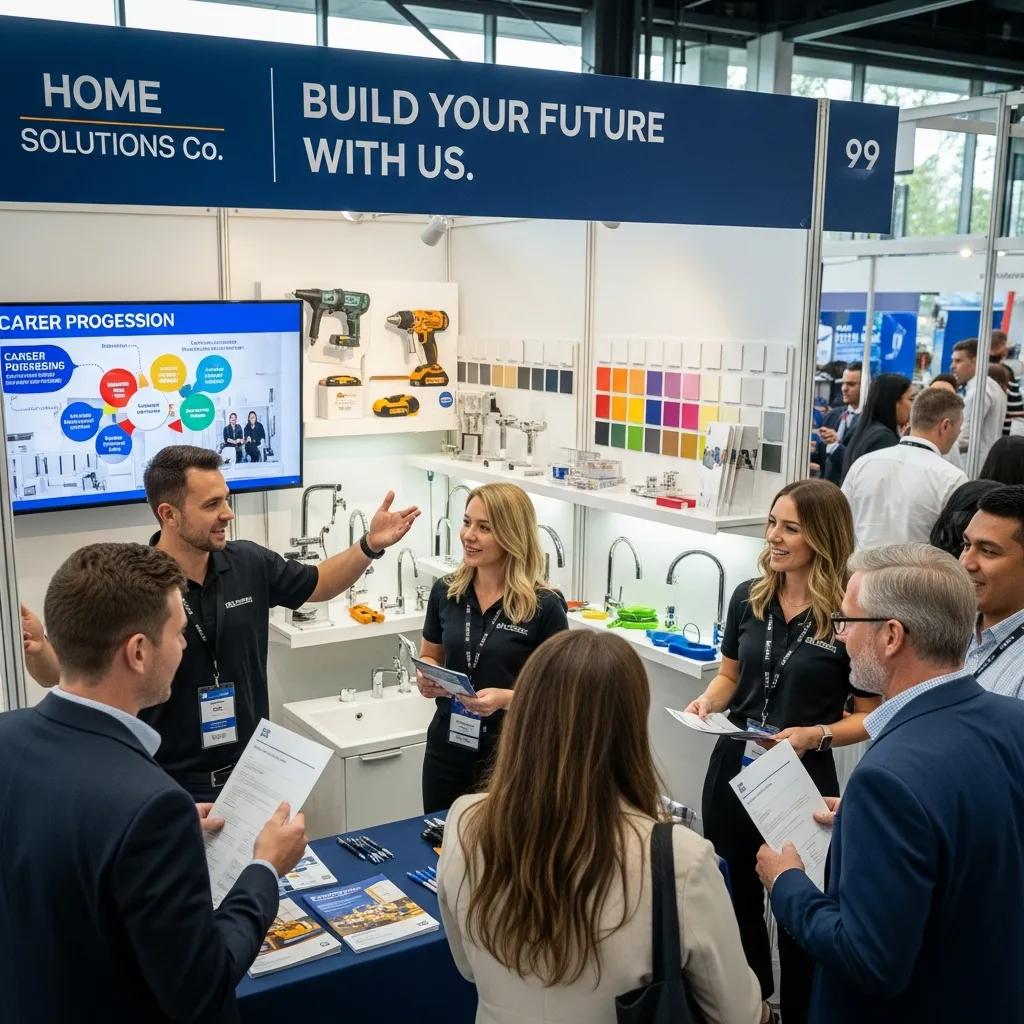
Hiring and onboarding top reps means using a trade‑aware funnel, honest job specs, and a tight 30/60/90 onboarding plan that shortens time‑to‑first‑sale and reduces churn. For in‑home sales prioritize credibility, comfort with estimating, and consultative communication over generic outbound experience. Layer onboarding with product training, scripts, objection handling, and CRM workflows so reps can close reliably and report progress. Below is a checklist of sourcing and screening methods, followed by an onboarding map that links steps to outcomes.
- Local trade referrals: Pull candidates from installers, crews, and supplier networks for built‑in credibility.
- Job boards + targeted copy: Use role‑specific descriptions that stress consultative in‑home selling and closing.
- Behavioral interviews: Include role‑plays and scorecards to evaluate estimating and rapport skills.
- Short trials: Use paid field trials or shadowing to validate fit before hiring.
These sourcing and screening tactics feed a structured onboarding pipeline that speeds rep readiness and improves retention by creating early success signals.
| Onboarding Step | Goal | Expected Timeframe / Outcome |
|---|---|---|
| Orientation & product training | Establish baseline product and company standards | 1 week; rep can clearly explain core offerings |
| Script & objection training | Build consultative selling and pricing confidence | 2–3 weeks; consistent scripted demos in role‑play |
| CRM & paperwork workflows | Ensure reporting accuracy and follow‑up discipline | 2 weeks concurrent; correct activity logging |
| Shadowing & ride‑alongs | Real‑world practice and confidence building | 2–4 weeks; first independent consults scheduled |
| Performance review & milestones | Measure time‑to‑first‑sale and ramp progress | 30/60/90 days; target first sale by day 30–60 |
This onboarding checklist removes ambiguity for new reps and creates measurable ramp milestones — next we cover recruiting best practices and interview scorecards to vet candidates before they enter the pipeline.
What Are the Best Practices for Recruiting Skilled Home Improvement Sales Talent?
Recruiting top home improvement sales talent starts with honest job previews, trade‑aligned job descriptions, and interviews that simulate in‑home selling. Write job posts that emphasize consultative selling, estimating comfort, and reliability, and include KPIs and compensation to attract the right candidates. Use behavioral questions and a short role‑play that mirrors a homeowner consultation to score rapport, needs diagnosis, and objection handling. Source through trade referrals, supplier networks, and local classifieds where construction‑savvy candidates look for roles that bridge field and sales. These steps reduce mismatches and shorten ramp time.
How Can Structured Onboarding Programs Reduce Turnover and Boost Sales?
Structured onboarding cuts turnover and boosts sales by giving new reps clear expectations, early wins, and continuous feedback during the first 90 critical days. A 30/60/90 plan should list deliverables (first consults, follow‑ups, CRM accuracy), training modules (scripts, pricing, objections), and coaching touchpoints (ride‑alongs, role‑plays, weekly 1:1s). Celebrate early wins — first independent close or first profitable proposal — to build confidence and reduce churn. Regular checkpoint reviews let managers remove blockers and personalize coaching to accelerate time‑to‑first‑sale, directly improving hiring economics. These milestones tie back to the KPIs managers should track to measure individual and team progress.
Which Sales Performance Metrics Should Home Improvement Managers Track?
Key sales metrics for home improvement managers include close rate, average ticket, lead‑to‑proposal conversion, pipeline velocity, and forecast accuracy. Together they show whether coaching, process, or lead quality needs attention. Tracking these KPIs helps diagnose root causes — poor close technique, underqualified leads, or slow proposal turnaround — and prioritize fixes. The table below defines each KPI and suggests the coaching action that follows from the data.
| KPI | Definition | Coaching Action |
|---|---|---|
| Close Rate | Conversions per proposal submitted | Run objection‑handling coaching and review proposal quality |
| Average Ticket | Average project value per closed job | Coach upsells and protect margin with pricing scripts |
| Lead‑to‑Proposal Conversion | Leads scheduled that become formal proposals | Improve qualification scripts and booking discipline |
| Pipeline Velocity | Speed from lead to close | Automate follow‑ups and tighten scheduling windows |
| Forecast Accuracy | Variance between forecasted and actual revenue | Improve activity tracking and recalibrate probabilities |
Use a weekly reporting rhythm and a simple dashboard to turn KPIs into coaching topics, not just numbers. In weekly reviews, focus on one KPI per rep so feedback is specific and actionable — for example, if a rep’s close rate is low, run role‑plays around their common objections and review recent consult notes or recordings. That links metric insights directly to observable behavior and next‑step coaching.
What Key Performance Indicators Drive Sales Team Success in Remodeling?
The highest‑leverage KPIs in remodeling are close rate, average ticket, and lead‑to‑proposal conversion because together they determine revenue per lead and forecast reliability. Raising close rate boosts conversion without more leads; increasing average ticket multiplies revenue per close — both are coaching priorities. Use simple case examples in coaching: a 5% lift in close rate on the same lead volume can drive meaningful revenue, and a $2,000 increase in average ticket compounds over time to change staffing needs. Read KPI trends across weekly and monthly windows and correlate shifts with process changes — a new proposal template or pricing script — to find causal links and repeat what works across the team.
How Can Sales Forecasting and Reporting Improve Team Results?
Forecasting and reporting give leaders predictable hiring, cash flow, and coaching rhythms that reduce last‑minute scrambling. Keep forecasts simple: multiply pipeline value by stage probabilities (based on historical close rates) and update weekly to spot trends early. Reporting should be concise — activity (calls/consults), pipeline by stage, top three deals at risk, and variance to target — so meetings focus on fixing deals, not just reviewing numbers. Reliable forecasting gives leaders time to adjust marketing, schedule hiring, and prioritize high‑value coaching, reducing owner‑dependence in selling.
How Can You Optimize the Sales Process for Home Improvement Sales Teams?
Optimizing the sales process means mapping lead‑to‑handoff workflows, enforcing CRM discipline, and automating repetitive touches so reps spend more time closing and less on admin. Process mapping uncovers friction — late proposals, missing qualifying questions, or weak follow‑up — that hurt conversion. Focus on three CRM features and three automation wins that deliver the biggest impact, and follow the implementation tips below when you roll them out.
- Pipeline stages: Define stages from lead to estimate to closed to handed‑off job so forecasting stays accurate.
- Activity logging: Require consult notes, follow‑up tasks, and next‑step dates to enable coaching and accountability.
- Integration with project tools: Make sure estimates and scope transfer cleanly to operations to protect margin and the customer experience.
These process fixes create smoother throughput and more consistent handoffs to operations. Below are the CRM features and automation tactics that typically deliver the biggest returns.
| CRM Feature | Benefit | Implementation Tip |
|---|---|---|
| Custom pipeline stages | Better forecasting and stage‑specific coaching | Map stages to seller behaviors, not just outcomes |
| Activity/task automation | Ensures consistent follow‑ups and reduces slippage | Automate reminders with clear owners and due dates |
| Proposal templates & e‑sign | Faster proposals and fewer errors | Standardize scope language and pricing bands |
Standardizing these features and automations reduces human error and frees owners to focus on growth rather than daily firefighting. The next section explains the CRM’s role in keeping these workflows running.
What Role Does CRM Play in Managing Home Improvement Sales Workflows?
A CRM gives pipeline visibility, enforces activity‑based selling, and connects sales data to project execution — all critical for accurate forecasting and repeatable processes. For contractors, a CRM should capture consult notes, estimate versions, follow‑up tasks, and handoff triggers so deals move predictably through the funnel. Discipline in CRM use lets managers spot behavior gaps — missing follow‑ups or late proposals — and turn them into coaching items instead of subjective criticism. Integrating CRM fields with reporting dashboards keeps weekly huddles focused on fixing bottlenecks and reviewing top at‑risk opportunities, creating a continuous improvement loop from data to coaching.
How Can Automation Streamline Sales Cycles and Improve Efficiency?
Automation handles routine touches — appointment confirmations, follow‑up reminders, and proposal delivery — so reps can concentrate on consults and closing. High‑ROI automations include appointment reminders to cut no‑shows, templated proposal generation for faster delivery, and multi‑step follow‑up sequences to re‑engage quiet leads. Implement automations thoughtfully: keep personalization tokens, and audit sequences weekly to avoid stale messaging. The payoff shows up as faster pipeline velocity and better lead‑to‑proposal conversion, which lets your team handle more consults and higher‑ticket opportunities.
What Are the Best Strategies to Scale and Grow Your Home Improvement Sales Team?
Scaling a home improvement sales team requires repeatable hiring, leadership layering, delegation, and documented systems so growth doesn’t rely on the owner. Adding team leads or regional managers builds capacity while keeping coaching quality intact. Key moves include delegating routine coaching to second‑line managers, standardizing playbooks for proposals and pricing, and documenting procedures to make the business sellable. Below is a practical checklist for organizational scaling and a short note on building exit‑ready value.
- Hire for teachability and document every sales process so it can be replicated.
- Develop second‑line managers with a coaching playbook and clear KPIs.
- Standardize estimates and approval matrices to protect margin as volume grows.
- Track exit‑readiness metrics: steady revenue, management depth, and documented SOPs.
Put these pieces together and you create a repeatable growth engine — and move the business toward being sellable by strengthening team leadership and systems.
How Do You Build a Sellable Home Improvement Business Through Team Leadership?
Buyers pay for documented processes, management depth, recurring revenue, and teams that perform independent of the owner — and strong team leadership creates those assets. To increase sellability, document your sales playbook, KPIs, and SOPs so future owners see repeatable results instead of owner‑reliance. Demonstrate management depth by promoting and training second‑line managers to run day‑to‑day operations, and maintain consistent forecasting accuracy and healthy margins across reporting periods. Those improvements raise valuation and buyer confidence because they signal predictable future cash flow and a transferable operating model.
What Advanced Leadership Techniques Support Sustainable Sales Growth?
Advanced techniques for sustainable growth include designing a performance culture, building succession plans, assigning matrixed responsibilities, and providing formal leadership training for emerging managers. Create a performance culture with public targets, development plans, and objective scorecards tied to compensation. Use succession planning to identify high‑potential reps and give them stretch leadership tasks with coaching responsibilities so they’re ready to step up. These approaches scale leadership capacity and help preserve company culture as headcount grows — protecting the systems that allowed growth in the first place.
How Does the RPC Framework Support Effective Team Management in Home Improvement Sales?
The RPC Framework — Rapport, Professionalism, Close — applies directly to team leadership by shaping hiring standards, coaching routines, and performance expectations that create consistent customer experiences and predictable sales. Rapport guides hiring and coaching for trust and needs diagnosis; Professionalism covers presentation, proposal accuracy, and process discipline; Close covers scripts, price protection, and closing cadence. Teaching RPC at the team level standardizes consults and gives coaches a shared language for role‑plays and scorecards. Below we translate each RPC pillar into leadership behaviors and show how training pathways roll it out across a team.
- Rapport → Hire and coach for trust‑building and needs diagnosis.
- Professionalism → Standardize proposals, on‑site conduct, and documentation.
- Close → Train closing scripts, price protection tactics, and disciplined follow‑up.
How Do Rapport, Professionalism, and Close Principles Apply to Sales Team Leadership?
Rapport means hiring and training reps who build trust quickly in‑home and who can diagnose homeowner priorities efficiently; leaders must model and coach these behaviors. Professionalism shows up as pre‑visit checklists, scoped proposals, and consistent follow‑up — steps that cut rework and protect margin; leaders should audit these process points regularly. Close principles require disciplined pricing conversations, scripted concessions, and closing sequences that defend average ticket and margin. Teaching RPC using real consult recordings, role‑plays, and scorecards moves the team from ad‑hoc selling to repeatable processes that produce reliable KPIs and predictable forecasts.
How Can Home Improvement Closer’s Tier 3 Ownership Course Help Scale Your Sales Team?
Tier 3: Ownership centers on closing larger jobs, scaling teams, and building a sellable business. The course covers practical hiring, training, and management routines like "Build a crew you can trust (hire, train, manage)" and "Team leadership that gets results." For managers wanting a productized path to scale, Tier 3 is available month‑to‑month at $250/month or annually at $208/month billed yearly, and paid tiers include a 60‑day money‑back guarantee. The RPC Framework underpins the curriculum — a system the program says has supported over $237M closed across 20+ trades — and the course equips leaders to delegate, document, and grow revenue while protecting customer experience. This structured training complements in‑house coaching with templates, frameworks, and managerial routines that speed scaling and exit preparation.
Sign up to learn more: Tier 1 is free, or choose paid Tiers 2 & 3 to access deeper training and implementation support.
Sign up to learn more: Tier 1 is free, or choose paid Tiers 2 & 3 to access deeper training and implementation support.
Frequently Asked Questions
What are the common challenges faced by home improvement sales teams?
Common challenges include inconsistent close rates, long ramp‑up times for new reps, and over‑reliance on the owner for sales — all of which limit growth. Teams also struggle with lead qualification, slow proposal turnaround, and keeping a consistent sales process. Fixing these issues starts with structured coaching, performance management, and process discipline so reps can convert leads into profitable projects more reliably.
How can technology enhance the performance of home improvement sales teams?
Technology streamlines process and communication so reps sell more and do less admin. A solid CRM tracks leads, captures consult notes, automates reminders, and speeds proposal delivery. Data and dashboards reveal performance trends so managers can target coaching where it matters. Used right, technology increases close rates and revenue while freeing up time for high‑value selling.
What role does team culture play in the success of home improvement sales teams?
Culture is critical — it drives collaboration, motivation, and accountability. A positive culture encourages reps to share wins and problems, supports continuous learning, and makes recognition part of daily routines. When a team values performance and development, retention improves and results follow.
How can sales managers effectively track and analyze team performance?
Track a focused set of KPIs that align with business goals and review them regularly. Metrics like close rate, average ticket, and lead‑to‑proposal conversion reveal trends and coaching needs. Use dashboards for clear visuals, and hold one‑on‑ones to turn metric insights into personalized coaching plans.
What are the benefits of ongoing training and development for sales reps?
Ongoing training sharpens skills, builds confidence, and increases job satisfaction. Regular sessions on product knowledge, sales techniques, and common objections produce better consults and higher close rates. Investing in development also builds a learning culture that improves retention and motivates reps to hit targets.
How can sales teams maintain motivation during challenging times?
Keep motivation up with recognition programs, achievable short‑term goals, and regular check‑ins. Celebrate small wins, provide skill resources, and encourage collaboration so reps feel supported. Those practices help teams stay resilient and focused through tough patches.
Conclusion
Effective team management for home improvement sales does more than lift close rates — it builds a culture of accountability and continuous improvement. With structured coaching, clear metrics, and reliable processes, businesses can boost sales, reduce turnover, and scale without founder overload. Use these strategies to turn your sales team into a predictable, high‑performing unit that supports sustainable growth. Explore our resources and training options to take your team to the next level.