

Home improvement sales training that helps contractors close more deals

Contractor sales work when you have repeatable, trade-focused methods — not pressure scripts. This guide lays out practical, field-tested sales strategies built for home improvement: the RPC Framework (Rapport, Professionalism, Close), objection handling, confident closing moves, and the operational steps to scale a sales team into a sellable business. You’ll get specific actions — what to say, what to show, and which processes to lock down — so close rates and average ticket sizes improve. Each principle is tied to real contractor scenarios (roofing, HVAC, remodeling, and more) and to a progressive practice path. Inside: short checklists, tactical scripts, trade examples, quick-reference EAV tables, and clear next steps for on-the-job use. By the end, you’ll have an actionable playbook for better homeowner conversations, smoother objection handling, stronger closes, and repeatable systems that make growth predictable.
What is the RPC Framework and how it improves home improvement sales
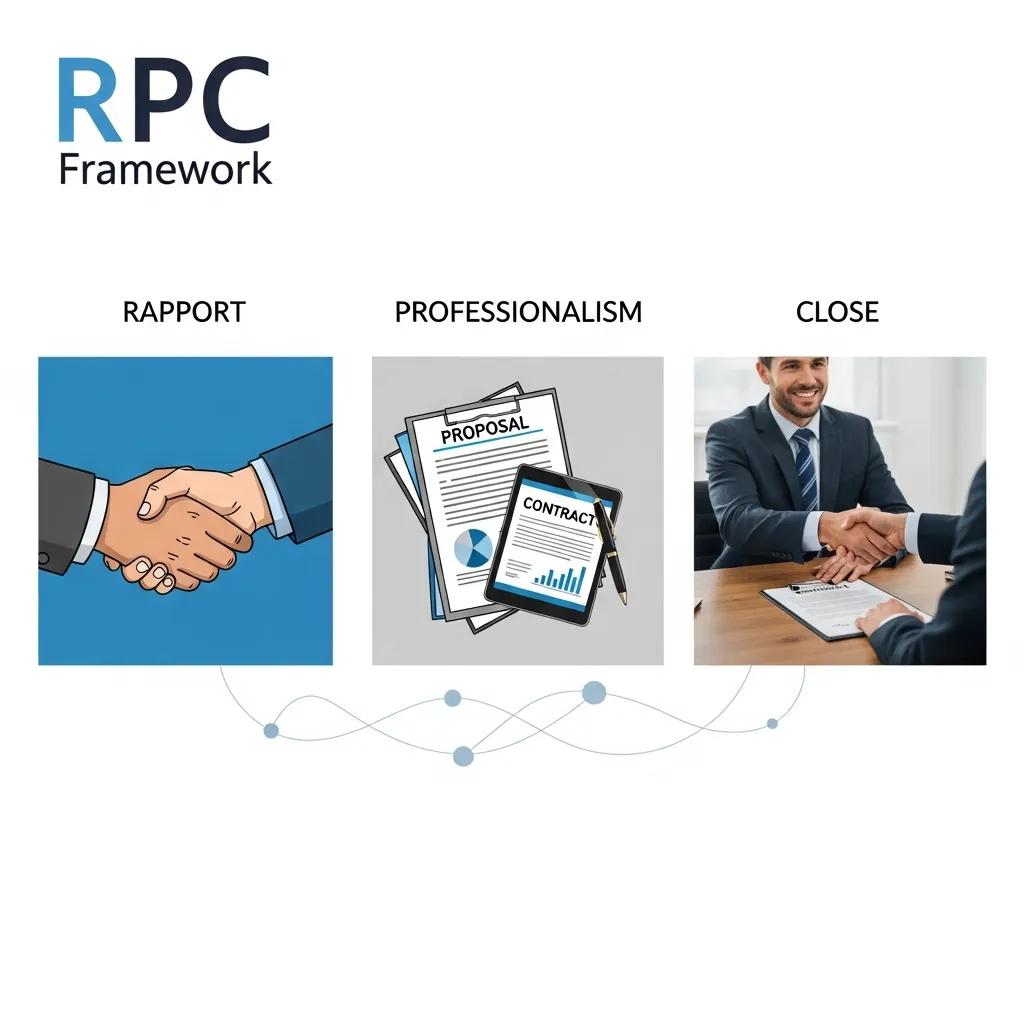
RPC is a three-part sales method — Rapport, Professionalism, Close — designed to align how sellers behave with how homeowners decide. Rapport is about trust and discovery. Professionalism establishes value through a tight presentation and clear documentation. Close times the ask and uses assumptive, low-friction steps to turn intent into a signed contract. Used together, these pillars cut down price-driven losses, shrink cancellations, and raise conversion by keeping the conversation homeowner-centered. RPC also gives you a diagnostic lens: when a sale stalls, you can pinpoint which pillar needs work and apply repeatable micro-behaviors to fix it in the moment. Below we break each pillar into concrete steps you can practice in-home or over a remote call.
Key components of RPC: Rapport, Professionalism, Close
Rapport starts with a strong first impression and two targeted discovery questions in the first five minutes to surface homeowner priorities and emotional drivers. Professionalism shows up as tidy proposals, clear timelines, confident pricing language, and reference evidence that justify value — these reduce anxiety and frame price as an investment. The Close is about spotting buying signals (agreement, questions about timing or budget) and using low-friction trial closes or staged commitments to get a next step. Turn these into routines: a 30-second discovery script, a two-page value summary in your folder, and one assumptive close question. When made habitual, these micro-behaviors cut cancellations and lift signed-contract ratios.
How RPC helps contractors solve common sales problems
RPC tackles the three biggest deal killers: price objections, inconsistent proposals, and decision delays. Rapport uncovers hidden homeowner concerns so you can reframe value instead of arguing price. Professionalism ensures every estimate reads the same and projects confidence. Close shortens time-to-sign with staged commitments like deposits or phased scopes. For example, rather than debating “too expensive,” ask “which of these priorities matters most?” That reframes trade-offs and often leads to a phased scope that fits budget while protecting margin. Those small conversational shifts create measurable wins: fewer lost jobs to lowball competitors and a clearer path to agreement. Next up: tactical objection handling.
If you want to practice RPC in a structured way, Home Improvement Closer offers a risk-free starting point: a free Foundation tier with 12 videos and six interactive tools to build Rapport and Professionalism routines. Tier 1 includes quick-start objection scripts and community practice, making it practical to turn RPC into consistent field habits.
How can contractors master objection handling to close more
Objection handling turns hesitation into action by diagnosing the true concern and answering it with value-focused, confidence-preserving language. Start by classifying the objection — price, timing, decision-maker, scope — then use a short script that validates the concern, reframes value, and proposes a low-risk next step. Mastery comes from practicing labeled responses, mirroring homeowner words, and offering clear choices instead of yes/no pressure. These techniques protect relationships while moving the sale forward. Below is a compact objection library you can use in coaching and role-play to reduce stalls and increase closes.
Most common homeowner objections and how to handle them

The top homeowner objections are price, “need to think about it,” a missing decision-maker, scope uncertainty, and timing conflicts. Each needs a diagnostic reply that addresses the root cause. For price, use value contrast and tiered options to map features to outcomes. For “need to think,” set a concrete follow-up and ask what information would help decide. If the decision-maker isn’t present, suggest a short joint call or give a one-page checklist for their conversation. For scope uncertainty, break the project into phases with clear deliverables. These tactical moves turn vague hesitation into defined next steps and keep the sales process predictable.
The table below is a quick-reference objection matrix for training sessions and in-field cue cards.
Use this table as a ready reference for common homeowner objections, their usual causes, and short tactical responses your team can use in role-play and live calls.
| Objection Type | Typical Cause | Tactical Response / Script Example |
|---|---|---|
| Price ("It's too expensive") | Perceived low value or budget mismatch | "I get it. Which of these outcomes matters most — durability, timeline, or looks? We can adjust scope to fit that priority." |
| Need to think about it | Risk aversion or missing decision info | "Totally fair. What's the one piece of information that would help you decide? Let's set a quick follow-up for [date/time]." |
| Decision-maker not present | Lack of joint buy-in | "Would a 10-minute call with them help? I can summarize options and timelines so you both have the same picture." |
| Scope uncertainty | Overwhelm or unclear priorities | "We can phase this: phase one secures critical fixes; phase two handles finishes. Which phase should we focus on now?" |
Proven objection techniques that boost contractor sales
Use a few reliable techniques: mirroring, labeling, value contrast, and option presentation. Mirroring repeats the homeowner’s words to surface more info. Labeling names the emotion to validate and defuse resistance. Value contrast compares price to outcomes and the cost of inaction. Option presentation gives two or three clear price paths so the homeowner chooses within boundaries instead of rejecting a single number. Practice these in short scripts during role-play so closers can apply them naturally across trades like roofing or remodeling.
Home Improvement Closer includes these objection modules in the Foundation content and expands them into full objection libraries in the Mastery tier — the next step for teams who want deeper rebuttals and scripts.
Which closing techniques work best for home improvement sales?
Good closes balance timing, confident pricing, and reading homeowner cues so you ask for a commitment at the moment of readiness. Closing should be the natural end of Rapport and Professionalism — when conversation moves from problems to solutions — and use low-friction paths like staged deposits, phased scopes, or assumptive scheduling. Always pair a close with simple documentation: a concise scope summary, timeline, and signature page to reduce pre-signature doubt and make terms clear.
The table below compares practical closing techniques, when to use them, and step-by-step outcomes to help teams pick the right close for each situation.
Use this table as a quick guide to match closing methods with homeowner cues and project type.
| Closing Technique | When to Use | Step-by-Step Example / Outcome |
|---|---|---|
| Assumptive Close | Buyer shows readiness (timeline questions) | Ask: "When should we schedule the crew?" Outcome: locks in a date and deposit with little friction. |
| Staged Commitment | Buyer worried about cost or scope | Offer phase 1 with a deposit; Outcome: lowers the barrier and begins the relationship. |
| Choice Close (two options) | Buyer indecisive on features | Present two vetted options; Outcome: buyer selects a package instead of saying no. |
| Trial Close | During presentation to test readiness | Ask: "Does this solution cover your main concerns?" Outcome: reveals objections early so you can resolve them. |
Using confident pricing and client reading to win more deals
Confident pricing comes from consistent proposals, clear tiers, and anchoring that frames value, not just cost. Present a recommended mid-tier and explain why it fits the homeowner’s priorities. Reading a client means watching verbal cues (questions on timing, materials) and nonverbal cues (body language, tone). When several cues line up, run a short trial close to test commitment. Anchor by showing a full-scope option to set value, then offer simplified choices so the preferred package feels proportionate. Practice anchoring and cue recognition in role-plays so your closers learn to ask at the right time and avoid margin-eroding concessions.
Best practices for closing high-value renovation projects
High-ticket projects need extra documentation, staged payments, and third-party validation to reduce buyer anxiety and justify spend. Use visual proposals, mockups, and a clear milestone schedule so homeowners can picture outcomes and understand when payments are due. Add references and past-project evidence to reinforce reliability. Break payments into staged commitments — design deposit, pre-construction deposit, then final payment — so trust builds over time. After delivering a proposal, follow up proactively: confirm receipt, answer questions within 24–48 hours, and provide a closing timeline that creates urgency without pressure. These steps reduce hesitation and create a smooth path to a signed contract.
Use this quick checklist to increase signed contracts on high-ticket jobs.
- Provide a visual proposal with clear milestones and a payment schedule.
- Use a recommended mid-tier anchor plus two simplified options to ease decisions.
- Offer phased commitments to lower perceived risk.
- Add references, warranties, and documented timelines to build trust.
Applying this checklist makes complex projects feel manageable for homeowners and supports reliable revenue recognition — a direct tie into building a scalable sales operation, covered next.
How can contractors scale sales teams and build a sellable business?
Scaling sales means documented playbooks, repeatable hiring and onboarding, and KPIs that link activity to revenue. Those elements make performance predictable and increase company value. SOPs capture RPC routines, objection responses, and closing scripts so new hires ramp faster. Build a hiring funnel with clear role definitions, a training cadence, and weekly coaching tied to interactive tools that measure skill adoption. Track lead-to-meeting, meeting-to-proposal, and proposal-to-close rates to find bottlenecks and make data-driven hiring or training choices. These operational steps create a sales engine that supports growth and becomes the backbone of a sellable business.
Strategies for sales managers to lead and expand construction sales teams
Managers should adopt a five-step framework: define roles and expectations, create repeatable onboarding, run weekly coaching cycles, use role-play and interactive tools for reinforcement, and measure progress with clear KPIs. Separate responsibilities for prospecting, estimating, and closing so accountability is explicit. Onboarding should include RPC routines, objection scripts, and shadowing. Weekly coaching using recorded role-plays or live observation accelerates skill adoption and keeps messaging consistent. Use scorecards, script libraries, and checklists to standardize evaluation and reduce variability across closers. This approach scales consistent performance while protecting margin and customer experience.
Preparing your home improvement business for sale or long-term growth
To prepare for an exit or sustained growth, document sales playbooks, stabilize pricing, and show predictable revenue via a reliable pipeline and repeat customers. Key value drivers are documented processes, trained teams, stable margins, and evidence of scalable customer acquisition — capture those in shareable SOPs. Build a metrics dashboard that shows pipeline health and margin consistency so buyers or lenders can see stability. Training that institutionalizes RPC routines and sales ops, especially leadership-level processes, directly increases sellability and valuation multiple.
For teams targeting that level, advanced training and community support are critical — Home Improvement Closer’s Ownership tier includes live monthly Q&A and VIP community access to help institutionalize processes and prepare your business for sale.
Which training tier is right for different contractor needs?
Pick a tier based on experience, team size, and business goals. Free foundational training is for teams that need standardized routines and core objection scripts. Mastery helps experienced closers deepen technique and expand their objection library. Ownership targets leaders building scalable, sellable processes. The table below contrasts the three tiers so you can match features to needs and decide where to start.
Use this comparison to choose the tier that fits your role and growth plan — each row highlights features and who benefits most.
| Tier | Key Features | Who It's For |
|---|---|---|
| Tier 1: Foundation (FREE) | 12 foundation videos, 6 interactive tools, quick-start objection scripts, community access | New closers, contractors stuck on pricing, teams standardizing core routines |
| Tier 2: Mastery ($149/mo or $124/mo billed annually) | Includes Tier 1 + 51 videos total, 21 interactive tools, monthly Q&A replays, bonuses | Experienced closers aiming to master objection handling and confident pricing |
| Tier 3: Ownership ($250/mo or $208/mo billed annually) | Includes Tier 1 & 2 + Ownership content (98 videos total), 30 interactive tools, live monthly Q&A, VIP community access | Leaders preparing to scale teams and build sellable processes |
What the free Tier 1 Foundation course includes and who should start here
Tier 1 Foundation is a risk-free starting point that delivers the core routines to run RPC: 12 videos, six interactive practice tools, quick-start objection templates, and community access with no credit card required. It’s ideal for new sales hires, owners frustrated by low close rates, and crews that need consistent in-field behavior to cut price-driven losses. The material focuses on Rapport and Professionalism routines — discovery scripts, tidy proposals, and basic trial closes — so teams can apply tactics immediately and measure progress. Starting with Tier 1 builds a baseline and prepares teams for deeper work.
How Tier 2 Mastery and Tier 3 Ownership expand skills and business capability
Tier 2 Mastery builds on Foundation with a 51-module video library, 21 interactive tools, monthly Q&A replays, and bonuses to sharpen objection handling and confident pricing. Tier 3 Ownership adds leadership and scaling content — 98 videos, 30 interactive tools, live monthly Q&A, and VIP community access — focused on playbooks, SOPs, and valuation-ready processes. Both paid tiers include a 60-day money-back guarantee to reduce purchase risk and support adoption. Most teams progress: start with Tier 1, move to Tier 2 to master closers' tactics, then to Tier 3 to institutionalize systems for scale and exit readiness.
Why industry-specific sales training matters for home services
Industry-specific training adapts scripts, objections, and proposals to trade realities — roofing decisions aren’t the same as kitchen renovations — so tailored training converts better than generic programs. Trade modules tackle objections unique to each discipline (warranty concerns for roofing, disruption for remodeling, seasonal timing for HVAC), making coaching immediately usable on the job. Custom tools and sector role-plays shorten the gap between training and revenue because closers rehearse real scenarios they face every day. That specificity lowers cancellations, increases referrals, and boosts repeat business — the clear advantage of a specialized curriculum over one-size-fits-all training.
How training for 20+ trades improves contractor performance
When training includes scenarios for 20+ trades, teams get material that matches their exact selling context, which raises learning transfer and on-the-job use. Closers rehearse trade-specific objections and pricing talks: roofing focuses on weather and warranties; remodeling covers design choices and work staging. This leads to measurable gains — higher first-presentation close rates and fewer post-signature change orders because expectations were set correctly. Tailored training also supports cross-sell and upsell strategies that reflect trade realities, improving average ticket size and customer satisfaction.
How RPC differs from generic sales training
RPC isn’t a rigid script library. It’s human-centered, built around flexible micro-behaviors and trade-specific tools so conversations feel natural, not pushy. The method combines rapport-building, value-focused professionalism, and timed closes with interactive tools and customizable playbooks. RPC emphasizes practice, role-play, and measurable routines so teams can iterate and see real improvements. With a claimed $237M closed across 20+ trades when applied systematically, RPC delivers more natural conversations, higher close rates, and repeatable processes compared with generic programs.
- RPC is human-centered: it puts homeowner priorities and trust-building first.
- RPC is tool-driven: scripts come with interactive tools and playbooks for focused practice.
- RPC is trade-specific: modules adapt to the needs and objections of each trade.
Those differences explain why a trade-focused framework produces better outcomes and fewer cancellations for contractors who adopt it.
Frequently Asked Questions
What are the benefits of using the RPC Framework in home improvement sales?
RPC aligns seller behavior with how homeowners make decisions. By focusing on Rapport, Professionalism, and Close, contractors build trust, present clear value, and convert leads into signed contracts more often. The framework reduces price-driven objections and cancellations, increases conversion, and gives actionable steps to diagnose and correct stalled sales with repeatable micro-behaviors.
How can contractors effectively practice objection handling?
Practice objection handling with role-play that mirrors real objections. Classify objections (price, timing, decision-maker, scope), then rehearse short, labeled responses. Regular training with feedback reinforces these skills. Keep a concise objection library handy during practice so teams can quickly reference proven replies and build confidence for live situations.
What role does follow-up play in closing sales?
Follow-up keeps momentum and shows commitment. After a proposal, confirm receipt, answer questions promptly, and set a clear follow-up timeline that nudges decision-making without pressure. Timely, purposeful follow-up shortens time-to-close and helps overcome lingering objections after the estimate is delivered.
How can contractors scale their sales teams effectively?
To scale, document your playbooks, define clear roles, and build repeatable onboarding. Use weekly coaching, role-play, and interactive tools to reinforce skills and keep messaging consistent. Track KPIs tied to revenue so you can spot bottlenecks and make data-driven hiring or training decisions. Repeatable processes and measurable results are what let teams scale while protecting margin and customer experience.
What are the key differences between the training tiers offered?
The tiers vary by depth and audience. Foundation (free) gives core routines and objection scripts for beginners. Mastery expands technique and tools for experienced closers. Ownership targets leaders who need playbooks and SOPs to scale and prepare a business for sale. Each tier builds on the last so teams can grow capability in stages.
Why is industry-specific training important for contractors?
Industry-specific training tailors language, scripts, and objections to the realities of each trade, making coaching directly applicable on the job. That relevance speeds learning, reduces cancellations, and increases conversion because closers practice scenarios they actually face. In short: targeted training produces faster, more consistent revenue impact than generic programs.
Conclusion
RPC gives contractors a practical framework to sell more effectively and build stronger client relationships. Focus on Rapport, Professionalism, and Close to raise conversion and customer satisfaction. If you want step-by-step training, explore our tiers — there’s a path for every level, from foundation to ownership. Start building predictable, repeatable sales systems today.