

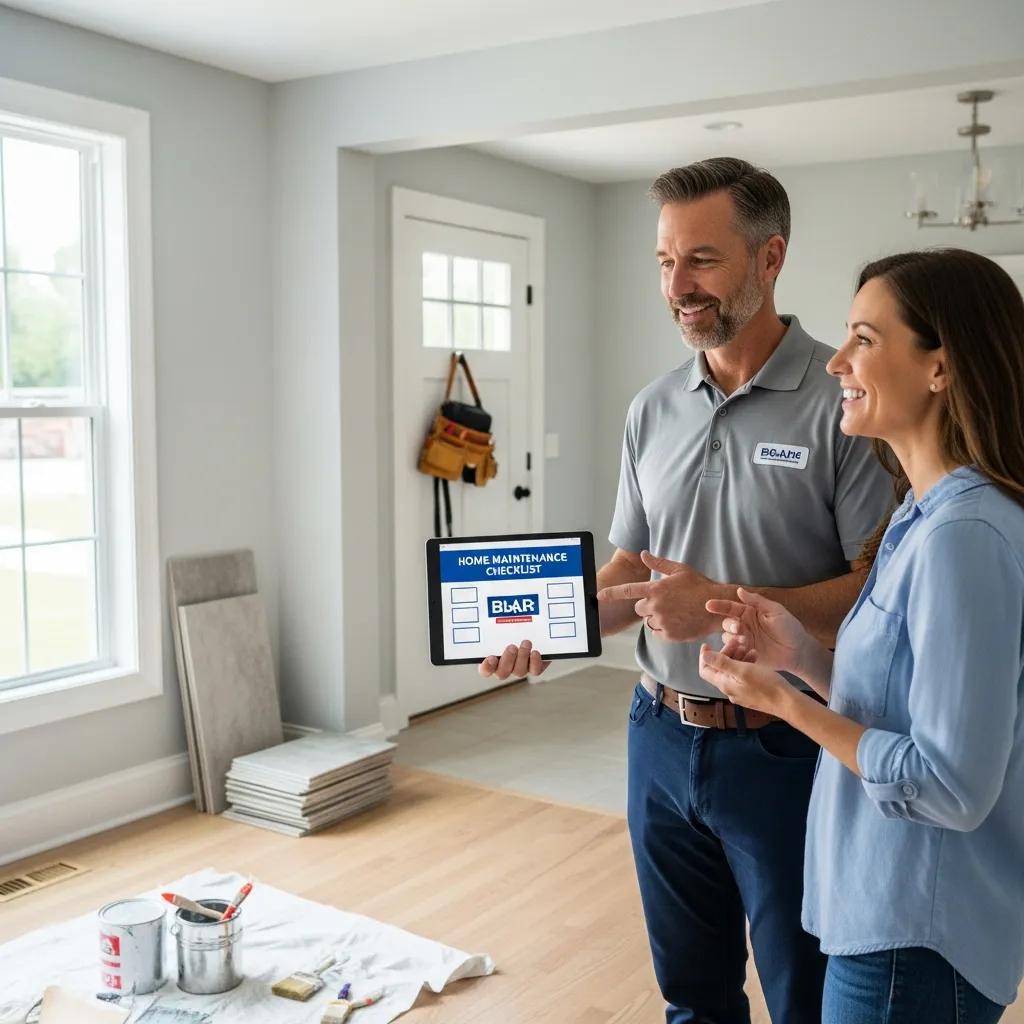
Customer retention in home improvement is about keeping homeowners connected after a job ends so they come back for maintenance, new projects, or send referrals. This guide lays out how retention works, why it moves the profitability needle for contractors, and which hands-on tactics actually create repeat business — from a practitioner-led sales framework and post-sale playbooks to realistic loyalty programs and the metrics you should watch. You’ll get scripts, follow-up cadences, formulas for CLTV and repeat purchase rate, and loyalty options tailored to remodelers and trade contractors. We map the RPC Framework (Rapport, Professionalism, Close) to retention outcomes, show post-sale sequences that turn one-offs into long-term clients, and explain how to use retention data to prioritize investments. Throughout, find checklists and clear steps crews and owners can use to build predictable, repeatable revenue.
What Is Customer Retention in Home Improvement and Why Does It Matter?
Customer retention means keeping completed-job clients engaged so they come back, refer neighbors, or buy maintenance plans. It works by protecting trust, delivering clear value, and creating consistent touchpoints after the project wraps. Retention matters because contractor acquisition costs are high — even a small bump in repeat business can lift margins and Customer Lifetime Value. In practice, retention looks like timely post-project follow-up, clear warranties and documentation, scheduled maintenance, and simple referral asks. Contractors who make retention a system turn one-off projects into steady revenue streams and gain the freedom to charge for quality. The next section makes the profit case and highlights common churn causes you can fix.
How Does Customer Retention Impact Contractor Profitability and Business Growth?
Retention boosts profitability by increasing Customer Lifetime Value (CLTV) and lowering the effective cost to earn each dollar, because repeat customers need less marketing and often take higher-margin work. A basic CLTV formula — — shows how small gains in repeat rate scale revenue, and a 5% lift in retention can produce outsized profit gains for service businesses. For example, a $5,000 average project plus two repeat jobs over three years raises CLTV and shortens payback on acquisition costs. Tracking retention-driven revenue helps you decide whether to fund follow-up sequences, loyalty programs, or crew training. Next, we’ll identify common churn points so you can plug leaks that hurt CLTV.
What Are Common Reasons Customers Leave Home Improvement Services?
Customers usually walk away because of communication breakdowns, unclear scope or timing, surprise costs, or unprofessional behavior on site — and each of these is fixable with specific sales and service moves. Communication issues include slow replies or vague next steps; standardized updates and confirmation messages fix that. Scope and timing problems come from vague contracts or missed windows; clear scopes and realistic schedules prevent disputes. Price surprises disappear when proposals are transparent, options are shown, and objections are handled early. Addressing these root causes raises repeat rates and sets the table for the retention processes we cover below.
How Does the RPC Framework Drive Customer Retention for Contractors?

The RPC Framework — Rapport, Professionalism, Close — powers retention by combining real human connection, consistently executed service, and closing language that points toward future work. Rapport builds the relational foundation that increases NPS and referrals; professionalism reduces cancellations by matching expectations to delivery; and confident closing converts opportunities while keeping the relationship intact. Putting RPC into practice means concrete steps in discovery, written agreements, and closing scripts that position you as a long-term partner, not a one-time vendor. The table below ties RPC steps to tactical examples crews and salespeople can use in the field.
| RPC Step | Tactical Example | Application |
|---|---|---|
| Rapport | Discovery questions, homeowner history, personalized notes | Use pre-job calls to capture homeowner preferences and reference them on site |
| Professionalism | Clear contracts, punctuality, jobsite cleanup, upfront pricing | Create a finish checklist and standardize start-of-day and end-of-day routines |
| Close | Future-focused language, maintenance proposals, referral asks | Close by outlining next projects and scheduling a follow-up within 30 days |
Translating RPC into daily habits turns vague good intentions into repeatable routines crews and sales teams can practice and measure. Those tactical examples lead directly into specific rapport techniques installers and office staff can use on the first visit.
How Does Building Rapport Establish Long-Term Customer Trust?
Building rapport creates long-term trust by asking the right discovery questions, personalizing interactions, and recording homeowner preferences so follow-ups feel tailored. Begin visits by asking about the homeowner’s history with the property, their priorities, and any constraints; store that info in a simple CRM or job file so anyone who returns the call sounds informed. Empathy statements and reflective listening reduce perceived risk and lift NPS, which increases referrals and repeat work. Role-play and short scripts help teams deliver consistent rapport across crews and admin staff. These skills make it easier to deliver professional execution, which directly reduces cancellations and earns future jobs.
Why Is Professionalism Essential for Repeat Business and Customer Loyalty?
Professionalism is the proof you show up reliably — on-time arrivals, clear contracts, respectful crews, and thorough cleanup communicate competence and prevent buyer’s remorse. When homeowners see steady professionalism they trust your pricing and are more open to upgrades and maintenance plans. Practical steps like pre-job confirmations, detailed scopes, and a job-completion checklist cut disputes and support positive reviews. Training crews to do these things consistently turns rapport into measurable loyalty and creates the conditions for confident closes that preserve relationships.
How Does Confident Closing Lead to Referrals and Repeat Clients?
Confident closing turns satisfied customers into long-term clients by framing proposals around future value — next-step recommendations, maintenance windows, and calendar-based scheduling — instead of only the immediate sale. Use closing language that ties recommendations to ongoing care (seasonal checks, warranty upkeep, upgrades) and lock follow-ups into the calendar to remove friction later. Objection-handling scripts that respect homeowner concerns while protecting price keep trust intact and keep doors open for referrals. Closing with a simple referral ask or a packaged maintenance offer often converts a single job into a steady pipeline of repeat opportunities.
We also run training modules and practical exercises designed to help home improvement sales pros learn these skills — start with a free entry tier, then move to paid tiers for deeper scripts and reproducible templates.
Quick conversion tip: Work through RPC tactics in short modules, then test one technique on your next estimate to see immediate retention lift.
What Are Effective Post-Sale Follow-Up Strategies to Sustain Customer Loyalty?
Good post-sale follow-up locks in value right after completion and establishes scheduled touchpoints so homeowners think of you first for future needs. Start with a final walkthrough, written care instructions, and a clear warranty statement to prevent confusion and confirm satisfaction. Keep the relationship active with seasonal guides, maintenance reminders, and targeted check-ins timed to the property’s needs — stay top of mind without being pushy. Ask for feedback and manage reviews to amplify reputation and feed referral channels.
Five high-impact follow-up tactics contractors can implement reliably:
- Final walkthrough and written care instructions within 24–48 hours to confirm satisfaction.
- Scheduled seasonal check-ins (for example, a pre-winter inspection) with tailored advice for the property.
- Automated but personalized email or SMS reminders for maintenance milestones and warranty dates.
- Simple, guided review-request scripts sent after confirmed satisfaction to capture online testimonials.
- Referral incentives or thank-you gestures after repeat purchases to encourage advocacy and new leads.
These steps create a predictable cadence that turns satisfied customers into repeat buyers and active advocates, forming the backbone of measurable retention programs operations and marketing can track.
How Can Personalized Check-Ins and Seasonal Guides Improve Client Retention?
Personalized check-ins and seasonal guides keep the relationship active with timely, useful content that shows your expertise between jobs. Examples include a spring deck inspection checklist, pre-winter heating tips, or maintenance reminders specific to installed systems — deliverables that make you a trusted advisor instead of a one-off vendor.
Short email and phone scripts that reference the original project and give concrete next steps increase response rates and open doors to more work.
A simple 12-month cadence — walkthrough, 3-month touch, seasonal guide, annual maintenance offer — creates multiple chances for additional revenue and preserves trust over time.
How Do Customer Feedback and Online Reviews Enhance Contractor Reputation?
Customer feedback and online reviews are social proof that bring in new clients and support premium pricing; start by asking for reviews at the moment satisfaction is highest — after the final walkthrough. Use scripts that make it easy for homeowners to reply and suggest what to mention (timeliness, professionalism, cleanup).
Handle negative feedback quickly: acknowledge the issue, propose a remedial step, and follow up to confirm resolution. Turning complaints into resolved experiences often builds stronger loyalty than a problem-free job.
Collecting reviews and testimonials feeds your sales and marketing conversations and lowers acquisition friction for future projects.
If you want step-by-step scripts and templates for these follow-ups, our Tier 2 modules cover objection handling and client communication with ready-to-use templates and practice workflows.
Micro-CTA: Start with a free foundation module to practice follow-up scripts on your next job.
How Can Loyalty Programs and Referrals Boost Repeat Business in Home Improvement?
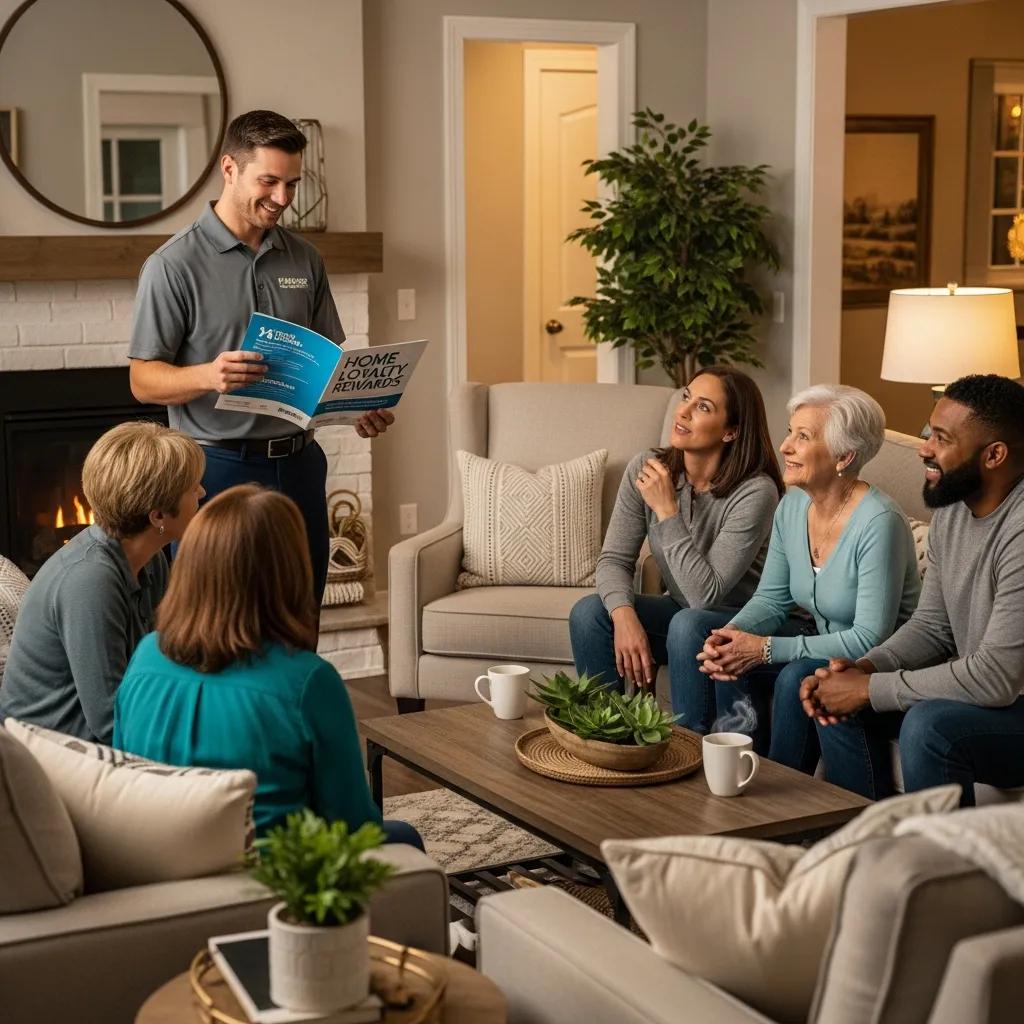
Loyalty programs and referral systems increase repeat business by creating clear, easy-to-understand incentives that encourage customers to book again and share you with others. They work best when simple, well-communicated, and tied to services homeowners actually need.
The table below compares common program types and suggests where each fits typical contractor businesses.
| Program Type | Best For | Implementation Tip |
|---|---|---|
| Discount Card | Frequent small repairs and service calls | Limit discounts to certain categories to protect margins |
| VIP Membership | Customers who need regular maintenance or medium-ticket recurring work | Offer a flat monthly fee with scheduled visits and priority booking |
| Referral Bonus | High-ticket remodeling and specialty trades | Give referral credits or discounts and track them with simple codes |
PICK a program that matches your average ticket and customer frequency so incentives drive profitable repeat business and sustainable referrals. The next section explains which models work best for common contractor scenarios.
What Types of Loyalty Programs Work Best for Contractors?
Practical loyalty programs for contractors are low-friction and offer a clear value exchange: discount cards for regular small jobs, VIP maintenance plans for scheduled revenue, and referral bonuses for high-ticket projects.
Discount cards are right for businesses with many service calls where you control margin impact with caps or category limits; VIP plans turn irregular work into dependable monthly or annual revenue; referral bonuses work when the reward is measurable and the referral process is simple.
A short implementation checklist — define benefits, set eligibility, automate reminders, and track results — helps you run a pilot and measure ROI quickly.
Loyalty Programs: Strategic Design and Effectiveness for Customer Retention
Loyalty programs are a core CRM tool for identifying and rewarding customers who deliver long-term value. This chapter reviews program objectives, designs that succeed or fail, and real-world examples to illustrate what works. It breaks loyalty programs into key design dimensions — rewards, sponsorship, and operational setup — and explains four drivers of effectiveness with empirical evidence across industries. The chapter closes with practical guidelines and a seven-point checklist for designing and implementing loyalty programs that actually move retention.
Loyalty programs: design and effectiveness, V Kumar, 2012
How Do Referrals and Customer Advocacy Scale Home Improvement Businesses?
Referrals scale your business by delivering low-cost, high-trust leads that convert better than cold traffic. As satisfied customers recommend your work, that effect compounds and brings steady, higher-quality leads.
Ask for referrals after a confirmed positive experience, make the referral method effortless, and recognize advocates with a personal thank-you to build a reliable pipeline.
Track referrals with simple attribution codes or CRM tags and measure conversion to fine-tune incentives. As volume grows, document the process so crews and office staff can replicate it without relying on sporadic marketing.
Micro-CTA: Offer a straightforward referral credit and ask within 48 hours of job completion to maximize participation.
Which Key Metrics Should Contractors Track to Measure Customer Retention Success?
Track CLTV, Repeat Purchase Rate, Net Promoter Score (NPS), and churn to quantify retention and decide where to invest — follow-up sequences, loyalty plans, or crew training. These metrics give both descriptive insight and prescriptive direction when you measure them regularly.
The table below lists each metric with a copyable formula you can drop into a spreadsheet.
| Metric | Description | Formula/How to Calculate |
|---|---|---|
| CLTV | Lifetime revenue per customer | Average job value × Avg purchases per year × Avg customer lifespan (years) |
| Repeat Purchase Rate | Share of customers with >1 purchase in period | (Customers with >1 purchase ÷ Total customers) × 100 |
| NPS | Customer advocacy score | % Promoters − % Detractors from survey responses |
| Churn Rate | Percentage of customers lost | (Customers lost in period ÷ Customers at period start) × 100 |
Running these calculations regularly shows which retention tactics move revenue and where to scale investments. The next subsection breaks down the formulas with a worked example to make the math practical.
What Are Customer Lifetime Value, Repeat Purchase Rate, and Net Promoter Score?
Customer Lifetime Value (CLTV) estimates average revenue from a client over the relationship and helps you prioritize retention work; a contractor-specific CLTV is average job value × purchase frequency × retention years.
Repeat Purchase Rate measures how many customers come back for more work and directly affects revenue predictability; calculate it as the percent of customers with more than one purchase in a set period.
Net Promoter Score (NPS) gauges advocacy by asking how likely customers are to recommend you on a 0–10 scale, then subtracting percent detractors from percent promoters.
A worked example — — shows how small shifts in frequency or lifespan meaningfully increase long-term revenue.
How Can Contractors Use Retention Metrics to Improve Sales and Service?
Use retention metrics to prioritize experiments — whether to test a follow-up sequence, a loyalty plan, or crew training — by modeling expected CLTV lift versus implementation cost and running a controlled pilot.
For example, if a seasonal check-in should raise repeat rate by 10%, estimate the extra revenue, run a pilot group, and measure lift in repeat rate and CLTV.
Use simple A/B tests for follow-up scripts or referral offers, track conversion differences, and scale the winner.
Set clear metric targets (for example, move repeat purchase rate from 20% to 25% in six months) and you turn retention strategy into repeatable growth.
How Can Contractors Scale Their Business by Leveraging Strong Customer Retention?
Strong retention builds predictable revenue that supports premium pricing, funds crew training, and creates recurring work that raises business value. Growing from repeat customers reduces dependence on inconsistent lead channels and smooths cash flow.
What Role Does Team Building and Premium Pricing Play in Scaling?
Team building creates service consistency — the prerequisite for charging premium prices without losing customers. Train crews on RPC behaviors and standard job execution to make the customer experience uniform across teams and projects.
Invest in hiring checklists, hands-on training for rapport and finish standards, and performance metrics that reward retention actions like completed follow-ups and review requests.
Communicate premium pricing with proven outcomes, warranties, and testimonials from repeat customers — use retention metrics to show the value. Disciplined crew training and a consistent customer experience protect loyalty as you scale.
How Does Preparing for Business Sale Benefit from High Customer Loyalty?
High customer loyalty improves exit planning by presenting recurring revenue, documented repeat customers, and steady referral streams to prospective buyers — all of which reduce perceived risk and raise valuation multiples.
Buyers look for stable revenue, clustered repeat clients, and documented acquisition and retention processes; retention metrics plus operational documentation (workflows, customer lists, maintenance contracts) satisfy due diligence.
Standardize retention systems and track CLTV and repeat rates to demonstrate predictable cash flow that supports a higher sale price and smoother transfer. Building these assets early makes retention a strategic, sellable advantage.
- Home Improvement Closer offers a Contractor Training Program with three tiers to help trades pros implement RPC and scalable retention practices.
- Tier 1: Foundation — FREE entry point focused on RPC basics, business asks, basic objection handling, and communication.
- Tier 2: Mastery — $149/mo or $124/mo billed annually; expands on Tier 1 with full objection handling, pricing confidence, client reading, and cancellation prevention.
- Tier 3: Ownership — $250/mo or $208/mo billed annually; focuses on scaling, premium pricing, building a trusted crew, and exit preparation.
Final micro-CTA: Start with the free Tier 1 Foundation to apply RPC and see measurable retention gains on your next project.
| Metric | Action | Expected Outcome |
|---|---|---|
| CLTV | Improve repeat rate via a structured follow-up cadence | Higher long-term revenue per customer |
| Repeat Rate | Offer a loyalty or VIP plan | Increased purchase frequency |
| NPS | Train crews on rapport and professional standards | More referrals and higher close rates |
This guide delivered practitioner-focused retention tactics, RPC mapping, post-sale playbooks, loyalty program options, and practical metrics so contractors can turn one-off jobs into dependable, repeatable revenue. Each tactic links to measurable outcomes so you can prioritize what moves the business most.
Frequently Asked Questions
What are the key components of an effective customer retention strategy in home improvement?
An effective retention strategy combines clear communication, personalized follow-ups, and a simple loyalty system. Set clear expectations during the estimate, stay in touch after the job, and send tailored maintenance reminders. Loyalty perks that reward repeat customers help, too. Track feedback and satisfaction with metrics like NPS to find improvement areas and strengthen long-term client relationships.
How can contractors effectively handle customer complaints to improve retention?
Handle complaints fast and with a plan: listen, acknowledge, and offer a clear resolution. Follow up after the fix to confirm satisfaction. Train staff in conflict resolution and keep the tone constructive — resolving issues professionally can turn unhappy clients into loyal advocates.
What role does technology play in enhancing customer retention in home improvement?
Technology streamlines follow-up and makes communication consistent. A simple CRM tracks interactions, schedules reminders, and manages loyalty programs. Email and SMS tools deliver personalized touches like seasonal tips or warranty notices. The right tools help you stay organized and responsive, which raises retention.
How can contractors measure the success of their customer retention efforts?
Measure retention with CLTV, Repeat Purchase Rate, and NPS. CLTV shows long-term revenue per customer, Repeat Purchase Rate reveals how often customers return, and NPS gauges advocacy. Regularly review these KPIs to spot trends and tune your retention investments.
What are some common pitfalls to avoid in customer retention strategies?
Common mistakes include skipping follow-up, failing to personalize outreach, and ignoring customer feedback. Setting unclear expectations at the start also creates problems later. Avoid relying only on discounts — focus on building real relationships and consistent service to earn lasting loyalty.
How can contractors create a referral program that effectively boosts customer retention?
Make referral programs simple and valuable: offer clear rewards like service credits or discounts, give easy instructions, and ask for referrals soon after a positive experience. Thank advocates personally to reinforce the behavior. Simple, well-timed referral asks drive the best results.
Conclusion
Effective retention strategies turn one-off projects into reliable revenue and stronger business value. By using the RPC Framework and practical post-sale tactics, contractors can build a loyal customer base that returns, refers, and pays for quality. Apply these proven methods, start with the free Foundation tier if you need a roadmap, and focus on the small behaviors that create predictable growth.