


Your contractor brand is everything homeowners use to judge your business—your promises, visuals, and the way you show up on site. A clear, consistent brand raises trust, improves close rates, and lets you command better prices. This guide walks you through what a contractor brand is, why it matters for sales, and how to turn strategy into day-to-day actions across messaging, visuals, digital presence, and seller behavior. You’ll get step‑by‑step methods to write a sharp Unique Value Proposition (UVP), build repeatable visual systems, win local search and reviews, and link brand signals to sales results with a sales‑first approach. The chapters cover brand identity, must‑have visual elements, online authority, consistent client experience, personal branding for sales pros, and tying brand into sales systems. Practical checklists, sample comparisons, and ready-to-use templates make implementation straightforward so you can measure impact on leads, close rates, and average job size.
How do you define a powerful contractor brand identity?
A strong contractor brand is a simple promise to a specific homeowner—delivered through clear messaging, consistent visuals, and repeatable customer experiences that lower buyer risk and support premium pricing. It works by pairing perceived competence with concrete proof—testimonials, project photos, and a reliable process—so homeowners feel safe choosing you and will pay more for less uncertainty. The quick win is faster decisions and higher conversion because your brand shortens the trust-building part of the sale and frames your offer as the smarter, safer choice. Start by naming your core promise, the problems you solve best, and the homeowner you serve; that clarity guides every message and design decision that follows.
What is a Unique Value Proposition and why does it matter for contractors?
A Unique Value Proposition (UVP) is a short, focused statement that says what you do, who you help, and why you’re the better option. A strong UVP gives salespeople a memorable way to explain why a homeowner should choose you and helps your marketing focus on the evidence that matters. Try this template: “For [ideal homeowner], we deliver [service] that gives [benefit] because [reason to believe].” Test variations in proposals and on your homepage to see which wording drives more calls and appointments. A clear UVP also tells you which photos, testimonials, and proof points to highlight—use it as the filter for every customer-facing asset.
Introductory table to compare sample UVPs and show how each targets a homeowner need.
| Contractor Type | Core Promise | Why It Matters to Homeowner |
|---|---|---|
| Emergency Roof Repair | Same‑week repairs that stop leaks and protect interiors | Prevents costly water damage and gives homeowners immediate relief |
| Kitchen Remodel Specialist | On‑time, on‑budget kitchen remodels with a dedicated project manager | Delivers predictability and one point of accountability for the homeowner |
| Energy‑Efficient Upgrade Team | Measurable energy savings and available rebates within 12 months | Lower bills and a faster return on the homeowner’s investment |
This comparison shows how tailoring your UVP to homeowner priorities—speed, predictability, or cost savings—creates clearer buying reasons and improves lead quality. Use this table as a starting point to craft and test UVP variants in marketing and sales conversations.
Once you’ve clarified your UVP and ideal client profiles, you can test basic branding ideas with minimal cost. Learn how our online training helps sales teams practice UVP‑driven scripts and messaging: Tier 1 is free to try, and Tiers 2 & 3 add advanced training to scale brand‑driven sales.
What are the essential visual branding elements for construction companies?

Visual brand elements—logo, color palette, typography, photography, and vehicle or uniform graphics—are the quick signals homeowners use to judge professionalism before a conversation starts. When those cues match your messaging, homeowners infer competence and are more open to higher‑priced proposals. Start with a compact style guide that covers logo use, primary and secondary colors, headline and body fonts, and a photo direction; applying those rules across website, proposals, trucks, and uniforms builds a cohesive reputation that grows with exposure. The immediate payoff is fewer price objections and more word‑of‑mouth because neighbors recognize and trust your brand in the field.
How to design an impactful contractor logo and consistent visual identity
An effective logo is simple, readable at a distance, and hints at your trade or promise—durability, craftsmanship, or speed—so it communicates meaning instantly. When briefing a designer, provide your UVP, ideal customer, preferred color temperature, and the main logo uses (vehicles, hard hats, web). Avoid literal clip art; choose a mark that scales and pairs with a type lockup for different layouts. DIY checklist: test readability on a vehicle, produce monochrome and full‑color versions, and export print/web file formats to avoid inconsistent usage that undermines perceived quality.
How should your website and marketing collateral reflect your brand?
Your website and collateral should lead with the UVP, showcase strong project photos and testimonials, and make the next step obvious for a homeowner to request a quote or book an inspection. Practically, the homepage should feature a short UVP headline, three supporting proof points (reviews, gallery, process), and service pages organized around homeowner problems. Proposals should mirror the website look—branded cover, clear scope, timeline, and a homeowner‑friendly warranty or guarantee when available. Consistent templates across these assets make your business feel polished and smooth the handoff between marketing and field teams.
Introductory table to compare visual elements and provide implementation tips.
| Element | Purpose | Implementation Tips |
|---|---|---|
| Logo | Instant recognition and professional credibility | Create scalable files, test on vehicles and small print, use lockups for layouts |
| Color Palette | Sets emotional tone and helps you stand out | Pick 1–2 primaries and 2–3 accents; confirm contrast for legibility |
| Vehicle Graphics | Local visibility and trust cue | Keep messaging short, include logo and core promise, keep vehicles clean |
| Website Header | First impression and UVP delivery | Clear headline, key proof points, and a visible call‑to‑action above the fold |
| Uniforms | Crew professionalism and customer confidence | Use consistent colors and logo placement; require uniforms on jobsites |
Use this table to prioritize visual elements that deliver the strongest trust signals and follow the implementation tips to get quick wins.
How can contractors establish a strong online authority and digital presence?
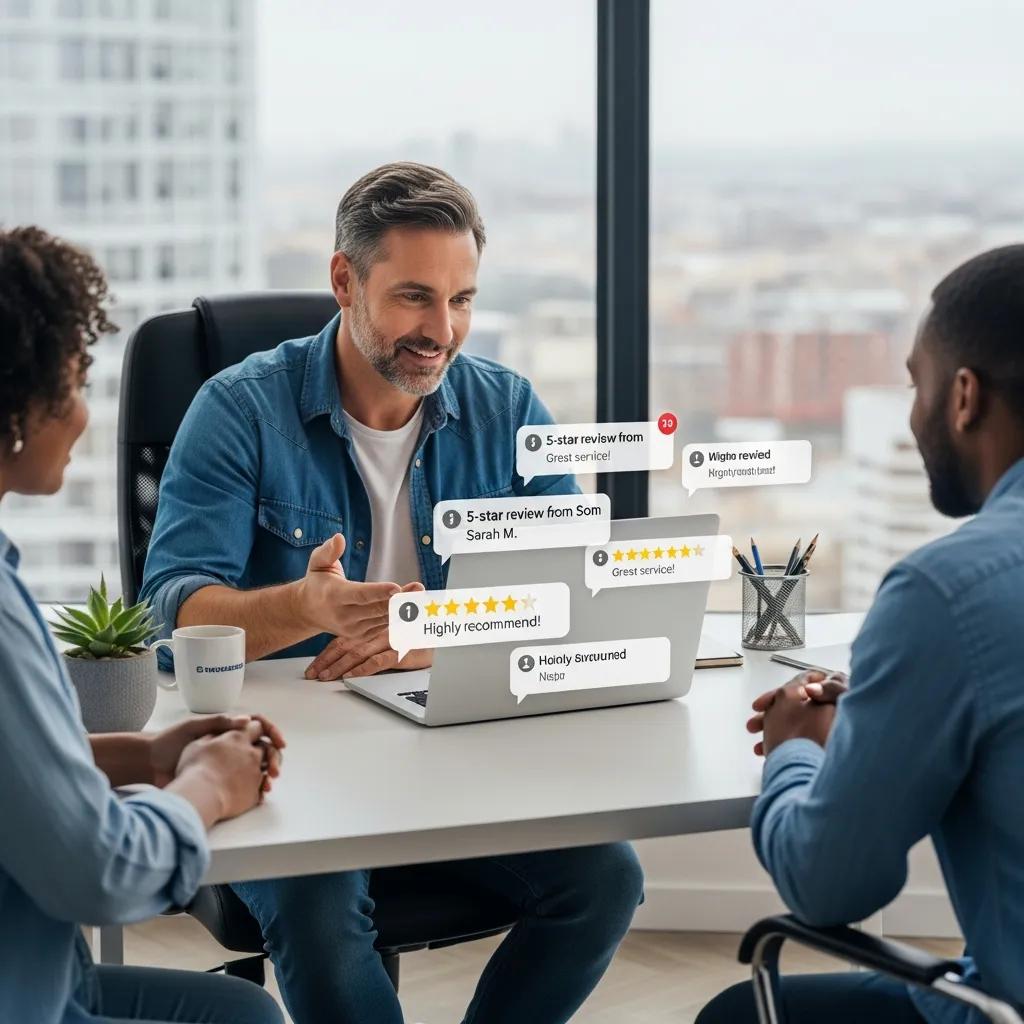
Online authority comes from search visibility, helpful content, and social proof working together so your company is the obvious choice for the homeowner needs you serve. That means combining local SEO (service pages, neighborhood landing pages, schema) with content that shows real expertise—case studies and how‑tos—so both search engines and homeowners see your brand as credible. The outcome is more high‑intent organic leads, higher click‑through rates, and better conversions from price‑sensitive prospects into customers who value quality. Focus on well‑structured service pages, local schema, and repeatable content formats that highlight measurable results; these elements build momentum in search and reputation over time.
What SEO and content marketing strategies boost contractor brand visibility?
Build separate service pages for distinct homeowner intents—repair, remodel, upgrade—using local keywords, clear headings, and project examples to rank for the searches that matter. A practical content calendar mixes case studies, short how‑to posts, and homeowner FAQs tied to your UVP to build topical authority and feed social channels. Technical SEO steps include adding Organization and Course schema where relevant, improving page speed, and creating neighborhood landing pages. These tactics increase organic traffic and create sales assets your team can use to answer objections and show proven outcomes.
A short checklist of core SEO and content actions to start with:
- Create service pages for each primary offering with a clear UVP and local signals.
- Publish project case studies that include before/after photos and measurable outcomes.
- Add schema markup for Organization and Course elements to improve search visibility.
These first steps build organic authority and produce sales‑ready assets that shorten sales cycles and support premium pricing.
How to manage online reviews and reputation for maximum client trust?
Systematically asking for, tracking, and replying to reviews turns customer feedback into a competitive advantage. Request reviews within days of project completion using a simple script, monitor responses in one dashboard, and reply to both praise and complaints promptly and professionally. For negative reviews, acknowledge the issue, explain next steps, and invite an offline conversation—prospective customers notice how you handle problems. Combine automated requests with manual follow‑up on high‑value jobs and reuse standard response templates to keep tone consistent and reputation management predictable.
Sample review response templates and a short tracking workflow:
- Request template: A clear, polite message sent after project completion with easy instructions to leave a review.
- Positive response: Thank the client, call out a specific detail, and invite referrals.
- Negative response: Acknowledge the issue, propose remediation, and provide direct contact to resolve it.
These processes preserve ratings and give sales reps concrete proof to share with homeowners, lowering perceived risk and supporting higher close rates.
How do you build trust and a positive reputation with clients?
Trust comes from delivering what you promised, clear communication, and visible proof that you finish on schedule and on budget. The mechanism is operational discipline—onboarding, timelines, crew presentation, and follow‑up—paired with social proof that confirms those claims. Homeowners reward predictable, communicative contractors with repeat business and referrals, which raises revenue per lead and lowers acquisition cost. Focus on repeatable processes that create reliable experiences, capture proof of success, and train crews in client‑facing professionalism to amplify your brand reputation.
Why are testimonials and case studies vital for contractor branding?
Testimonials and case studies cut buyer risk by showing real problems solved and outcomes delivered, backed by photos and metrics when possible. A good case study follows a simple arc—client problem, solution, measurable results—and includes strong images, timelines, and quotes for credibility. Place testimonials on service pages, proposals, and social posts where they directly counter common homeowner objections; paired with a clear UVP, they often tip the decision in your favor. Make collecting social proof part of project closeout so evidence is gathered consistently and ready to support sales.
Introductory table to map brand elements to sales impact and KPIs.
| Brand Element | Sales Impact | Example KPI Improvement |
|---|---|---|
| Testimonials | Reduces perceived risk | Increase close rate by 5–12% |
| Professional Photos | Raises perceived quality | Increase average ticket by 8–15% |
| Consistent Messaging | Shortens decision time | Reduce sales cycle length by 10–20% |
Use this table to link brand investments to measurable sales gains and prioritize where to spend your time and budget.
How does professionalism and consistent communication strengthen your brand?
Professionalism—from arriving on time to clear, written estimates—signals reliability and eases homeowner anxiety, making them more likely to accept recommendations and higher‑priced options. Consistent communication means setting expectations early, confirming timelines, and giving timely updates; these practices reinforce your brand promise and create a dependable customer journey. Train sales and field teams on standard scripts for onboarding and escalation so every homeowner gets the same high standard. Over time, consistent professionalism increases referrals and supports higher margins.
After you demonstrate that operational discipline builds trust, teams can speed their learning with targeted training that links brand cues to selling tactics. Learn how our online course helps sales professionals connect operational improvements to buyer confidence: try Tier 1 free, then upgrade to Tier 2 or Tier 3 for deeper training and coaching.
Research highlights that professionalism, clear communication, and trustworthiness are central to better client–contractor relationships.
Improving Client‑Contractor Relationships: Key Measures for Success
This study identified practical measures to improve client–contractor relationships on construction projects. From a sample of contractors, it found that professionalism, effective communication, mutual commitment, and trustworthiness are key drivers of successful relationships and project outcomes.
How can personal branding enhance home improvement sales professionals’ credibility?
Personal branding strengthens the company brand by making individual sales reps recognizable and trusted in local networks. It combines consistent content, clear credentials, and relationship building—events, LinkedIn posts, neighborhood outreach, and project walkthroughs—to create multiple trust signals for homeowners. When reps present themselves as local experts, both the person and the company gain credibility, which increases referrals and repeat business. Focus on a few reliable channels so personal brands support, not distract from, the company narrative.
What networking strategies help sales professionals build their personal brand?
Target high‑impact local channels: HOA meetings, supplier events, local business groups, and selective LinkedIn outreach to realtors and trade partners. A 90‑day plan that mixes one public event per month, weekly short educational posts, and monthly outreach to referral partners builds momentum and measurable touchpoints. Track simple metrics—meetings scheduled, referrals received, content engagement—to see which channels pay off. Those activities create local advocates that feed the company pipeline.
Brief networking checklist:
- Attend one local homeowner or trade event each month.
- Publish two short educational posts weekly on local social channels.
- Send a monthly outreach email to your top referral partners.
These actions grow personal credibility and a steady stream of trusted introductions that shorten the sales cycle.
How to showcase expertise and achievements to boost personal brand value?
Show expertise with short project videos, before/after photo reels, and concise posts that explain the problem‑solving steps. Display relevant certifications and trade affiliations on personal profiles and proposals to signal competence without overstating claims. Build a personal portfolio that mirrors the company UVP and use local PR to amplify notable projects. Consistent, outcome‑focused personal content becomes a lead generator and a trust multiplier for both the rep and the firm.
How does a strong brand help contractors close more sales and charge premium prices?
A strong brand reduces perceived risk, raises perceived value, and shortens the trust phase of a homeowner’s decision—changes that directly increase close rates and allow premium pricing. Brand trust amplifies sales techniques: when homeowners already trust your brand, price and timeline objections are easier to handle and RPC (Rapport, Professionalism, Close) tactics land more effectively. The result is measurable—higher close rates, bigger average tickets, and more referrals that lower acquisition costs. To capture these gains, map brand activities to KPIs and run short tests to quantify close‑rate lift from items like testimonials or professional photography.
How does brand trust integrate with the RPC framework to overcome objections?
Brand trust strengthens each RPC stage: a known brand makes rapport quicker, visible professionalism backs up promises, and documented results simplify closing. For example, when a homeowner opens a conversation by referencing a positive review, your salesperson can focus on differentiators instead of basic credibility. Professionalism cues—clean uniforms, punctuality, clear proposals—support the Professionalism step by reducing execution risk. These brand signals shorten conversations and lower price resistance, letting RPC tactics work at higher price points.
A short list of RPC–brand tie‑ins:
- Rapport: Lead with social proof and local references to connect fast.
- Professionalism: Standardize appearance and documents to validate promises.
- Close: Use documented outcomes and guarantees to convert at higher prices.
These tie‑ins show how brand investments supply the proof and consistency that make RPC scripts more persuasive with homeowners.
What are the benefits of leveraging your brand for higher closing rates and business growth?
Using brand to drive sales delivers concrete business benefits: better close rates, larger average tickets, more referral business, and a stronger company valuation if you ever sell. Track KPIs like close rate, average ticket, referral share, and lead‑to‑client conversion time; watching these over quarters shows how brand work turns into revenue. Expect noticeable improvements in three to nine months as visuals, content, and reputation efforts compound. Run small experiments (A/B test a proposal layout or add testimonials to service pages) to find which brand actions move your KPIs.
If you want to systematize this approach, integrated training links brand signals to sales routines. Explore our online courses: Tier 1 — Foundation (FREE, no credit card required), Tier 2 — Mastery ($149/month or $124/month billed annually), and Tier 3 — Ownership ($250/month or $208/month billed annually). These tiers combine the RPC Framework with branding modules, community support, and clear upgrade paths to align learning with measurable sales outcomes.
Research indicates that consistent branding is a key factor for construction companies competing in crowded markets.
Construction Company Branding KPIs for Competitive Success in Iran
This study examines branding KPIs for construction firms operating in a competitive environment. It finds that consistent messaging and visual identity across channels helps companies attract clients, command higher prices, and improve project success.
A short final checklist of next steps contractors can implement today:
- Audit your UVP and test a homepage headline for two weeks.
- Standardize one visual asset (logo or vehicle graphic) and apply it across three touchpoints.
- Publish one case study with measurable outcomes and add one strong testimonial to proposals.
These tactical moves create immediate trust signals and set your business up to capture the long‑term ROI of a cohesive brand and training program.
Learn more about our online training for home improvement sales professionals: start with Tier 1 free or upgrade to paid Tiers 2 & 3 for deeper learning and coaching.
Frequently Asked Questions
What role does social media play in contractor branding?
Social media is a practical channel to show your work, answer homeowner questions, and build local awareness. Share project updates, short how‑tos, and client testimonials to demonstrate skill and reliability. Visual platforms like Instagram and Facebook are great for before/after photos; LinkedIn works for pro networking. Regular, honest posts build familiarity and lead to more referrals and local inquiries.
How can contractors measure the effectiveness of their branding efforts?
Measure branding with KPIs tied to revenue: lead conversion rate, close rate, average ticket, referral share, and customer feedback. Monitor online reviews and social engagement for reputation signals, and run simple A/B tests—like adding testimonials to a service page—to see direct impact on calls and appointments. Regular tracking helps you refine what actually moves the needle.
What are some common mistakes contractors make in branding?
Common mistakes include inconsistent messaging, ignoring the online presence, and not defining a clear UVP. Mixed visuals or conflicting copy confuse homeowners. Skipping review management or social engagement leaves opportunities on the table. And a vague UVP makes it hard for prospects to see why they should choose you. Fix these, and your brand clarity—and results—improve fast.
How important is local SEO for contractor branding?
Local SEO is essential: homeowners search for services in their area, and appearing prominently in local results builds trust and drives leads. Optimize service pages, use Google Business Profile, collect local reviews, and add neighborhood landing pages. Strong local SEO not only increases traffic but positions your company as a trusted local option.
What strategies can contractors use to enhance client relationships?
Improve client relationships with clear expectations, regular updates, and consistent quality. Communicate timelines and changes early, solicit feedback, and address concerns quickly. Offer post‑project follow‑ups and maintenance tips to keep clients satisfied and encourage referrals. Reliable service and transparent communication create repeat business and stronger word‑of‑mouth.
How can contractors effectively use testimonials in their branding?
Use testimonials where they answer homeowner doubts—service pages, proposals, and social posts. Highlight specifics (timeline, problem solved, outcome) and consider short video testimonials for added authenticity. Prompt satisfied clients to leave reviews on Google and other platforms to strengthen online credibility and visibility.
Conclusion
Investing in a clear UVP and consistent visual identity makes your contracting business easier to trust and easier to sell. Start small—test a headline, standardize one visual asset, publish a case study—and build from there. If you want a guided path, our training for home improvement sales professionals ties branding to sales routines and measurable outcomes. Start with Tier 1 free, then move to paid tiers for deeper coaching and systems that scale results.