

Sales Psychology for Home Improvement Contractors — Practical Techniques to Close More Jobs
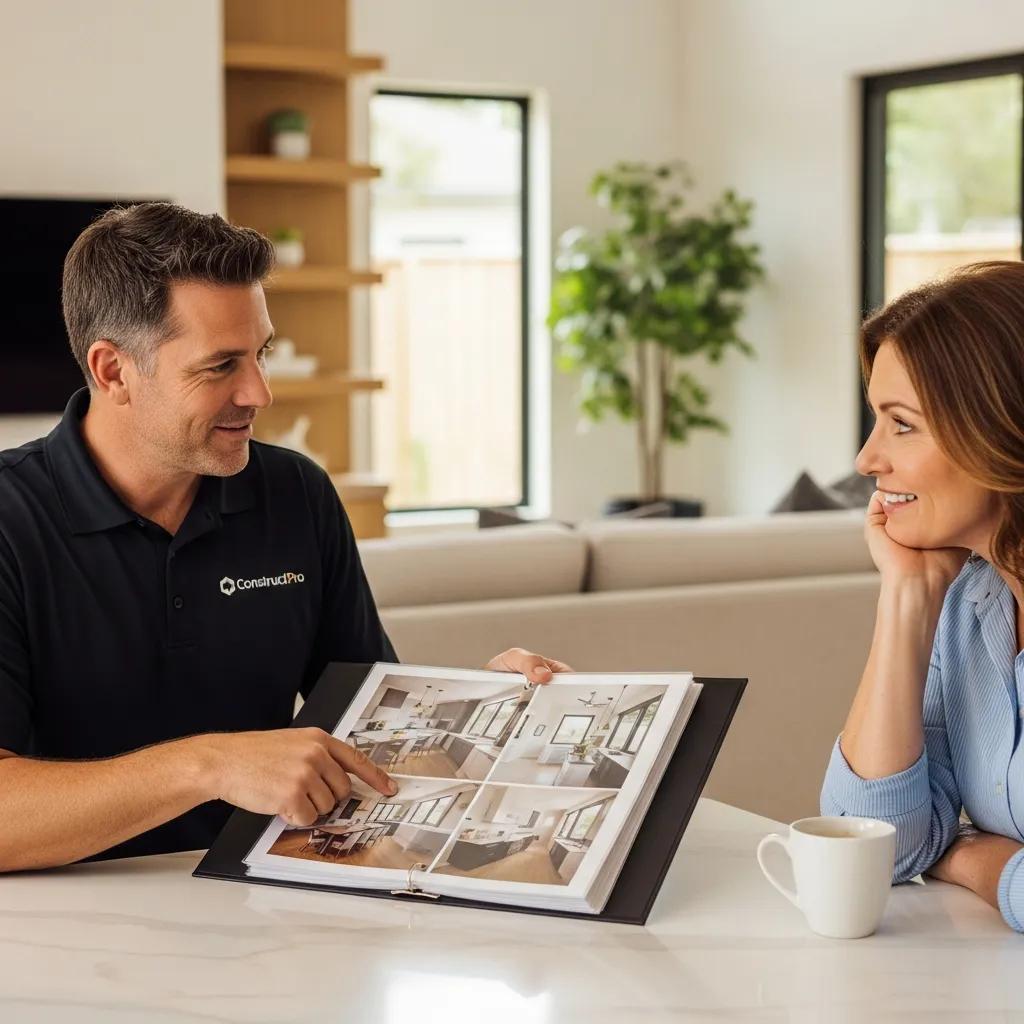
Sales psychology looks at how people decide to buy and how sellers can ethically shape those decisions by matching messages to real human motives and thinking patterns. For home improvement contractors, these principles turn stressful, expensive homeowner choices into clear conversations that reduce friction and increase signed contracts. This guide walks through the core triggers homeowners respond to, explains the RPC Framework (Rapport, Professionalism, Close), and gives ready-to-use scripts and quick-reference tables contractors can apply on estimates and follow-ups. You’ll see which emotional and logical levers matter in remodel and repair sales, how 2023–2025 market shifts change buyer behavior, and which tactics boost conversions without sacrificing ethics. Each concept ties to practical field behaviors and ends with a clear overview of training options that teach these skills step by step. Read on to sharpen your ability to read buyers, handle objections, and turn more visits into paid work.
What Is Sales Psychology and Why Does It Matter for Home Improvement Contractors?
Sales psychology is the applied study of cognitive biases, emotional drivers, and decision shortcuts that shape how homeowners pick contractors. It matters because home improvement work is costly and infrequent—so uncertainty and perceived risk dominate the decision. Contractors who understand a homeowner’s mental model can frame value better, reduce perceived risk, and sequence conversations to match homeowner priorities. That leads to less hesitation, higher satisfaction, and more closed deals. The next section shows how these principles show up in real homeowner choices you meet every day.
How Do Psychological Principles Influence Homeowner Buying Decisions?
Homeowners use both emotion and reason when choosing a contractor: emotions (safety, pride, fear of loss) often spark interest, while logic (budget, warranty, ROI) drives the final choice. You’ll see anchors, loss aversion, and social proof at work—an initial estimate sets expectations, worries about poor workmanship create demand for guarantees, and positive reviews lower perceived risk. From 2023–2025, buyers rely more on reviews and are more price sensitive, so contractors must pair emotional reassurance with transparent value justification. The right sequence is clear: address emotions first to get buy-in, then follow with comparisons and evidence to close the decision.
Which Key Psychological Triggers Drive Sales in Home Renovation?

Contractors can ethically use a few proven psychological triggers to guide homeowner choices. Each trigger works through a known mental mechanism and is easy to implement on-site or in proposals. Below are the most practical triggers with quick, actionable examples for remodel work:
- Reciprocity: Give a small, useful item—like a checklist or a short site assessment—to make homeowners more willing to engage.
- Social proof: Show recent, verifiable reviews and project photos that demonstrate your work and reduce uncertainty.
- Authority: Highlight certifications, specialty experience, and clear examples of similar projects to increase credibility.
- Scarcity (ethical): Call out genuine constraints—limited start dates or material lead times—to encourage timely decisions without pressure.
- Commitment & consistency: Capture tiny commitments—agreeing on priorities or scheduling a follow-up—to build momentum toward a signed scope.
- Liking: Create rapport with personalization and shared references so homeowners prefer working with your team.
Use these triggers transparently: ethical application builds reputation and referrals, not just short-term wins. Next, we connect these triggers to a simple field-ready framework—RPC—that teams can train and follow.
How Does the RPC Framework Improve Sales Success for Contractors?
The RPC Framework—Rapport, Professionalism, Close—turns sales psychology into a three-step workflow that lowers homeowner anxiety and improves conversion. Rapport creates liking and common ground, Professionalism shows competence and reduces execution risk, and a structured Close uses commitment devices and clear choices to finalize the agreement. Each step maps to observable actions and outcomes, which makes it easy to coach teams and repeat consistent results in the field. Below is a quick mapping of RPC components to the psychological principles they use and the seller actions that deliver value.
| RPC Component | Psychological Principle | Practical Action / Value |
|---|---|---|
| Rapport | Liking, Similarity | Listen actively, use homeowner language, and share short relatable examples to build connection and preference |
| Professionalism | Authority, Social Proof | Deliver clear proposals, warranty details, and project portfolios that reduce risk and show capability |
| Close | Commitment & Consistency, Micro-commitments | Offer clear next-step options, confirm summaries, and use honest urgency to move interest into a signed scope |
What Is the Role of Rapport in Building Trust with Homeowners?
Rapport is the social currency that turns strangers into collaborators. It taps into the liking principle and perceived similarity, which lowers resistance and opens homeowners to recommendations. In practice, build rapport with focused listening, matched tone, and curiosity-driven questions so homeowners feel heard. Small actions— noticing décor, referencing neighborhood concerns, or validating frustration about past work—signal attention and reduce defensiveness. After rapport, move into evidence: once a homeowner feels understood, polished proposals and warranty details land far more effectively.
How Do Professionalism and Closing Techniques Boost Contractor Sales?
Professionalism signals you can do the job and lowers the homeowner’s sense of execution risk: polished proposals, transparent pricing, timelines, and references all reassure buyers. Closing techniques then convert that reduced risk into commitment using structured choices. Ethical closes use micro-commitments—choosing a finish, picking a start window, or approving a phased plan—rather than pressure. When you sequence rapport, professionalism, and a clear close, homeowners shift from anxious evaluation to confident signature because both their emotional and logical concerns are addressed in order.
How Can Contractors Master Homeowner Buying Decisions Using Sales Psychology?
To influence homeowner decisions consistently, diagnose buyer type quickly and adapt your messaging to balance emotion (safety, pride) with logic (cost breakdowns, warranties). Segmentation helps you choose the right levers: some buyers want visual proof and references, others need ROI calculations or phased payments. Use a short discovery sequence to classify the buyer, then deploy a tailored narrative—start with reassurance for risk-averse clients, lead with aspirational results for style-focused clients, and stress scheduling certainty for time-sensitive clients. The list below shows common segments and how to open the conversation for each.
- Safety-focused homeowners: Lead by addressing structural and safety concerns, and emphasize warranties and code compliance.
- Aesthetic-driven homeowners: Show portfolio images, design references, and finish options that match their taste.
- Value-conscious homeowners: Highlight cost-per-year ownership, energy savings, and financing or phased options.
- Time-sensitive homeowners: Emphasize scheduling reliability, guaranteed start windows, and fast-track choices.
Quick segmentation improves message fit and conversion because you focus on the factors the homeowner actually cares about. That brings us to how market shifts from 2023–2025 affect these buyer segments.
What Emotional and Logical Factors Influence Home Improvement Purchases?
Emotional drivers—security, comfort, pride—often start the conversation, while logical factors—budget, resale value, warranties—decide the solution. The most effective conversations validate emotion first (acknowledge disruption or past bad experiences), then present clear data: comparisons, timelines, and transparent pricing. Practically, validate feelings, restate priorities, then offer two tailored options with simple pros and cons. That emotional-then-logical flow matches how people process decisions and reduces analysis paralysis.
How Do Market Trends Affect Customer Behavior in Home Renovation?
From 2023–2025 we’ve seen more price sensitivity, heavier reliance on online reviews, and growing demand for phased or smaller upgrades instead of full-scale remodels. That means contractors should emphasize value framing, proactively collect social proof, and offer modular scopes that lower immediate spend while preserving future work. Early use of visual tools (like simple AR previews) and clearer timelines also speed decisions from cautious buyers. Adapting scripts and service packaging to these trends helps you meet current homeowner expectations.
What Are Effective Objection Handling Strategies for Home Improvement Sales?

Good objection handling finds the psychological root of resistance and solves it with targeted, ethical moves—not just discounts. The three most reliable techniques translate psychological insight into quick actions: reframe value, use micro-commitments, and offer phased scopes. Below are those techniques with short explanations for fast reference.
- Reframe value: Turn cost into long-term benefit and risk reduction so the discussion shifts from price to return.
- Micro-commitments: Break decisions into smaller approvals to lower friction and build forward momentum.
- Phased scopes: Propose staged work that addresses urgent needs now and schedules later phases to ease budgeting.
Each technique addresses a different psychological barrier—value perception, decision inertia, and budget limits—and they work best combined into a follow-up plan that leads homeowners through incremental commitments. The table below lists common objections, their psychological roots, and practical resolution strategies with example scripts you can adapt.
Use this objection-resolution table as a quick field reference: identify the root, pick the matching strategy, and apply the sample language or your own variation.
| Objection Type | Psychological Root | Resolution Strategy |
|---|---|---|
| Price is too high | Loss aversion / anchor mismatch | Reframe as lifecycle cost, show trade-offs, offer phased scope |
| Need to “think about it” | Decision inertia / fear of regret | Use micro-commitments, schedule a follow-up, summarize the cost of delay |
| Hesitation over workmanship | Risk aversion | Provide references, recent photos, clear warranty and inspection plans |
| Timeline concerns | Perceived disruption risk | Offer scheduling guarantees, explain mitigation steps, propose off-hours work |
How Can Contractors Overcome Price Objections Ethically?
Price pushback usually means a perceived value gap, not an inability to pay. Start by acknowledging the concern, then re-anchor value with lifecycle comparisons (maintenance savings, included warranties), and present options that preserve margin—like phased work or financing. A simple structure works well: empathize, quantify a benefit, show two viable options (full scope vs. phased), and ask which aligns with their priorities. That approach avoids discounting and keeps quality intact.
What Psychological Techniques Help Resolve Hesitation and “Think About It” Responses?
“Thinking it over” often masks fear of regret or decision overload. Counter that with commitment devices and low-pressure urgency that lower friction. Tactics include requesting a small choice (pick a finish), setting a clear next step with a scheduled follow-up, and offering honest, time-limited reasons to decide (material lead times). A short follow-up cadence—check-in, remind them of priorities, and update on availability—moves decisions forward while respecting autonomy. Those micro-commitments add up and often lead to a signed scope.
What Are the Benefits and Features of Home Improvement Closer’s Sales Training Tiers?
Home Improvement Closer offers a tiered training program built on the RPC Framework and focused on the psychological skills covered here. The three-tier structure gives a free entry point and paid tiers for deeper mastery and scaling. Each level teaches specific objection handling, closing techniques, and systems for growth so contractors can pick the fit for their current goals and team size. Below is a comparison that links each tier to the skills taught and the expected results.
This comparison helps you match your current needs—immediate lift, consistent conversion, or team-wide scaling—with the right training level.
| Tier | Feature / Skill Focus | Outcome / Value |
|---|---|---|
| Tier 1: Foundation (Free) | Core RPC concepts, basic objection handling, rapport basics | Immediate, low-risk entry to improve first-visit conversions |
| Tier 2: Mastery ($149/month or $124/month billed annually) | Advanced objection scripts, roleplay coaching, closing frameworks | Measurable conversion lift and higher confidence in closing |
| Tier 3: Ownership ($250/month or $208/month billed annually) | Sales management, scaling processes, team coaching | Standardized sales approach, systemized growth for teams |
How Does Tier 1 Foundation Provide a Free Introduction to Sales Psychology?
Tier 1 Foundation is a practical, no-cost starting point that teaches the basic RPC habits and entry-level objection handling. Contractors learn to build quick rapport, craft clear proposals, and use ethical closing steps that generate early wins on estimates. The free tier lowers adoption friction and delivers actionable takeaways—discovery scripts, checklist templates—that you can use right away. After seeing results, teams can decide whether roleplay coaching or scaling tools in higher tiers will speed growth.
What Advanced Skills Do Tier 2 Mastery and Tier 3 Ownership Offer for Scaling Sales?
Tier 2 Mastery builds on the foundation with advanced objection frameworks, regular roleplay sessions, and closing cadences that improve consistency. Tier 3 Ownership focuses on sales management, playbook creation, and training so you can scale a repeatable process across crews. Both paid tiers include ongoing support and structures designed to produce measurable outcomes: higher close rates, less discounting, and a standardized customer experience. Pricing options remain: Tier 2 at $149/month or $124/month billed annually and Tier 3 at $250/month or $208/month billed annually, with a 60-day money-back guarantee to reduce purchase risk.
How Can Contractors Build Trust and Credibility to Close More Home Improvement Deals?
Trust combines visible proof with consistently ethical behavior so homeowners sense competence and honest intent. Key tactics include collecting and showcasing social proof, offering clear guarantees, maintaining a professional on-site and online presence, and using transparent pricing. These steps reduce perceived risk and make decisions easier. The list below gives practical actions you can start using today to strengthen trust signals across marketing and in-person interactions.
- Collect and display recent project reviews and before/after photos to show real results.
- Provide clear written proposals with explicit inclusions, exclusions, and timelines.
- Offer written guarantees or warranty terms to lower execution risk.
- Maintain consistent branding and professional presentation on-site and in communications.
- Ask for referrals and document them to create referral loops that reinforce your reputation.
Doing these consistently builds a reputation advantage over high-pressure sellers and speeds the sales conversation. The next section explains why social proof matters more than ever.
Why Is Social Proof Important in Home Renovation Sales?
Social proof lowers perceived risk by showing homeowners that others made the same choice and were satisfied. Reviews, photo portfolios, and local referrals turn abstract promises into concrete evidence, and a portfolio that matches the homeowner’s project type is especially persuasive. Collect reviews systematically—ask at milestones and make it easy to leave feedback—so your social proof stays fresh. Display a mix of testimonials, star ratings, and project timelines in proposals and online to help skeptical prospects become confident buyers.
How Do Ethical Sales Practices Differentiate Contractors from High-Pressure Sellers?
Ethical sales—transparent pricing, clear contracts, warranties, and consent-based closing—build long-term value through referrals and repeat business. High-pressure tactics may win a sale today but harm reputation tomorrow. Ethical language focuses on helping homeowners choose what’s right for them, walking through trade-offs, documenting priorities, and spelling out next steps. Make ethics operational: use guarantees, staged approvals, and written scopes so every team member delivers the same respectful experience. Over time, ethical sellers accumulate steady pipelines and social proof that outlast the short-term gains of aggressive selling.
Frequently Asked Questions
What are the common psychological barriers homeowners face during the decision-making process?
Homeowners commonly face fear of making the wrong choice, uncertainty about total costs, and worry about disruption. Those barriers can cause decision paralysis. Contractors who recognize these issues can respond with reassurance, clear information, and structured options that make the choice easier. Addressing these concerns directly helps homeowners feel confident and increases the chance of closing.
How can contractors effectively use social proof in their sales strategy?
Use social proof by featuring positive reviews, before-and-after photos, and client testimonials that match the homeowner’s project type. Collect feedback at key milestones and make leaving a review simple. Then display that proof prominently in marketing materials, proposals, and on-site conversations. A steady stream of relevant social proof builds credibility and reduces perceived risk for new clients.
What role does emotional intelligence play in sales for home improvement contractors?
Emotional intelligence helps contractors read homeowner cues and respond in ways that build rapport and trust. Recognizing emotion—frustration, pride, or caution—lets you tailor your language and pace. Contractors with strong emotional intelligence navigate objections more smoothly and create a more positive customer experience, which improves close rates and referrals.
How can contractors adapt their sales approach to different homeowner personality types?
Quickly assess whether a homeowner is analytical, expressive, or amiable, then match your approach. Analytical buyers want data and comparisons, expressive buyers respond to stories and outcomes, and amiable buyers value reassurance and relationships. Active listening and a few well-chosen questions reveal preferences so you can present the right mix of evidence and emotional appeal.
What are some effective follow-up strategies after an initial consultation?
Good follow-up includes a personalized thank-you, a short summary of key points, and any supporting resources tied to the homeowner’s concerns. Schedule a clear next step—a call or on-site revisit—and stick to a cadence of reminders that respect their timing. Consistent, helpful follow-up keeps you top of mind and moves the decision process forward.
How can contractors ensure ethical sales practices while maximizing conversions?
Prioritize transparency: clear proposals, honest timelines, and open conversations about trade-offs. Avoid pressure tactics and focus on helping the homeowner choose the best fit. Use structured closes that respect decision-making—micro-commitments, staged approvals, and written scopes. Ethical selling builds long-term business through referrals and repeat customers while still improving conversions.
Conclusion
Sales psychology gives contractors practical tools to guide homeowner decisions and close more work without compromising ethics. By sequencing rapport, demonstrating professionalism, and using honest closing techniques, you address both emotional and logical buying drivers. Consistently applying these methods strengthens trust, improves conversion rates, and positions you as a reliable partner in the renovation process. Start using these principles today to make estimates convert more often and to build a steadier pipeline.