

Mastering Negotiation in Home Improvement Sales: Field-Proven Techniques to Close More Jobs

Strong negotiation skills turn estimates into signed work orders. In home improvement sales that means matching what the homeowner cares about with the contractor’s real value — lowering price pushback, shortening the decision window, and increasing average ticket size. This piece walks through how negotiation works in our industry, the homeowner decision drivers, and practical steps your sales team can use right away to lift close rates. You’ll get core negotiation principles, objection-handling playbooks, in-home closing moves, team training practices to scale, 2024 market signals that change leverage, and trade-specific examples with measurable results. We map everything to the RPC Framework — Rapport, Professionalism, Close — and give repeatable scripts, role‑play drills, and follow-up cadences that techs and managers can apply on day one. Read each section for definitions, mechanisms, real examples, and quick-reference lists built for on-the-job use.
What Are the Core Negotiation Principles for Home Improvement Sales?
At the foundation, negotiation in home improvement is about five things: build rapport fast, sell outcomes instead of line-item price, manage timing, and demonstrate authority through professional behavior. Homeowners decide based on trust, perceived value, and certainty about the project — so clear guarantees and visible proof of quality shift the talk from cost to results. On-site, combine visual evidence, concise proposals, and calibrated questions to guide decisions without pressure. Below are the practical principles every contractor should use on every visit.
- Establish Rapport Quickly: Lead with local credibility and listen first to shorten the trust curve.
- Frame Value, Not Price: Compare total cost to lifecycle savings, warranty protection, and convenience.
- Use Authority Signals: Present photos, crew bios, and warranty documents to lower perceived risk.
- Control Timing and Urgency: Use clear timelines and slot-based booking to make decisions easier.
- Calibrate the Ask: Match assumptive language to homeowner readiness and always offer clear options.
These principles tie directly into the RPC Framework — Rapport, Professionalism, Close — and form a consistent playbook for negotiation. If you want to start structured training, Tier 1 (Foundation) is a free introduction to RPC basics and in‑home negotiation fundamentals you can use immediately.
How Does Building Rapport and Trust Improve Sales Outcomes?

Rapport and trust cut through price objections and boost referrals because they align your behavior with what homeowners expect — practical answers, honest timelines, and clear workmanship proof. On-site rapport works through three practical moves: empathic listening to reveal motivations, local credibility (neighborhood jobs or references), and transparent explanations of process and price. For instance, a roofer who shows nearby completed work and addresses a homeowner’s specific pain points will usually convert faster than someone who dives straight into price debate. Role-play that practices openers and reflective listening builds field reps’ confidence and reduces cancellations. In short: a short, structured rapport sequence — personal connection, confirm concerns, preview outcomes — speeds decisions and makes the close easier.
What Role Does Client Psychology Play in Effective Negotiation?
Homeowner choices respond to common cognitive levers: risk aversion, anchoring, loss aversion, and social proof. Used ethically, these levers reframe offers and smooth the decision. Anchoring means showing a high-value option first so standard packages look reasonable; loss aversion highlights what the homeowner avoids by acting now (further damage, rising costs). Social proof — testimonials and project photos — normalizes the choice. Structure proposals with tiered options, strong guarantees, and visual evidence; add a small scarcity cue (limited schedule slots) and homeowners typically decide faster and accept higher-value packages. This approach feels consultative, not pushy, and improves conversions without hard sells.
How Can Contractors Overcome Common Sales Objections in Home Improvement?
Objection handling starts before you drop a number: pre-handle common concerns, reframe in the moment, and use escalation paths that keep the conversation moving toward a decision. Typical objections are price, timing, “need to think,” competitor bids, and warranty doubts — each needs a tailored pre-handle and a live-script response to reveal the real barrier. The best sequences begin before showing price, add value-stacking when dollars come up, and end with a clear, low-pressure next step. The quick table below is a field-ready reference for top objections.
This table helps reps reference practical responses to common objections.
| Objection Type | Best Strategy | Step-by-step Actions |
|---|---|---|
| Price | Value stacking and scope framing | Reposition cost as investment, show life-cycle benefits, offer tiered packages |
| "Need to think" | Pre-handle and close-probe | Ask what they’re weighing, set a short follow-up window, hold a limited slot to prompt a decision |
| Competitor bids | Differentiate with proof | Point to warranties, crew credentials, recent local jobs; ask what the competitor actually quoted |
| Timing concerns | Offer scheduling certainty | Give defined start dates, explain crew capacity, propose a prioritized timeline |
| Warranty/trust | Lower perceived risk | Show written guarantees, third-party references, and transferable warranty details |
Walking through these paths helps reps pick the right escalation and avoid defaulting to discounts. Below are focused tactics for two of the highest-frequency objections.
What Are Effective Strategies to Handle Price Objections?
Price pushback disappears faster when you shift the talk from dollars to outcomes. Try these tactics: pre-sell quality with unique deliverables; use clear, tiered packages so differences are obvious; offer payment options that ease cash flow while highlighting warranty value; and use scope framing to show what cheap options leave out. A compact script: “I hear budget is important — the mid package includes X plus a transferable warranty that avoids surprise costs down the road. Which of those outcomes matters most to you?” That moves the conversation to goals, preserves margin, and builds perceived fairness.
This research highlights the critical role of salesperson competencies in engaging customers within the home improvement retail sector.
Salesperson Competencies for Customer Engagement in Home Improvement Retail
ABSTRACT: Sadique, Farhan. The Pennsylvania State University — ProQuest Dissertations & Theses, 2024. 31353890.
Exploration of Salesperson Competencies for Customer Engagement in Selected Home Improvement Retail Organizations in the USA, F Sadique, 2024
How Do You Address “I Need to Think About It” and Competitor Bids?
When a homeowner says “I need to think,” treat it as an information moment — not a rejection. Use diagnostic probes like, “What specifically would you like to think through?” and offer a short, definite follow-up: “I can hold that slot through Friday — would an answer then work?” For competitor bids, ask for details: “What did they include that I didn’t?” Then contrast warranties, crew consistency, and timeline. Follow up with a short email or voicemail that reiterates key benefits, quantifies the risk of delay, and gives one clear next step. These moves often re-open decisions and convert deferred leads.
What Closing Strategies Help Home Improvement Professionals Seal More Deals?
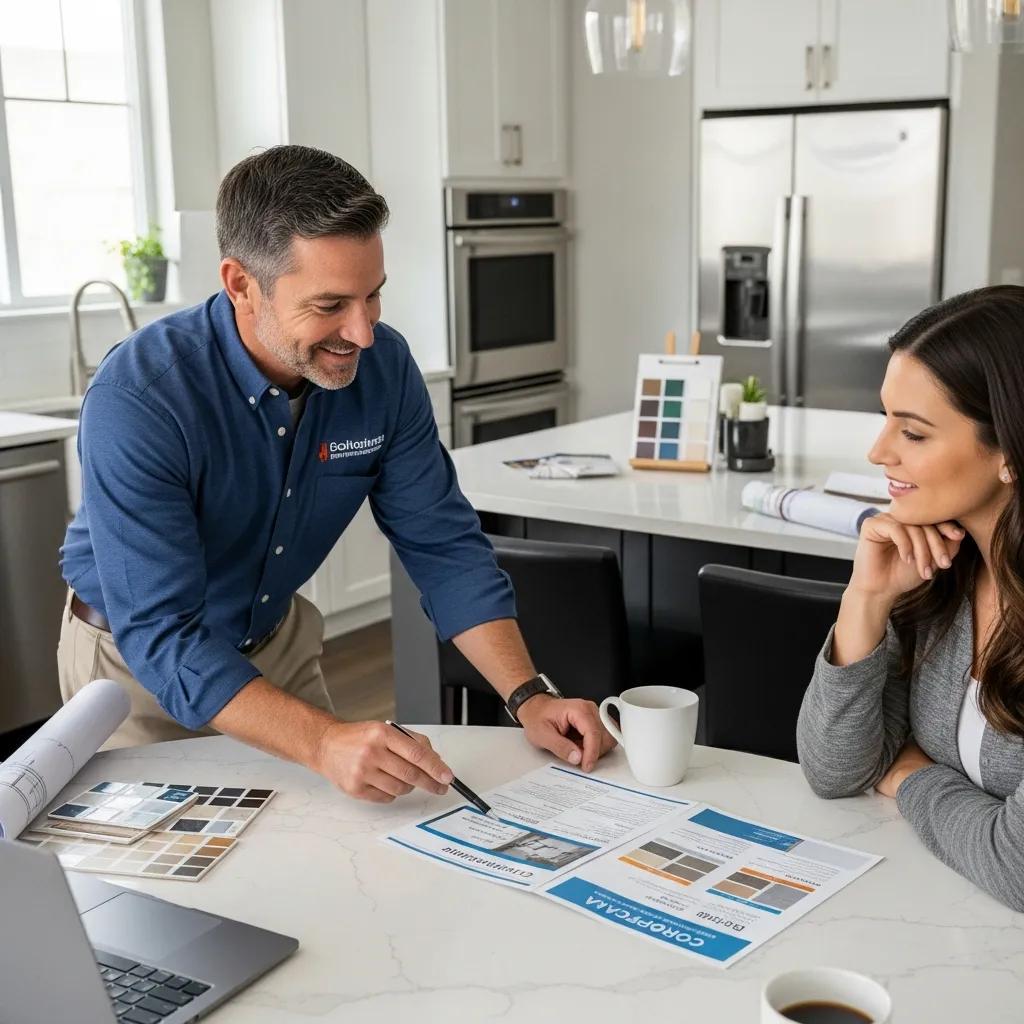
Closing in the field adapts traditional closes to in‑home constraints: keep proposals short, check signals, and make confident, simple asks that respect the homeowner’s process. The best closes combine prior rapport, a calibrated value presentation, and an assumptive next step that makes the path forward obvious. A one‑call close works when qualification is tight, visuals and proof are present, and you remove timing risk with clear scheduling and warranty terms. Below are practical close types that fit the homeowner mindset and keep the conversation professional.
- Assumptive Close: Present next steps as if the homeowner has decided, then confirm the preferred start date.
- Option Close: Offer two clear packages and ask which one matches their priorities.
- Scarcity/Ticket Close: Use limited scheduling availability to create urgency while staying transparent.
Role‑play these closes so language sounds natural, not pushy. Track which close types convert best and refine your field scripts and training accordingly.
How Does the One-Call Close Work for Home Improvement Contractors?
The one‑call close follows a disciplined sequence: pre-qualify before arrival, build quick rapport and uncover needs, deliver a concise prioritized proposal, handle objections immediately, then ask an assumptive closing question. This compresses decision steps by reducing uncertainty — competence, clarity, and scheduling certainty let homeowners commit on the spot. Sample in‑home stages: opener questions, a short inspection with photos, prioritized proposal, rapid objection responses, and an assumptive choice like, “Which of the two options works with your timeline?” Practice these transitions during ride‑alongs and role‑play to raise success rates.
What Are Confident Ways to Ask for the Sale and Follow Up?
Ask confidently with clarity and brief options — never pressure. Try: “If you’d like us to move forward, I can secure you for next Wednesday — should I put you on that schedule?” Pair that with a three-step follow-up: call within 48 hours, a short value-focused email, and one text reminder 24 hours before the decision deadline. Combine automated reminders with a personal touch so communication stays timely without feeling robotic. Run small A/B tests on follow-up timing and language to find what moves your market.
How Can Sales Teams Scale and Improve Performance in Home Improvement Sales?
Scaling requires repeatable onboarding, role-play-heavy training, and measurable RPC outcomes like close rate and average job value. Use the RPC Framework as your training backbone: teach Rapport first, then Professionalism, then Close — so reps internalize the sequence that drives homeowner decisions. Build a 30/60/90-day plan that mixes classroom work with ride-alongs, role-play, and KPI tracking to speed ramp time. The table below shows the course tiers and the outcomes they target to help managers pick the right path for their teams.
This table outlines course tiers and the core outcomes for team scaling.
| Course Tier | Core Focus | Time / Price / Key Outcomes |
|---|---|---|
| Tier 1: Foundation | RPC basics and asking for the business | Free / Introductory / Faster onboarding, baseline scripts |
| Tier 2: Mastery | Advanced objection handling and confident pricing | $149/mo or $124/mo billed annually / Better close rates and pricing confidence |
| Tier 3: Ownership | Premium pricing, scaling crews, exit preparation | $250/mo or $208/mo billed annually / Higher AOV and systems for sale-readiness |
Use this comparison to match training investment to expected performance gains. Built-in tiered training makes hiring and coaching more predictable and helps you scale without losing quality.
What Are Best Practices for Training New Sales Professionals with the RPC Framework?
Effective RPC onboarding uses a clear 30/60/90 plan, frequent role-play, ride-alongs with live feedback, and KPI-based reviews so learning turns into field results. In month one, focus on rapport scripts and standardized proposal templates; by month two, tackle common objections and pricing talks; by month three, measure independent close rates and average job value. Simulate frequent objections in role-play and use recorded ride‑alongs to coach tone and phrasing. This cadence shortens ramp time and creates a common language across crews.
How Do You Charge Premium Prices Without Losing Deals?
Charge premium prices by clearly communicating what’s different, qualifying ideal clients early, and using warranties or guarantees to remove risk. Emphasize durable materials, crew quality, documented timelines, and transferable warranties. Ask qualifying questions to steer price-sensitive homeowners to appropriate tiers and save premium conversations for clients who value long-term outcomes. When someone says “too expensive,” restate top benefits and the cost of delay instead of dropping price immediately. Experienced teams also selectively walk away from prospects who won’t accept value-based pricing to protect margins and market positioning.
What Are the Latest Home Improvement Sales Trends and Market Insights for 2024?
In 2024, homeowners do more online research before the first visit, timelines matter more because of labor constraints, and buyers expect clearer guarantees — all of which change negotiation leverage. Contractors who show documented proof, offer quick scheduling, and hold a premium position convert at higher rates; those competing on price see margin pressure. Shift your sales posture to pre-sell through online content, demonstrate quality on-site, and sell scheduling certainty. The short table below lists key 2024 metrics and how they affect negotiation.
This statistics table highlights metrics contractors should watch when adapting negotiation posture.
| Metric | Source / Year | Statistic |
|---|---|---|
| Homeowner digital research | Industry reports, 2024 | Majority of homeowners research options online before the first visit |
| Labor availability | Market surveys, 2024 | Labor constraints increase average project lead time and raise the premium for scheduling certainty |
| Warranty importance | Buyer behavior studies, 2024 | Transferable warranties boost buyer confidence and willingness to pay more |
Use these metrics to adjust timing, pricing, and value messaging so your offers match current market realities. Pre-selling, clearer guarantees, and flexible scheduling keep conversion rates steady in competitive markets.
How Is the Home Improvement Market Growing and Affecting Sales Negotiations?
Market growth and seasonality change buyer urgency and price sensitivity. When demand outstrips crew capacity, contractors can hold pricing and schedule; in slower periods, price sensitivity rises. Buyers are better informed now, so start the sales conversation before the visit with pre-qualified leads and clear expectations. Track local labor availability and seasonal demand to time promotions and manage booking windows. Match your negotiation posture to market phases — firm pricing during peaks and value-enhanced offers in slow months — to stay resilient.
What Contractor Sentiments and Buyer Behaviors Impact Negotiation Power?
Contractor concerns about labor and material costs often make scheduling cautious; buyers, meanwhile, research and compare more before contact, increasing the need for on-site differentiation. When supply is tight, you can charge for certainty — emphasize crew reliability and warranties. Buyers who research expect transparent comparisons and documented results; clear, evidence-based proposals shift the conversation from price to value. Teams that read these cues convert more leads and protect margin.
How Do Real-World Case Studies Demonstrate Successful Negotiation in Home Improvement Sales?
Case studies show that structured frameworks and targeted negotiation moves raise close rates, cut cancellations, and lift average job value. For example, pre-handling price objections and value stacking helped a sample contractor improve close rates by focusing homeowners on long-term benefits rather than short-term cost. Across trades, using the RPC sequence — open rapport, professional demo, concise close — creates a repeatable buyer experience that scales. Below are common techniques that produced measurable gains.
- Pre-handle Objections: Anticipating price concerns in the proposal reduced day-of objections.
- Visual Proof: Neighborhood photos and before/after galleries improved trust and shortened decision timelines.
- Tiered Options: Offering three clear packages increased conversion to mid and high tiers.
What Negotiation Techniques Led to Measurable Sales Growth for Contractors?
Techniques like pre-qualification, prioritized proposals, and structured follow-up drove measurable outcomes — higher close rates and fewer cancellations — by removing uncertainty and aligning offers to homeowner priorities. A coachable sequence that links rapport to a prioritized proposal and an assumptive close removes common friction. Tracking close rate, average order value, and repeat referral rate lets managers connect improvements to specific negotiation changes and continuously refine scripts and training.
How Do Different Trades Apply the RPC Framework to Close More Deals?
Trades adapt RPC to their services: roofers lean on visual evidence and quick scheduling, HVAC reps sell performance and energy savings, and remodelers lead with design outcomes and project-management assurances. Each trade builds pre-handles for typical objections — roofers address storm urgency, HVAC techs highlight efficiency gains, remodelers stress timelines and crew reliability. Short, trade-specific checklists and scripts keep Rapport, Professionalism, and Close consistent across services so the framework is practical and portable.
Below is how Home Improvement Closer helps sales professionals learn these skills and encourages sign-up for Tier 1 (free) or the paid Tier 2 & 3 options.
For teams and leaders who want hands-on coaching, Home Improvement Closer offers a three-tier online program aligned to these outcomes: Tier 1 Foundation (FREE) covers RPC basics and asking for the business; Tier 2 Mastery ($149/month or $124/month billed annually) expands objection handling and pricing confidence; Tier 3 Ownership ($250/month or $208/month billed annually) teaches premium pricing, crew building, and sale-readiness. The RPC Framework taught by Home Improvement Closer has reportedly supported over $237M in closed work across 20+ trades. Paid tiers come with a 60-day money-back guarantee for a risk-free trial. For faster implementation, 1-on-1 consultations with our founders and coaches (Ron; Shai) are available to accelerate results for teams and owners.
- Immediate next step: Start with the free Tier 1 Foundation to learn RPC basics and field scripts.
- Scale competence: Upgrade to Tier 2 Mastery for advanced pricing and objection modules to lift margins faster.
- Business outcomes: Pick Tier 3 Ownership when your goal is premium positioning, scalable crews, or preparing to sell.
Apply the practices in this article alongside the tiered training to turn improved negotiation into measurable revenue and stronger teams.
Frequently Asked Questions
What are the key benefits of using the RPC Framework in home improvement sales?
The RPC Framework — Rapport, Professionalism, Close — gives teams a simple sequence to follow during every visit. It helps reps build trust faster, present value clearly, handle objections predictably, and close with confidence. Teams that use RPC typically see higher close rates, larger average jobs, and happier customers because the process feels consistent and professional.
How can contractors effectively use follow-up strategies to increase sales?
Follow-up matters. Use a short, predictable sequence: call within 48 hours, send a concise value-focused email, then a single reminder text before your decision window closes. Personalize messages to the homeowner’s main concern and always give one easy next step. That structure keeps momentum without annoying prospects.
What role does online presence play in home improvement sales?
Today’s homeowners research before the first meeting. A strong online presence — clear service pages, testimonials, and before/after photos — pre-sells quality and shortens the trust curve. Use your site and social proof to answer common questions and set expectations so on-site conversations can focus on the details and the close.
How can contractors manage client expectations during the negotiation process?
Set expectations up front: clear scopes, realistic timelines, and transparent pricing. Use concise proposals that outline scope, exclusions, and contingencies. Regular updates during the project keep clients confident and reduce surprises — which leads to better referrals and fewer disputes.
What are some common mistakes to avoid in home improvement sales negotiations?
Avoid talking too much, assuming the homeowner’s priorities, and rushing the close. Don’t skip listening or fail to explain differences between packages. And don’t default to discounts — use value language instead. Taking time to build rapport and explain outcomes improves results and reduces buyer’s remorse.
How can contractors leverage testimonials and case studies in their sales process?
Use testimonials and case studies to show real outcomes. Share short stories that match the homeowner’s situation, with before/after photos and measurable results. That visual evidence and social proof make it easier for homeowners to imagine the result and trust your team.
Conclusion
Getting negotiation right increases closes and builds lasting homeowner relationships. Follow the RPC Framework to handle objections, demonstrate value, and streamline decisions. These are practical, field‑tested techniques — start with our free Tier 1 Foundation course to learn the basics and begin applying them on the next visit. Let’s turn better conversations into more signed jobs.