

The RPC Framework: Practical Sales Training to Build Rapport, Show Professionalism, and Close More Home Improvement Jobs
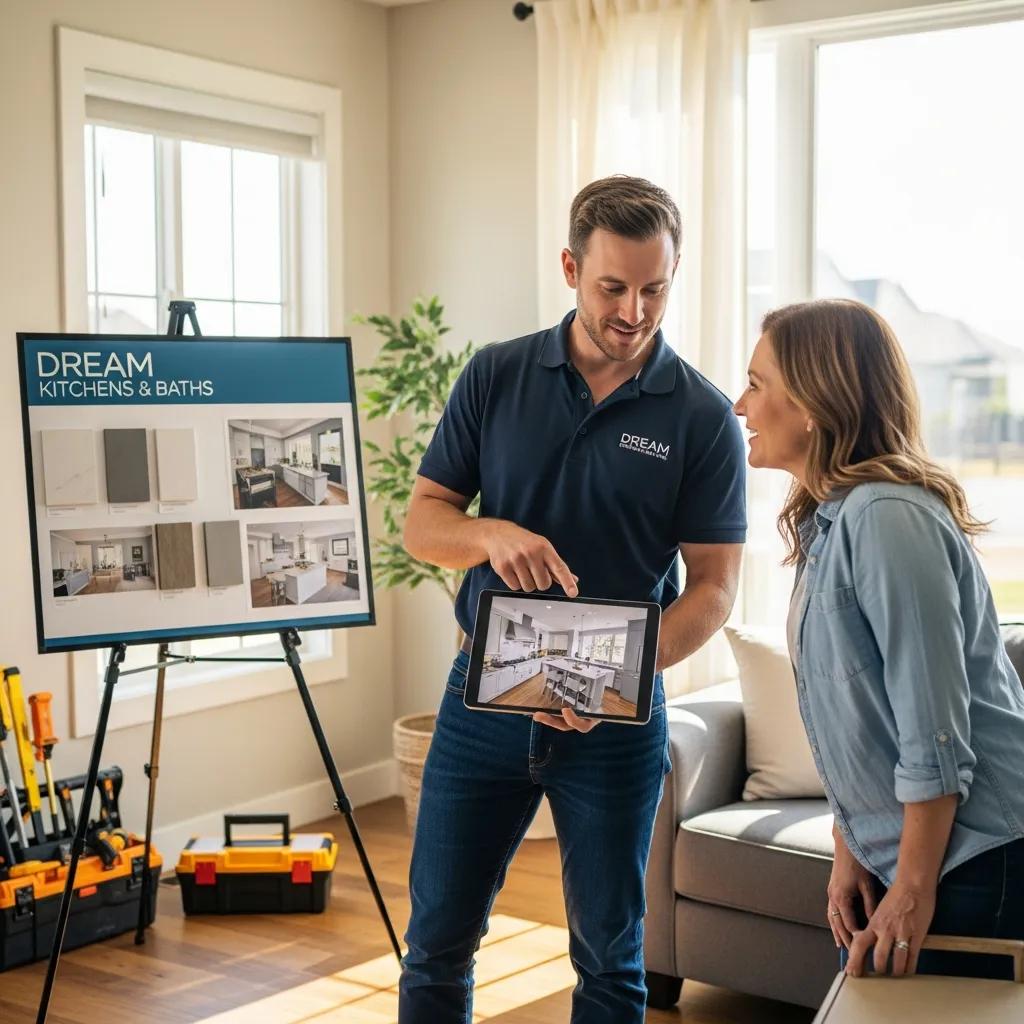
The RPC framework — Rapport, Professionalism, Close — is a field-proven approach that helps contractors reduce price pushback, win more jobs, and feel confident on the job. This guide breaks down each RPC pillar, explains why deals slip away without them, and gives trade-specific tactics you can use on-site, over the phone, or by text. You’ll get hands-on rapport drills, a presentation checklist that proves value, and closing scripts that neutralize objections like “cheaper bid” or “I need to think about it.” Each pillar maps to measurable outcomes, with objection-response language, practice progressions, and a clear plan to apply RPC in real-world home improvement work. Read on for actionable techniques, scripts, decision tables, and a simple path to practice RPC with your crew.
What Is the RPC Framework and Why Is It Essential for Home Improvement Sales?
RPC is a three-part sales method: build Rapport, present with Professionalism, and Close decisively. It works because rapport lowers price sensitivity, professionalism speeds decisions, and decisive closing turns perceived value into signed agreements. Contractors using RPC report fewer “I’ll think about it” stalls and more homeowners choosing quality options—so margins improve and fewer leads go to waste. The table below summarizes each pillar, the outcome it delivers, and a concrete example to make this immediately usable in the field.
| RPC Pillar | What It Achieves | Tactical Action / Example Outcome |
|---|---|---|
| Rapport | Builds trust and reduces price-first buying | Active listening and mirroring homeowner language → greater openness to mid- and high-tier options |
| Professionalism | Shows competence and speeds decision-making | Structured presentation + photos and clear options → fewer follow-up questions, faster signings |
| Close | Converts perceived value into commitment | Decision-focused language and alternative closes → higher close rates, fewer revisits |
Seeing each pillar this plainly makes it easier to target the real reasons jobs are lost and gives crews repeatable moves to improve conversion. Knowing how those pillars show up on-site sets you up for the practical tactics coming next.
How Does the RPC Framework Improve Contractor Sales Performance?
RPC improves results by changing three buyer behaviors: trust, decision speed, and willingness to pay. Rapport reduces the reflex to shop only on price. Professional presentations organize choices so homeowners can compare without confusion, shortening the sales cycle. Confident closes turn perceived value into signed work, cutting down follow-ups and lost momentum. Together these effects produce measurable wins—higher close rates, bigger average tickets, and shorter time from first contact to signed contract—so owners get steadier revenue and more time back from day-to-day selling.
What Are the Core Components of the RPC Framework?
RPC breaks into practical skills you can train and measure: rapport tactics, presentation mechanics, and closing scripts. Rapport covers active listening, mirroring, and calibrated questions to surface priorities and budget. Professionalism means a clear presentation flow, visuals, transparent option tiers, and pre-conditioned pricing language. Close focuses on trial closes, assumptive phrasing, option closes, and objection scripts tied to homeowner priorities. These modules let crews, sales reps, and owners practice targeted skills, run role-plays, and see lead-to-close improvements within weeks.
How Can Contractors Build Strong Rapport to Win Client Trust?

Rapport is the currency of contractor sales: when homeowners feel heard, they buy outcomes instead of shopping only on price. Rapport aligns your language and attention with what the homeowner cares about, lowering perceived risk and increasing acceptance of professional recommendations. On-site rapport is especially powerful—local knowledge and small physical cues build credibility fast. The techniques below are compact, repeatable, and mobile-friendly so crews can adopt them without hours of training; used consistently, they make the presentation that follows much easier to execute.
Use quick rapport checkpoints before each visit—review property notes, set an intent to listen first, and aim to identify the homeowner’s top three priorities. Framing the call around outcomes instead of features primes both sides for a collaborative decision and makes your options feel tailored, not salesy.
Exploring Rapport Building in B2B Sales: Understanding Salesperson Activities and Customer Relationships
This study digs into the specific actions salespeople use to build rapport and how their view of the sales process shapes those actions. Its findings translate well to contractor-client conversations where trust matters most.
Exploring rapport building in b-to-b sales, 2016
What Active Listening Techniques Enhance Rapport in Sales?
Active listening proves you understand the homeowner and reduces defensive objections. Key moves: mirror a homeowner’s words, summarize what you heard, and ask open, calibrated questions that reveal motives and constraints. Try short validating lines like “So your main concern is longevity, not upfront cost,” then follow with a focused question: “If warranty is most important, what would ideal protection look like for you?” These steps turn vague objections into answerable issues you can solve with specific options. Role-play these moves until they feel natural—your diagnostic accuracy on inspections will improve noticeably.
How Does Personalizing the Sales Experience Strengthen Client Connections?
Personalization ties technical recommendations to the homeowner’s everyday life, making benefits clear and easy to justify. Shape proposals around family routines, how the property is used, and what looks matter to them; point to a photo or a house detail from the inspection and link it to the option you recommend. For example, referencing a child’s play area when suggesting safety-focused decking makes the advice tangible. Personalization also applies to follow-up: a short text that mentions a homeowner’s specific worry keeps the relationship warm without pressure. Combine personalization with clean visuals and clear next steps and you’ll see more homeowners choose premium options.
How Does Professionalism Influence Sales Success in Home Improvement?
Professionalism signals competence and reduces buyer uncertainty—both of which directly lift conversion and pricing power. Professionalism covers your look, the materials you show, a predictable presentation flow, and transparent pricing framed around outcomes instead of line-item costs. Demonstrating this reassures homeowners you’ll deliver as promised and gives you credibility when recommending higher-value options. Below is a practical presentation flow and a short checklist you can adopt to standardize professionalism across visits.
Start presentations with discovery, move through inspection findings, show visual evidence and clear options, then end with next steps. Consistency in that flow builds trust and prevents the back-and-forth that kills momentum. The section that follows turns these steps into a field-ready template your crew can rehearse.
What Are Expert Presentation Skills Contractors Must Master?

A professional presentation uses a predictable structure that centers homeowner priorities and clearly shows value. Start with quick discovery to confirm concerns, present inspection findings with photos and samples, offer two to three prioritized options with outcome-focused benefits, and finish with a clear recommendation and next steps. Use plain language—avoid jargon—and add visual comparisons and short, explicit warranties. Keep it tight: a concise, organized pitch keeps homeowners engaged and lets you use trial closes to check readiness as you go.
- This template keeps teams consistent during in-home visits.
- Run short role-plays to drill timing and phrasing before field deployment.
- Use photos and a one-page option board so comparisons are immediate and visual.
These steps make the decision easier for homeowners and the close smoother for your team.
How Can Transparent Pricing and Value Communication Boost Client Confidence?
Transparent pricing turns cost into a decision tool instead of a barrier by linking price to specific features and homeowner outcomes. Present options in a simple table that pairs each package with what it includes and the homeowner benefit—so price communicates value rather than feeling arbitrary. Use pre-conditioning language—“Most homeowners who care about longevity pick the middle option”—to set expectations before you show numbers. Clear guarantees, timelines, and past-work references further reduce perceived risk and make premium prices defensible. The short table below models a concise way to present options.
| Option | Features | Homeowner Benefit |
|---|---|---|
| Basic Repair | Core materials, standard schedule | Lowest upfront cost for a functional fix |
| Value Package | Upgraded materials, extended warranty | Better durability and lower lifetime cost |
| Premium Solution | Top-tier materials, priority scheduling | Maximum lifespan and premium finish |
Simple option tables speed comparison and support confident homeowner decisions—setting you up for targeted closing moves.
What Are Effective Closing Techniques and Objection Handling Strategies for Contractors?
Closing converts the trust and value you built into a signed agreement. The best closes use ethical urgency and choice architecture—not pressure. Mix trial closes, assumptive language, and alternative-choice closes while mapping objections to their root causes (budget, risk, timing, authority). An objection playbook that links objections to RPC-based responses reduces guesswork and keeps your team consistent. Below are practical closing methods you can use today and train in role-plays.
- Assumptive Close: Present next steps as the normal procedure to lower friction and encourage agreement.
- Alternative Choice Close: Give two positive options to guide the decision without a yes/no squeeze.
- Summary Close: Recap the agreed priorities and ask for the decision based on that alignment.
- Trial Close: Check receptivity during the presentation to surface objections early.
These closes turn abstract value into concrete choices and keep momentum toward a commitment. The next section links common price objections to root causes and gives RPC-informed scripts you can use in the field.
How Can Contractors Overcome Price Objections Using the RPC Framework?
Price objections usually signal a trust gap, unclear value, or budget mismatch. RPC addresses the root cause: rebuild trust with rapport, clarify value with a professional presentation, and offer a clear decision path with the close. Use a three-step routine: confirm the objection, reframe value in homeowner terms, then present options with clear outcomes. The table below maps common objections to root causes and gives short RPC scripts you can drop into role-play drills.
| Objection Type | Root Cause | RPC Response Strategy & Sample Script |
|---|---|---|
| “It’s too expensive” | Value not tied to outcome | Reframe: “I hear you. If long lifespan matters, this option costs less over X years. Which matters more to you: lower upfront cost or long-term value?” |
| “I need to think about it” | Decision authority or timing | Close with choice: “If timing’s the issue, we can hold a spot next month. Which of these two dates works better for you?” |
| “We have a cheaper bid” | Trust and materials gap | Use proof: “Understood. The cheaper bid often uses different materials—here’s a side-by-side on lifespan and maintenance so you can compare.” |
Dealing with Sales Objections in Construction: Theory and Practice for Managers
This paper reviews literature on handling client objections and offers practical recommendations for construction managers. Its conclusions support scripted, repeatable responses that reduce lost jobs and improve client conversations.
Dealing with sales objections: theory and practice for the architectural and construction manager, D Makatora, 2025
These field-ready scripts are short so crews can use them without breaking rhythm. For teams wanting a deeper script library and role-play scenarios, advanced training modules focus on objection handling and client psychology.
What Are Confident Closing Methods to Secure More Deals?
Confident closers follow a steady sequence of checks and commitments that lead to a final agreement without pressure. Start with trial closes to gauge readiness, move to an assumptive close when the homeowner agrees on outcomes, then finish with an alternative-choice close to make signing easy. Use direct closing language like “Which start date works, the 8th or the 15th?” and pair it with clear next steps on deposit, timeline, and warranty to remove ambiguity. After an on-site decision, follow up immediately with a confirming text or signed estimate to keep momentum. Regular role-plays will tighten timing and make these moves feel natural for your crew.
How Does Home Improvement Closer Deliver the RPC Framework Through Tiered Sales Training?
Home Improvement Closer teaches RPC through a tiered path that matches skill progression to contractor needs—from quick execution to owner-level mastery. Each tier targets distinct RPC outcomes: Foundation builds rapport and basic presentation skills; Mastery focuses on advanced objection handling and closing scripts; Ownership covers owner-level strategy, pricing, and leadership to scale. The comparison table below helps you pick the tier that fits your goals and budget.
| Tier | Price & Lessons | Focus Areas / Guarantee |
|---|---|---|
| Foundation for Construction Sales | Free — 13 video lessons | RPC basics, quick-start objection scripts, community access, free 1-on-1 consultation |
| Mastery of Contractor Sales | $149/month or $1,788 annually — 51 videos | Advanced objection handling, client psychology, script vault, community, 60-day money-back guarantee |
| Ownership of Contracting Business | $250/month — 98 videos | Owner-level topics (mindset, leadership, premium pricing), live Q&A, VIP community, 60-day money-back guarantee |
This layout makes it clear which tier fixes which gaps: Foundation is for crews that need quick, practical scripts; Mastery fits reps and crew leads focused on objection mastery; Ownership suits owners who want to scale and price for profit. Every tier includes community coaching and a clear path to apply RPC on real jobs.
What Does the Foundation Tier Teach About the RPC Framework?
The Foundation tier is a free, practical entry point with 13 short video lessons focused on immediate field use. Highlights: quick-start objection scripts, a simple presentation template, and community feedback. It also includes a free 1-on-1 consultation to help teams pick a practice plan and put a few high-impact scripts into play right away. This low-friction path is built to produce fast wins in rapport and presentation and prepare crews for higher-value tactics later.
How Do Mastery and Ownership Tiers Advance Contractor Sales Skills?
Mastery and Ownership add depth and leadership development. Mastery offers 51 videos on advanced objection handling, client psychology, and a script vault for varied field scenarios. Ownership includes 98 videos on owner-level topics—mindset, leadership, premium pricing—plus live Q&A and a VIP community. Mastery is $149/month or $1,788/year with a 60-day money-back guarantee and community coaching; Ownership is $250/month with the same guarantee and added live support. Moving from Foundation to Mastery to Ownership takes teams from consistent execution to strategic leadership and scalable pricing.
What Real-World Success Stories Demonstrate the Impact of the RPC Framework?
Real crews using RPC report measurable gains in close rates, average ticket, and lead-to-close time after focused changes to rapport, presentation, and closing. Typical case steps: diagnose why jobs were lost (often price or unclear value), apply an RPC script or template, and measure results over a set period. Contractors see fewer “need to think” outcomes, faster approvals for premium options, and stronger crew confidence once role-play becomes habit. Below are concise case patterns and the KPIs crews can track to validate RPC impact.
How Have Contractors Increased Closing Rates Using the RPC Framework?
A common quick win is tightening the presentation flow and using a trial close: teams that added a three-option comparison and trained on two price-objection scripts often convert prospects during the same visit. Results include double-digit lifts in close rate and fewer return visits for clarification. Tracking lead-to-close time, close rate, and average ticket demonstrates the link between skill practice and revenue—making RPC appealing for crews wanting fast, measurable returns.
Ready to test RPC? Start with the free Foundation tier: 13 video lessons, quick-start scripts, community access, and a free 1-on-1 consultation. For deeper work, Mastery of Contractor Sales is $149/month or $1,788/year with 51 videos and a 60-day money-back guarantee; Ownership of Contracting Business is $250/month and includes live Q&A and VIP support. For tailored strategy, Home Improvement Closer also offers a free 60-minute strategy session (valued at $1,500) to help map the right tier to your business goals.
What Business Growth Results Stem from Applying RPC Sales Techniques?
RPC produces business-level improvements beyond single jobs: greater pricing confidence raises average job value, a streamlined presentation shortens the sales cycle, and consistent closing lowers wasted lead costs. Owners who track KPIs often see better margins and steadier cash flow as premium fees become easier to justify. Other benefits include improved team morale and less owner time spent on routine sales once scripts and templates are in place. If you’re deciding what to measure, start with close rate, average ticket, lead-to-close time, and repeat-customer percentage to capture revenue and operational gains.
- Close Rate: Percent of qualified leads that sign within 30–90 days.
- Average Ticket: Average revenue per signed job, tracked weekly or monthly.
- Lead-to-Close Time: Days between first contact and signed agreement.
Track these KPIs to make RPC outcomes visible and pick the training tier with the best ROI for your team.
This guide has laid out a practical RPC playbook, field-ready scripts, checklists, and a tiered training path so contractors can turn improved skills into real revenue and steadier growth.
Frequently Asked Questions
What are the benefits of using the RPC Framework for new contractors?
RPC gives new contractors a clear, repeatable sales process so they can connect with clients faster. By focusing on rapport, professional presentation, and proven closes, new contractors build trust, present options clearly, and handle objections with confidence—helping them win more jobs and grow their client base sooner.
How can contractors measure the effectiveness of the RPC Framework?
Measure RPC by tracking simple KPIs: close rate, average ticket size, and lead-to-close time. Compare those numbers before and after training to see progress. Regular reviews reveal where to tweak training and which scripts are driving results.
What role does follow-up play in the RPC Framework?
Follow-up keeps the rapport you built alive and preserves sales momentum. After a presentation, timely, personalized follow-ups address lingering concerns, remind homeowners of the agreed value, and prompt decisions. Short texts that reference a specific homeowner concern are low-pressure and effective.
How can contractors effectively handle objections during the sales process?
Handle objections with a structured routine: confirm the objection, reframe the value around homeowner priorities, and offer clear options. Use RPC scripts tied to common root causes so your team responds consistently and moves conversations from debate to decision.
What training resources are available for contractors looking to implement the RPC Framework?
Training options include online courses, video lessons, community coaching, and role-play sessions. The free Foundation tier covers basics; Mastery and Ownership offer advanced scripts and leadership content. Regular role-plays and peer feedback speed skill adoption in the field.
How does the RPC Framework adapt to different types of home improvement projects?
RPC is flexible: tailor rapport questions, presentation visuals, and option tiers to the project type—roofing, decks, kitchens, or remodeling. Adjust your examples and priorities to match the homeowner’s use of the space and the project’s complexity to stay effective across jobs.
What are some common mistakes contractors make when applying the RPC Framework?
Common errors include skipping personalization, not using active listening, and failing to rehearse closes. Rushing presentations or ignoring homeowner priorities also undermines RPC. Avoid these by practicing scripts, focusing on the homeowner’s outcomes, and keeping presentations tight and visual.
Conclusion
Putting RPC into practice gives contractors a simple, reliable way to build trust, show clear value, and close more jobs. Start with the Foundation tier to get quick wins, then scale skills through Mastery and Ownership as your team grows. Take the first step—try Foundation for free—and watch your close rates, ticket sizes, and business predictability improve.
**